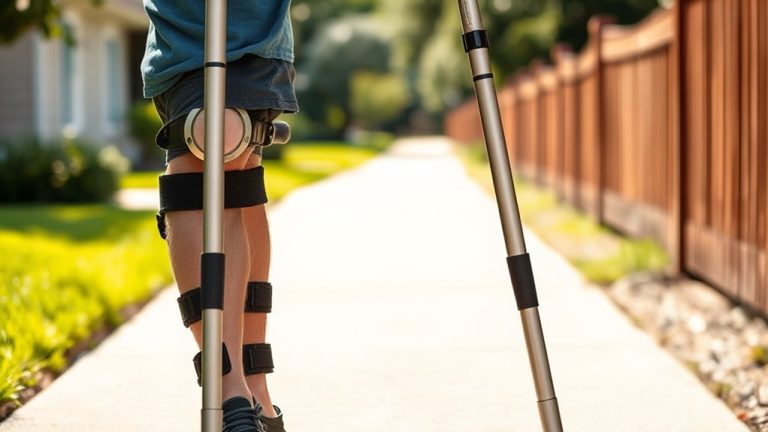

How Hard Is It to Get Disability for Scoliosis
Getting disability for scoliosis can be quite challenging. The Social Security Administration requires solid proof that your condition significantly limits your daily functioning for at least a year.
You’ll need detailed medical records that show nerve issues, spinal compression, or major mobility problems.
It’s important to note that pain alone won’t be enough—you must clearly link your symptoms to work restrictions.
Without comprehensive evidence, your claim may face denial.
However, understanding how to present your case effectively can significantly improve your chances.
Explore the necessary steps that can help strengthen your claim and increase your likelihood of approval.
Understanding the Criteria for Disability Benefits With Scoliosis
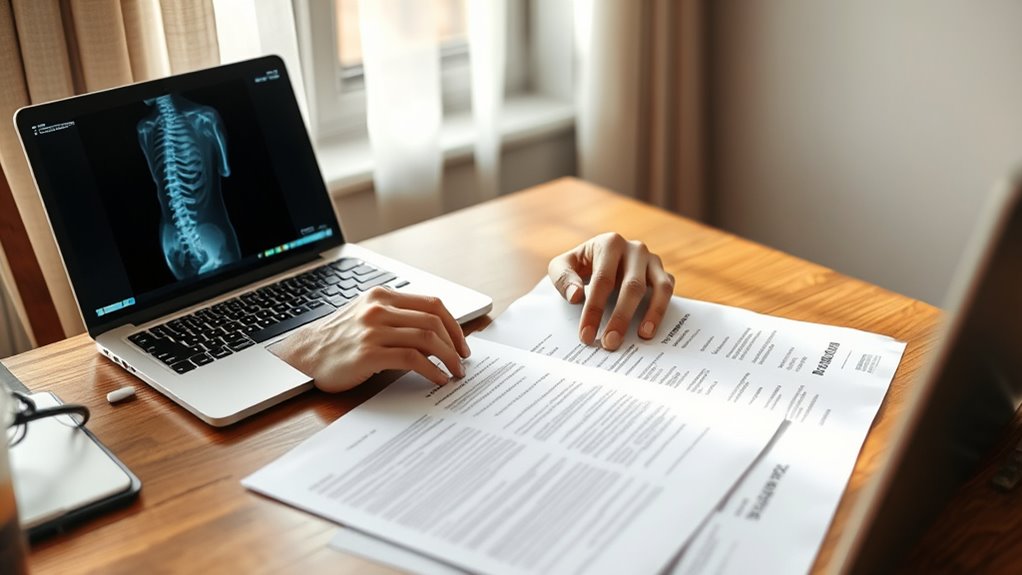
Although the Social Security Administration (SSA) doesn’t list scoliosis explicitly as a disability, you can still qualify for benefits if your condition causes severe symptoms like nerve compression, spinal stenosis, or major mobility issues.
Scoliosis isn’t explicitly listed by SSA, but severe symptoms can qualify you for disability benefits.
When applying for disability benefits, you need to show that scoliosis impairs your ability to work for at least 12 months.
The Social Security disability process requires solid medical evidence, such as diagnostic imaging demonstrating spinal curvature over 50 degrees or related complications.
You must document how these symptoms limit your daily activities, including sitting, standing, walking, or lifting.
Severe scoliosis causing breathing or cardiovascular problems may also support your claim under related impairments.
Understanding these criteria helps you build a stronger case when seeking disability benefits for scoliosis.
The Role of Medical Evidence in Disability Approval
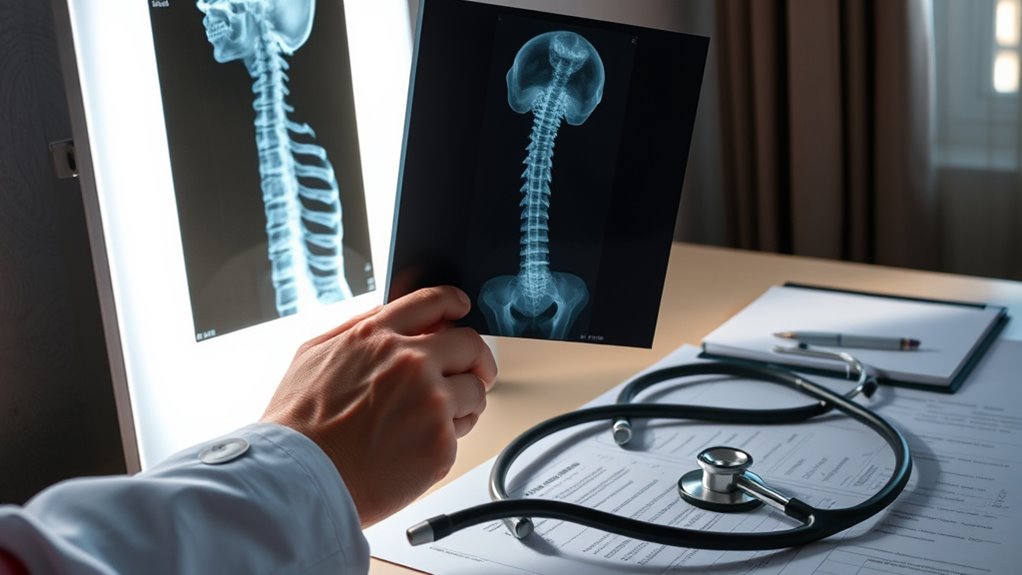
When you apply for disability benefits due to scoliosis, strong medical evidence plays a crucial role in proving the severity and impact of your condition.
You’ll need medical documentation like X-rays or MRIs that clearly show scoliosis progression and medical records detailing functional limitations such as pain or restricted movement.
Documentation of treatments—braces, physical therapy, or surgeries—demonstrates ongoing management and severity.
Your medical records must also confirm that your impairment has lasted or is expected to last at least 12 months, meeting SSA requirements.
This thorough medical evidence linking scoliosis to specific work-impairing symptoms considerably boosts your chances of disability approval.
Without clear, detailed medical evidence, it’s tough to prove how scoliosis limits your ability to work and function daily.
Challenges in Proving Work Inability Due to Scoliosis

Proving you can’t work due to scoliosis demands thorough medical evidence that shows severe, lasting functional limitations.
One major challenge is meeting the required severity level without specific Blue Book criteria.
You need detailed documentation demonstrating how your scoliosis affects your residual functional capacity, proving work incapacity.
Often, claimants face documentation challenges like incomplete medical evidence or lack of objective evidence such as X-rays.
Without clearly linking your symptoms to functional limitations, securing disability benefits becomes difficult.
To overcome these hurdles, legal representation can be vital.
An experienced attorney helps gather extensive medical records and connect your condition to job restrictions, improving your chances of approval.
Without solid evidence and expert guidance, proving disability for scoliosis remains a complex process.
Navigating the Social Security Administration’s Blue Book Listings
How do you qualify for disability benefits with scoliosis if the Social Security Administration’s Blue Book doesn’t list it specifically?
The Blue Book groups scoliosis under Spinal Disorders in Section 1.04.
To meet the listing criteria, you must show that your scoliosis causes nerve root compression, spinal stenosis, or motor loss with significant impairment severity.
Neck and back pain alone won’t qualify without evidence of functional limitations.
Medical documentation—like X-rays, MRIs, and physical exams—is essential to prove these effects.
If your scoliosis severely impacts lung or heart function, related Blue Book listings might apply.
Even if you don’t meet these standards, you could still get benefits through a medical-vocational allowance by demonstrating your condition prevents you from performing substantial work activities.
Navigating these Blue Book listings carefully is key.
How Legal Support Can Improve Your Chances of Approval
Although maneuvering the Social Security disability process can be complex, having legal support considerably boosts your chances of approval.
Legal representation helps you organize and present medical evidence that meets SSA criteria. This clearly demonstrates how scoliosis limits your ability to work.
Attorneys know the ins and outs of disability claims and can strengthen your qualification chances. They ensure all medical documentation and functional assessments are complete and accurate.
If your initial application is denied, legal support guides you through the appeals process, speeding up access to disability benefits.
Studies show that claimants with legal support are three times more likely to secure disability approval than those without.
Frequently Asked Questions
How Much Are Scoliosis Disability Checks a Month?
You can expect scoliosis disability checks to range from about $1,200 to $1,500 monthly, depending on your work history and severity.
High earners might get up to $3,800, while lower income recipients get less.
What Spinal Conditions Automatically Qualify for Disability?
You might think all spinal issues qualify automatically, but only severe cases like ankylosing spondylitis, complete paralysis, vertebral fractures causing immobility, spinal infections, tumors with neurological deficits, and severe degenerative disc disease meet automatic disability criteria.
So, it’s important to understand that not every spinal condition will qualify for disability benefits.
If you have a spinal issue, it’s crucial to consult with a healthcare professional to evaluate the severity of your condition.
What Makes Scoliosis a Disability?
Scoliosis becomes a disability when your spinal curvature causes severe physical limitations, chronic pain, or affects breathing and mobility.
You’ll need strong medical proof showing these impairments hinder your daily life or job.
Are You Classed as Disabled if You Have Scoliosis?
Only about 1% of scoliosis cases qualify as disabled.
You’re classed disabled if your spinal curvature severely limits your daily activities or work for 12+ months.
This classification is supported by strong medical evidence showing significant impairments.
Conclusion
Getting disability for scoliosis can feel overwhelming, but understanding the criteria and gathering strong medical evidence makes a big difference.
You might face challenges proving your work limitations.
Yet knowing how the SSA’s Blue Book applies to you is essential.
Why go it alone when legal support can improve your chances of approval?
With the right approach, you can navigate this process more confidently and increase your likelihood of getting the benefits you deserve.
In conclusion, obtaining disability benefits for scoliosis can be a complex journey.
However, by familiarizing yourself with the requirements and seeking professional assistance, you can enhance your chances of success.
Don’t hesitate to reach out for help!
Your health and financial stability are worth the effort.