

How to Open a Rehabilitation Center in 7 Simple Steps
To open a rehabilitation center in 7 simple steps, it’s essential to start with a clear mission and a deep understanding of community needs. Conducting a thorough market analysis will help you identify gaps and opportunities in your area.
Once you have that information, craft a solid business plan that includes financial projections. This step is crucial for securing funding, whether from investors, loans, or grants.
Next, you’ll need to register your legal entity and obtain all the necessary licenses to operate legally. This can vary by location, so be sure to do your research.
Then, focus on hiring qualified leadership and clinical staff. It’s important to ensure that everyone meets licensure standards and is equipped to provide quality care.
Finally, implement strong operational protocols and quality management systems. These will help streamline your processes and maintain compliance.
Keep exploring these steps as you embark on building a successful rehab center!
Define Your Mission and Strategic Focus

Before you lay the foundation for your rehabilitation center, you need to clearly define your mission and strategic focus.
Your mission should reflect your core values and genuine passion for helping individuals achieve lasting recovery.
Use market insights to understand community needs and identify a specialized treatment approach that sets your center apart.
This strategic focus will guide your program development, ensuring your services align with what the community truly requires.
By articulating a clear mission and focusing on innovative treatment modalities or operational models, you create a strong foundation for success.
Remember, your mission isn’t just a statement—it’s the compass driving every decision and initiative at your center.
Stay precise, passionate, and aligned with both your values and market realities.
Conduct a Feasibility Study and Market Analysis

You need to assess local demand by examining population data and existing treatment options to see where gaps exist.
Analyze the competitor landscape to understand their capacity and services.
Then, identify your target demographics to tailor your center’s approach effectively.
Assess Local Demand
How do you determine if your community truly needs another rehabilitation center?
Start with a thorough demand assessment through a feasibility study. Analyze the population size, demographic behavioral health needs, and existing treatment facilities to identify gaps.
Evaluate market saturation by mapping current rehab centers, their capacity, and service offerings.
Don’t forget to review local insurance coverage and payer networks to ensure financial viability.
Examine community health statistics, focusing on substance use and mental health disorder prevalence to recognize underserved populations.
Consult local healthcare providers to validate sustained demand and gather insights on patient needs.
This extensive approach ensures you understand the local landscape and make informed decisions about opening a rehabilitation center that genuinely meets community needs.
Analyze Competitor Landscape
While evaluating local demand sets the foundation, analyzing the competitor landscape sharpens your strategy by revealing where opportunities and challenges lie.
Conduct thorough market research to assess treatment centers’ presence, pricing, and reputations.
Use competitor analysis to identify market saturation and gaps for service differentiation.
Review demographic data to anticipate client volume and ensure compliance with licensing requirements and zoning laws.
This feasibility study helps you position your rehabilitation center effectively.
| Factor | Consideration |
|---|---|
| Treatment Centers | Number, services, pricing |
| Market Saturation | Density of existing providers |
| Demographic Data | Prevalence of substance/mental health issues |
| Licensing Requirements | Local regulations and compliance |
Identify Target Demographics
Where should you focus your efforts when opening a rehabilitation center?
Start by identifying your target demographics through a thorough feasibility study and market analysis.
Assess community needs and pinpoint underserved populations lacking adequate behavioral health services.
Analyze demographic data like age, income, and substance abuse prevalence to shape your ideal patient base.
Evaluate gaps in existing treatment options to tailor your offerings effectively.
Your market analysis should identify geographic areas with high demand but limited rehab facilities.
And don’t forget to take into account insurance coverage and payer sources, as these factors influence accessibility and service design.
Develop a Comprehensive Business Plan
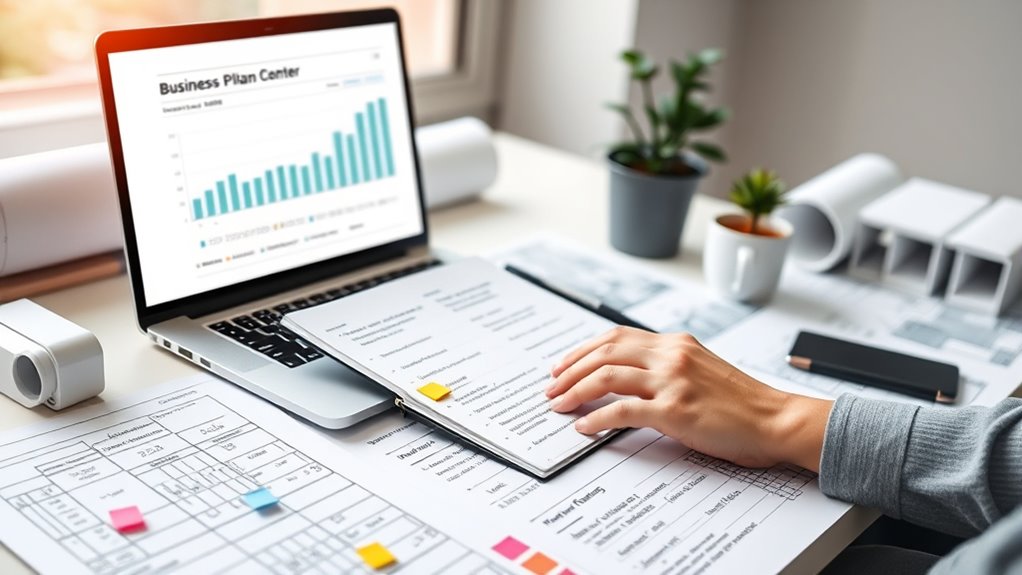
You need to clearly define your mission to guide every decision and inspire your team.
Analyzing the market opportunity is essential to understand who you’ll serve and how you’ll stand out.
Then, outline detailed financial projections to guarantee your center’s long-term success.
Define Mission Clearly
Every successful rehabilitation center starts with a clearly defined mission that shapes every aspect of its business plan.
You need to craft a mission statement that reflects your facility mission and center purpose, guiding your core values and decision-making.
This clarity supports effective goal setting and strengthens stakeholder engagement by communicating your ‘why’—what sets your center apart.
Incorporate your mission into all parts of the business plan, including treatment programs, staffing, and community efforts, ensuring alignment throughout.
And don’t forget to revisit and refine your mission statement regularly to stay relevant with industry changes and patient needs.
A well-defined mission keeps your rehab center focused, inspires your team, and attracts partners who share your vision, laying the foundation for long-term success.
Analyze Market Opportunity
Building on a clear mission, analyzing the market opportunity helps you tailor your rehabilitation center to meet real community needs.
Start with a thorough market analysis to understand local demand and demographic needs related to behavioral health. Identify service gaps where current providers fall short, giving you chances to offer unique solutions.
Conduct a competitor analysis to evaluate their services, pricing, and accreditation, which guides your market positioning strategy.
Use these insights to define your center’s unique value and target patient profiles. This data-driven approach guarantees your business plan addresses actual community challenges, setting measurable goals for growth and patient outcomes.
Outline Financial Projections
Three to five years of detailed financial projections form the backbone of your rehabilitation center’s business plan.
Start by estimating startup costs, including licensing, facility setup, and marketing.
Use market research and industry benchmarks to create realistic revenue forecasts based on patient volume, payer mix, and reimbursement rates.
Accurately outline operational expenses such as staff salaries, facility maintenance, and treatment program development.
Incorporate projected cash flow statements, balance sheets, and income statements to evaluate financial sustainability and identify funding needs.
Regularly update your financial projections with actual performance data to refine assumptions and improve accuracy.
This disciplined approach guarantees you present a clear, realistic financial outlook that appeals to investors and lenders.
Ultimately, it guides your center toward long-term success.
Secure Financing and Prepare Financial Projections
Before you can open your rehabilitation center, you need to secure financing and prepare detailed financial projections.
These projections should outline startup costs, expected revenue, and ongoing expenses.
Identify funding sources like bank loans, private investors, grants, and government programs.
You’ll also want to develop pro forma financial statements, including income statements and cash flow projections, to support your revenue forecast and operational planning.
Make sure to prepare thorough financial documentation and budgeting for property, staffing, equipment, licensing, and marketing.
And don’t forget to regularly update your financial projections to stay realistic and adapt to market changes.
| Item | Purpose | Example Cost |
|---|---|---|
| Startup Costs | Initial investment needs | $250,000 |
| Funding Sources | Financing options | Bank loan, grants |
| Revenue Forecast | Expected income projections | $500,000 annually |
Obtain Legal Entity Formation and Licenses
Once you’ve secured financing, you’ll need to register your rehabilitation center as a legal entity, such as an LLC or corporation, based on your state’s requirements.
Next, obtain all necessary licenses, including health department permits and zoning approvals, to comply with local and state regulations.
Obtain all required licenses and permits to ensure compliance with local and state regulations.
Prepare a detailed policy manual outlining your center’s procedures and submit it to licensing authorities for review as part of the licensing process.
Don’t forget to pay all licensing fees promptly to avoid delays.
Securing accreditation from organizations like CARF or The Joint Commission is vital—it not only boosts your center’s credibility but also improves reimbursement opportunities.
Staying compliant through proper legal entity formation and thorough licensing ensures your rehabilitation center operates smoothly within all regulatory frameworks.
Recruit Leadership and Qualified Clinical Staff
How do you guarantee your rehabilitation center delivers effective, evidence-based care?
Start by recruiting strong leadership, including a qualified medical director and clinical supervisors with proven expertise in addiction treatment.
When hiring, prioritize licensed clinicians like psychiatrists, psychologists, and addiction counselors holding certifications such as CADC or LPC to meet regulatory standards.
Build a multidisciplinary clinical team that also includes nurses, therapists, and case managers, ensuring all-encompassing patient care.
Conduct thorough background checks and competency assessments on all qualified staff to confirm they align with your center’s values and licensing requirements.
Implement Operational Protocols and Quality Management
To guarantee your rehabilitation center operates smoothly and meets all regulatory standards, you’ll need to develop thorough operational protocols that cover treatment procedures, staff roles, and safety policies.
Start by establishing clear staff responsibilities to ensure everyone understands their duties.
Next, implement a quality management system focused on continuous performance monitoring and collecting patient feedback to improve care.
Finally, maintain standardized documentation for compliance audits and incident reporting.
- Develop operational protocols aligned with licensing requirements and evidence-based guidelines.
- Use quality management tools like regular staff training and patient feedback integration.
- Conduct frequent compliance audits and update policies to reflect new regulations and best practices.
This approach guarantees high-quality care and regulatory compliance for your center.
Frequently Asked Questions
What Are the 5 Components of Rehabilitation?
The five components of rehabilitation include medical treatment, psychological counseling, social support, occupational therapy, and relapse prevention.
You’ll focus on these to address physical health, mental well-being, social connections, skills, and long-term recovery.
How Do Rehab Centers Make Money?
Rehab centers make money by weaving patient payments, insurance reimbursements, and government funding into a steady tapestry of income.
You’ll also boost earnings through specialized programs and ancillary services like family therapy and aftercare.
What Are the Basic Steps in Rehabilitation?
You start with assessment, then detox to manage withdrawal safely.
Next, you engage in therapy—individual and group—to address addiction causes.
Finally, you develop relapse prevention strategies and provide aftercare support to maintain long-term recovery.
How to Start a Mental Health Treatment Center?
You’ll research local needs, secure licenses, create a business plan, and hire skilled professionals.
Building partnerships is also crucial.
You’ll focus on compliance, quality care, and sustainable funding to launch a successful mental health treatment center.
Conclusion
Opening a rehabilitation center is like planting a seed—you start with a clear mission, nourish it with careful planning, and watch it grow through dedication and expert care.
By following these seven steps, you’ll build a strong foundation, turning your vision into a beacon of hope.
Keep your focus sharp and your passion burning.
Soon, you’ll see lives transformed, one step at a time, in the garden you’ve cultivated.
In conclusion, establishing a rehabilitation center requires a thoughtful approach. By setting a clear mission, engaging in thorough planning, and committing to ongoing care, you can create a supportive environment for individuals seeking recovery.
Remember, it’s about nurturing growth and fostering change.
With each step you take, you are not just starting a center; you are creating a sanctuary of hope.
Stay dedicated, and you’ll witness the profound impact you can have in your community.