

What Are the 4 Phases of Cardiac Rehabilitation?
You’ll go through four essential phases of cardiac rehabilitation, which are designed to help you recover and maintain a healthy heart.
The journey begins with acute inpatient care, where your heart is stabilized, and you start gentle exercises to promote healing.
Next up is early outpatient rehab, which helps you build strength and manage medications while adopting healthier habits.
After that, intensive outpatient rehab focuses on advanced exercises and education to boost your confidence and independence.
Finally, the maintenance phase encourages lasting lifestyle changes to keep your heart healthy.
If you want to understand each phase in depth, keep exploring the details.
Phase I: Acute Inpatient Rehabilitation

Although you’re still in the hospital, Phase I of cardiac rehabilitation kicks off soon after your cardiac event to stabilize your condition and get you moving safely.
This acute inpatient rehabilitation phase typically lasts 2-5 days and focuses on early mobilization through bedside exercises tailored to your tolerance.
Medical staff closely monitor your vital signs, including blood pressure, oxygen saturation, and EKG, to guarantee your safety during activity.
Symptom evaluation is continuous to detect any issues early.
Alongside physical activity, patient education plays a critical role, helping you understand your heart condition, recognize symptoms, and prepare mentally.
This phase also includes discharge planning, setting the stage for your next steps in recovery.
Through stabilization and careful monitoring, Phase I aims to build a strong foundation for your rehabilitation journey.
Phase II: Early Outpatient Subacute Rehabilitation

Once you leave the hospital, Phase II of cardiac rehabilitation begins, typically lasting 3 to 6 weeks in an outpatient setting.
During this phase, outpatient care focuses on exercise supervision to monitor your heart response as you engage in gradually increasing exercise.
You’ll receive medication management alongside patient education about lifestyle modifications like diet, exercise, and risk factor reduction to support long-term heart health.
This structured program aims to build your confidence in self-care and promote independence.
Psychological support is also provided to help you manage emotional adjustments and stay motivated throughout recovery.
Phase III: Intensive Outpatient Rehabilitation and Education
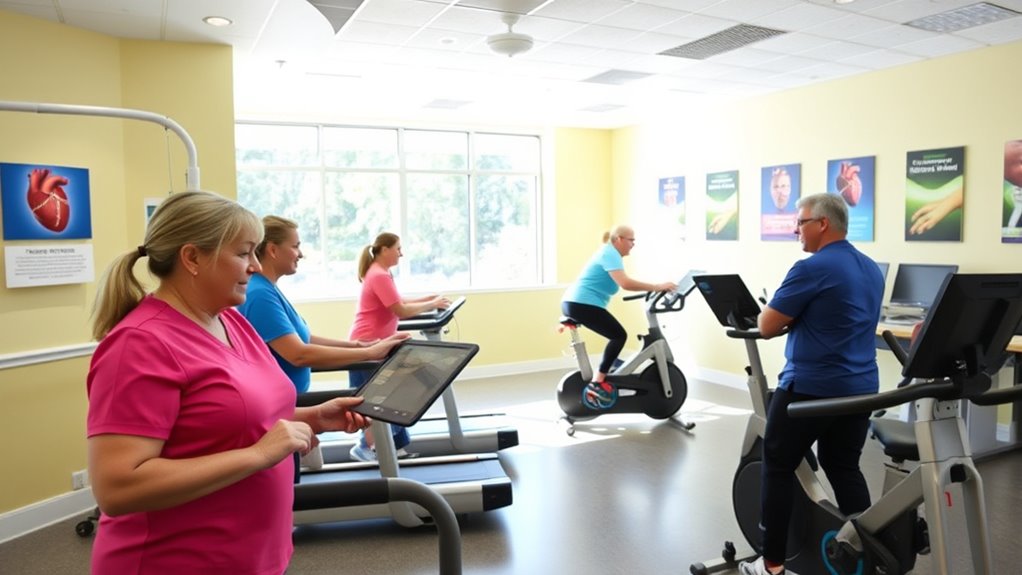
How can you take your heart health to the next level after early rehabilitation?
Phase III offers an outpatient program focusing on intensive exercise and education to bolster your cardiovascular health.
You’ll engage in group activities like walking, biking, and strength training, with exercise intensity tailored to your needs.
This phase includes up to 36 sessions where you learn self-monitoring and lifestyle management techniques, including stress management, heart-healthy diet, and medication adherence.
Your progress is closely monitored by a multidisciplinary team to ensure safety and effectiveness.
The goal is to prepare you for long-term maintenance of your heart condition by building confidence and knowledge.
This way, you can manage your cardiovascular health independently and maintain a heart-healthy lifestyle over the years.
Phase IV: Maintenance and Long-Term Independence
Building on the progress you’ve made in earlier phases, Phase IV empowers you to maintain your heart-healthy lifestyle independently.
Phase IV helps you confidently sustain a heart-healthy lifestyle on your own for lasting wellness.
This phase focuses on long-term independence by encouraging ongoing exercise, balanced nutrition, smoking cessation, and stress management.
You’ll apply lifestyle changes and risk management techniques learned earlier, supported by patient education that enhances your self-monitoring skills.
Regular follow-up care with healthcare providers ensures you can make timely lifestyle adjustments and track your progress effectively.
The goal is to prevent secondary events, promote overall well-being, and help you sustain healthy habits for life.
Frequently Asked Questions
What Are the 4 Stages of Cardiac Rehab?
The four stages of cardiac rehab are inpatient recovery, early outpatient rehab, intensive outpatient training, and lifelong maintenance.
You’ll start with stabilization, then gradually increase activity.
During this time, you’ll also learn self-care strategies to manage your health.
Finally, the goal is to maintain heart health long-term.
What Are the 4 Stages of Rehabilitation?
Think of rehabilitation as a staircase you climb:
you start with acute care, then move to early outpatient,
progress to intensive outpatient, and finally reach maintenance—
where you keep your health steady for life.
How Long Are Patients Typically in Cardiac Rehab?
You’ll typically spend about 12 weeks in cardiac rehab, attending around 36 sessions.
The exact length depends on your recovery and health.
But most programs last this long to help you regain strength and lifestyle habits.
What Exercises Can You Do After a Heart Stent?
Wondering what exercises you can do after a heart stent?
You can start light walking or stationary cycling soon after.
As you heal, brisk walking, swimming, and light resistance training become great options to rebuild strength safely.
Conclusion
As you journey through the four phases of cardiac rehabilitation, think of each step as climbing a mountain.
Phase I is your cautious first foothold, providing essential education and initial support.
Phase II builds your steady ascent, focusing on monitored exercise and lifestyle changes.
Phase III challenges your strength and resolve, offering more independence and personalized goals.
Finally, Phase IV plants your flag at the summit—a symbol of resilience and newfound freedom.
Embrace this climb, knowing that each phase brings you closer to a heart that beats stronger and a life you can truly own.
With dedication, you’ll navigate through the challenges, emerging more empowered and aware of your health.
Remember, this journey is not just about recovery; it’s about reclaiming your life and living it fully.
So, take each step with purpose and confidence as you embrace the transformation that cardiac rehabilitation offers.