
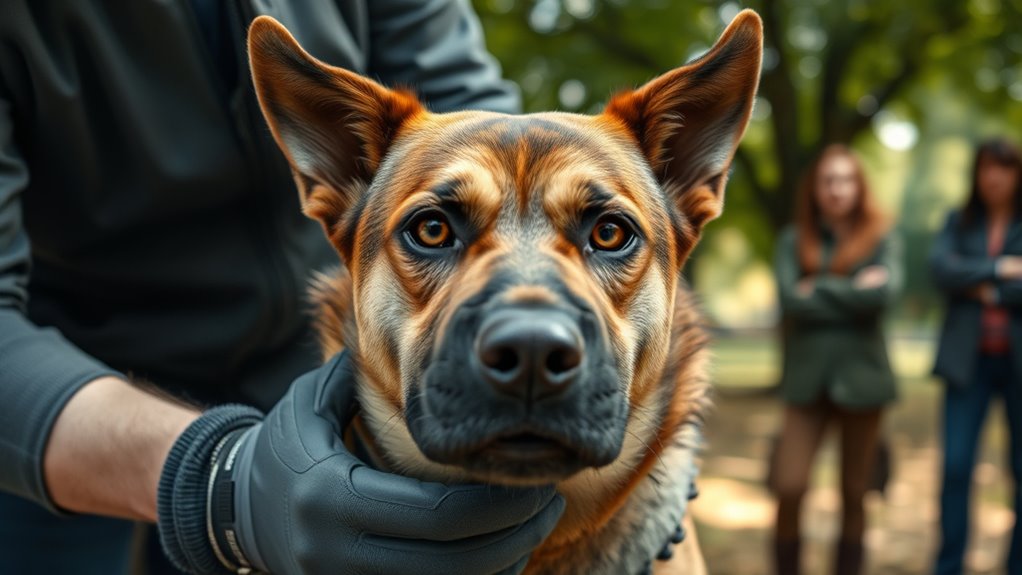
Can an Aggressive Dog Be Rehabilitated?
Yes, you can rehabilitate an aggressive dog by addressing fears, anxiety, or pain that often drive their behavior.
Start with a careful assessment to identify triggers and stress signals.
Use positive reinforcement and gradual desensitization to build trust and reduce reactivity.
Consistent routines and clear boundaries create emotional security, helping your dog feel safe.
Partnering with professionals enhances success and ensures you stay on track.
There’s more to learn about effective strategies and long-term management.
Understanding the Root Causes of Aggression
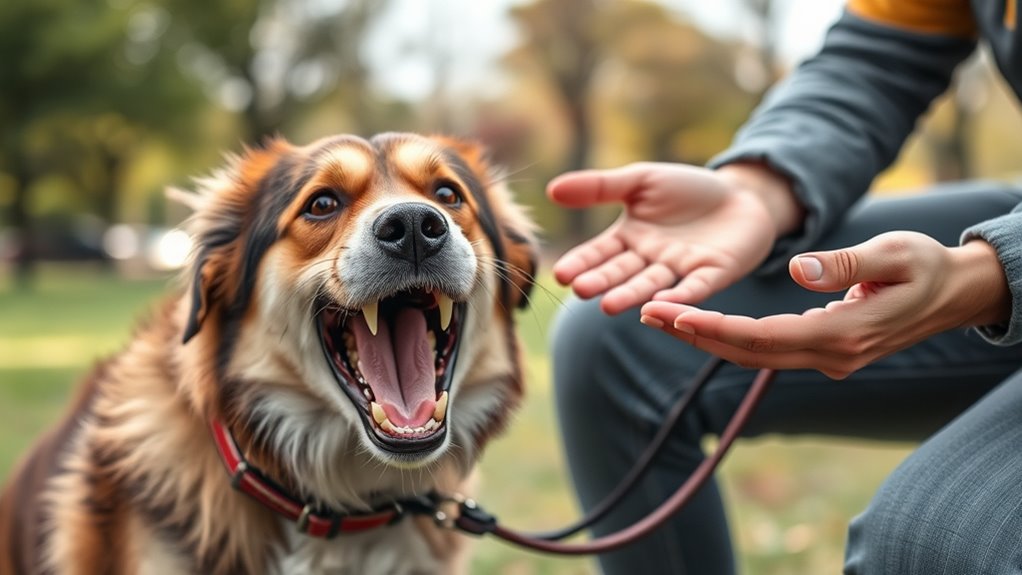
When you see a dog acting aggressively, it’s usually not about dominance but fear, anxiety, frustration, or past trauma driving that behavior.
Understanding these root causes is vital for effective rehabilitation.
Recognizing the true causes behind aggression is key to helping dogs change for the better.
Fear often triggers defensive behavior when a dog feels threatened or recalls negative experiences.
This means that your training approach should focus on building the dog’s confidence rather than forcing submission.
Addressing underlying health issues or pain is also essential, as discomfort can worsen aggression.
Lack of early socialization can make new stimuli overwhelming.
So, gradual exposure paired with positive reinforcement helps reshape behavior.
Initial Assessment and Behavior Evaluation
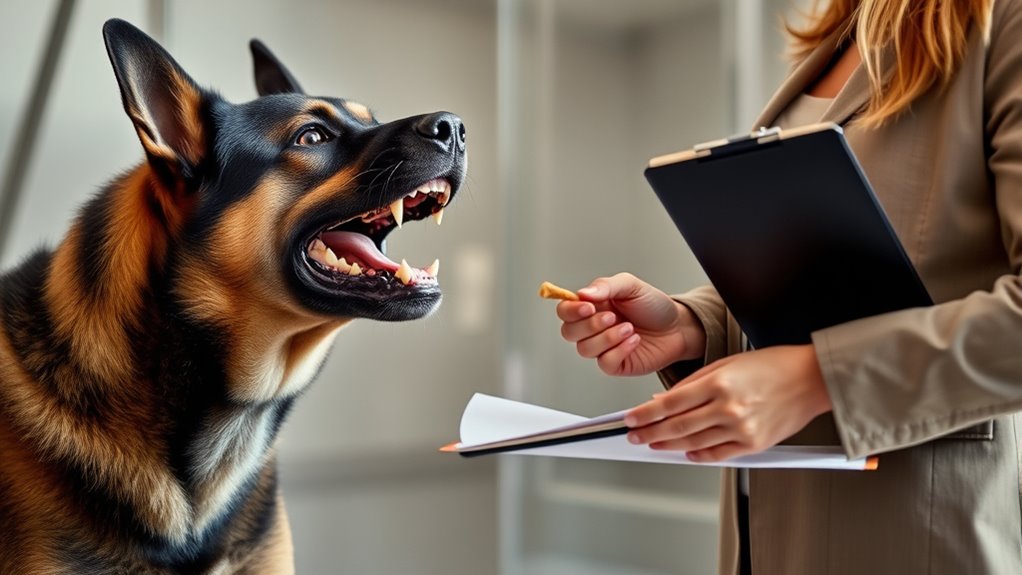
When you start evaluating an aggressive dog, pay close attention to their body language and how they react to different environments.
Identifying what triggers their aggression helps you understand the root causes behind their behavior.
Identifying Aggression Triggers
Although evaluating an aggressive dog can feel challenging, you can identify specific triggers by carefully observing its reactions to people, other animals, sounds, and changes in the environment.
During your behavior evaluation, focus on how the dog’s emotional response shows through its behavior, such as growling or posture shifts.
These aggression triggers often stem from fear, pain, dominance, or resource guarding.
By identifying triggers accurately, you’ll understand what sparks the aggression and can establish a baseline for future progress.
This assessment is vital for your safety and helps you develop an effective, individualized rehabilitation plan.
Pinpointing aggression triggers guides you in choosing the right strategies, like desensitization or counter-conditioning, to reshape the dog’s behavior effectively.
Observing Body Language
Since a dog’s body language reveals its emotional state, closely watching signs like tail position, ear orientation, and facial expressions helps you accurately assess its behavior during your initial evaluation.
Recognizing stress signals such as lip licking or yawning, and warning signals like growling or baring teeth, is vital in your behavior assessment.
These cues tell you if the dog feels threatened or relaxed, guiding your intervention.
| Body Language | Meaning |
|---|---|
| Loose muscles, wagging tail | Calm, comfortable |
| Stiff posture, avoiding eye contact | Stress, discomfort |
| Growling, baring teeth | Defensive, warning signals |
| Lip licking, yawning | Stress signals |
Evaluating Environmental Influences
Observing a dog’s body language gives you valuable clues. But understanding what triggers aggressive behavior requires looking beyond physical cues.
You need to evaluate environmental factors like the dog’s living situation, socialization, and recent changes that might influence its behavior.
During an initial assessment, watch how the dog reacts to various stimuli—people, animals, sounds—to identify specific triggers.
Analyze its stimuli response. A thorough behavior evaluation helps you understand whether aggression stems from fear, frustration, or pain. This understanding is essential for creating effective training strategies.
This detailed approach provides a baseline to measure progress. It also helps tailor interventions to the dog’s unique needs, increasing the chances of successful rehabilitation.
Key Behavior Modification Strategies
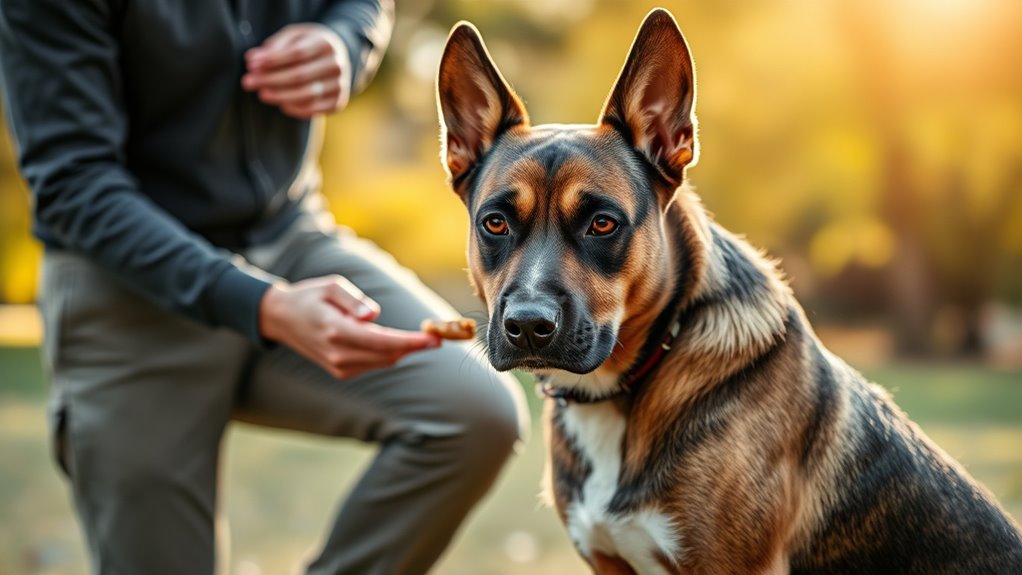
To help your aggressive dog improve, you’ll need a personalized training plan that fits their unique needs.
Using positive reinforcement will encourage good behavior and build trust between you and your dog.
Gradual exposure to triggers in a controlled way helps your dog stay calm and adjust to challenging situations over time.
Personalized Training Plans
When you create a personalized training plan for an aggressive dog, you focus on the dog’s unique triggers, history, and behavior patterns to design effective interventions.
Personalized training plans in aggression rehabilitation rely on behavior modification techniques like systematic desensitization. This approach involves gradually exposing the dog to triggers at a safe distance, which helps reduce reactive behaviors while building confidence.
Positive reinforcement supports these strategies by encouraging calm responses to challenges.
You’ll also incorporate obedience training to promote control and emotional regulation. Throughout the process, it’s important to continuously evaluate progress and adjust the plan as necessary.
Collaboration with professionals ensures consistency in routines and communication, which is crucial for success.
Positive Reinforcement Methods
Although changing aggressive behavior can be challenging, using positive reinforcement methods can make a significant difference.
Positive reinforcement relies on reward-based training to encourage calm behavior and replace aggression with desirable actions. This approach strengthens your bond through consistent, immediate rewards, making behavior modification effective.
Key strategies include:
- Rewarding calm, non-aggressive responses promptly.
- Using treats, praise, or toys to reinforce good behavior.
- Building trust to help your dog feel secure.
- Applying positive reinforcement during desensitization to reduce fear or reactivity.
- Avoiding punishment to maintain a positive learning environment.
Gradual Exposure Techniques
Since aggressive reactions often stem from fear or overstimulation, gradual exposure techniques help you carefully introduce your dog to triggers at a manageable level.
Gradual exposure involves systematically increasing the intensity of the stimulus. This allows your dog to experience it without becoming overwhelmed.
This approach supports desensitization by reducing your dog’s negative emotional response, helping them feel less threatened.
By reinforcing calm behavior and rewarding relaxed reactions, you create positive interactions that reshape your dog’s associations with the trigger.
Consistent, controlled sessions build your dog’s confidence and trust. This enables them to tolerate situations that once provoked aggression.
The Role of Positive Reinforcement
Because you want to encourage good behavior, positive reinforcement rewards your dog with treats, praise, or toys to motivate them to repeat those actions.
This reward system plays a crucial role in addressing behavior problems by reinforcing calm behaviors over aggressive ones.
When you consistently use positive reinforcement, you build trust between you and your dog, which is essential for successful rehabilitation.
Unlike punishment, this method reduces fear and anxiety, fostering a safe environment for change.
Remember to:
- Reward desired behaviors immediately
- Use high-value treats or toys
- Keep training sessions short and frequent
- Praise calmly to encourage relaxed responses
- Be consistent to strengthen trust building
Desensitization and Controlled Exposure Techniques
When you gradually expose your dog to triggers at a low intensity, you help reduce their emotional reactivity through desensitization.
Controlled exposure keeps your dog calm while facing stimuli that once caused aggressive behavior.
Pair these sessions with positive reinforcement—like treats or praise—to help your dog form positive associations.
This approach demands patience and consistency, as meaningful behavioral change takes time.
| Step | Purpose |
|---|---|
| Low-intensity trigger | Minimize stress and aggression |
| Controlled setting | Ensure calm reactions |
| Positive reinforcement | Build positive associations |
| Gradual increase | Enhance tolerance over time |
Establishing Consistent Routines and Boundaries
How do you create a calm environment for an aggressive dog?
You start by establishing consistent routines and clear boundaries.
This approach fosters emotional security and a predictable environment, which is essential for effective behavior management.
Fostering emotional security through predictability is key to managing aggressive behavior effectively.
When your dog knows what to expect, anxiety lessens, reducing aggressive triggers.
Focus on these key practices:
- Maintain regular feeding, walking, and play schedules.
- Set clear rules for rest areas and commands.
- Respond consistently to behaviors to reinforce expectations.
- Use routines to build trust and reduce confusion.
- Provide structure that supports calm, responsive behavior.
The Importance of Professional Support and Owner Involvement
Though managing an aggressive dog can feel overwhelming, seeking professional support and staying actively involved are vital steps toward successful rehabilitation.
Professional dog trainers and veterinary behaviorists assess your dog’s specific issues and create tailored behavior modification plans.
These experts use proven training strategies like desensitization and positive reinforcement to safely address aggression.
Your involvement as an owner is essential—consistently applying these strategies at home reinforces the rehabilitation process and builds trust with your dog.
When you collaborate closely with professionals and remain committed to ongoing training, you markedly increase the chances of improving your dog’s behavior.
This partnership ensures that the behavior modification is effective, leading to a safer, happier life for both you and your dog.
Frequently Asked Questions
Can an Aggressive Dog Become Friendly?
Yes, you can help an aggressive dog become friendly by using consistent, positive training,
gradual socialization, and building trust.
With patience and professional guidance, most dogs improve and develop more approachable, friendly behavior over time.
When Should a Dog Be Put Down for Aggression?
You shouldn’t wait until your dog’s aggression turns life-threatening before acting.
When training fails, attacks cause serious harm, or safety’s at risk, it’s time to contemplate euthanasia.
This decision is important for everyone’s well-being, including your dog’s peace.
Is It Ever Too Late to Train an Aggressive Dog?
It’s never too late to train an aggressive dog.
You’ll need patience and consistent positive reinforcement, but with the right approach,
even older dogs can improve their behavior and become safer companions over time.
How Long Does It Take to Rehabilitate an Aggressive Dog?
Rehabilitating an aggressive dog takes time like growing a sturdy oak—anywhere from months to over a year.
You’ll need patience, consistent training, and professional guidance to see steady progress and lasting behavioral change.
It’s important to remember that every dog is different, and some may take longer than others.
Stay committed, and you’ll likely see improvements along the way.
Conclusion
So, you’ve got an aggressive dog and think it’s hopeless? Think again.
With patience, consistent routines, and a sprinkle of positive reinforcement, even the fiercest furball can learn some new tricks.
Sure, it’s not magic—no, you won’t turn your dog into a fluffy angel overnight.
But with professional help and your dedication, you might just survive the chaos and come out with a calmer companion.
Who knew rehab wasn’t just for reality TV stars?
In conclusion, aggressive dogs can be rehabilitated with the right approach.
Using positive reinforcement, maintaining consistency, and seeking professional guidance are key steps.
While the journey may require time and effort, the reward of having a well-adjusted pet is worth it.
Don’t lose hope; with dedication, you can transform your aggressive dog into a loving companion.