
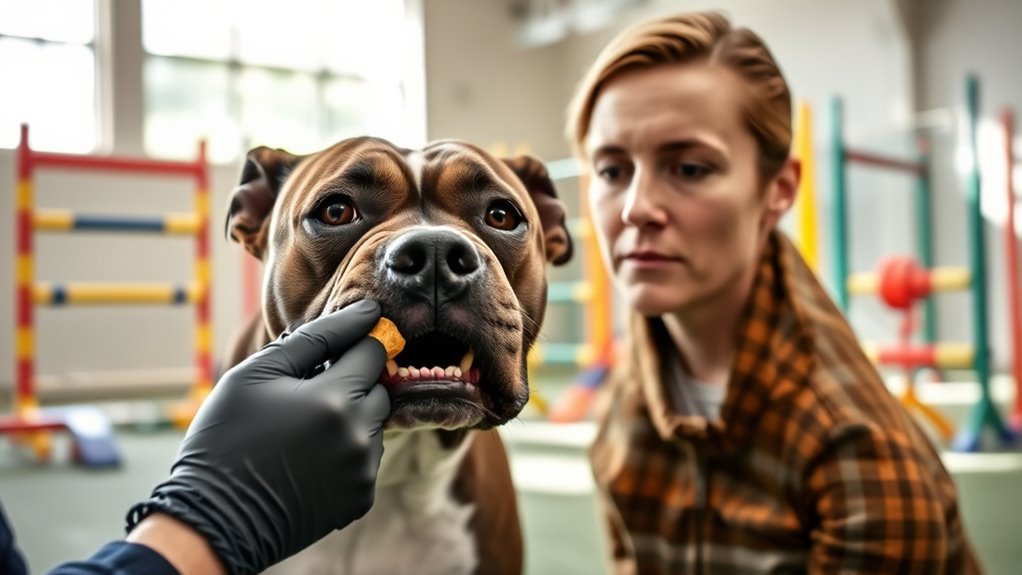
Can Aggressive Dogs Be Rehabilitated?
Yes, you can rehabilitate aggressive dogs by first understanding what triggers their behavior, like fear or anxiety.
With professional guidance, you’ll assess their aggression and use safety tools to manage risks.
Then, you’ll apply behavior modification strategies, including gradual exposure to triggers paired with positive reinforcement and socialization.
Consistent routines and owner involvement are essential for lasting change and safety.
Keep exploring these steps to discover how to help your dog thrive peacefully.
Causes and Types of Aggression in Dogs
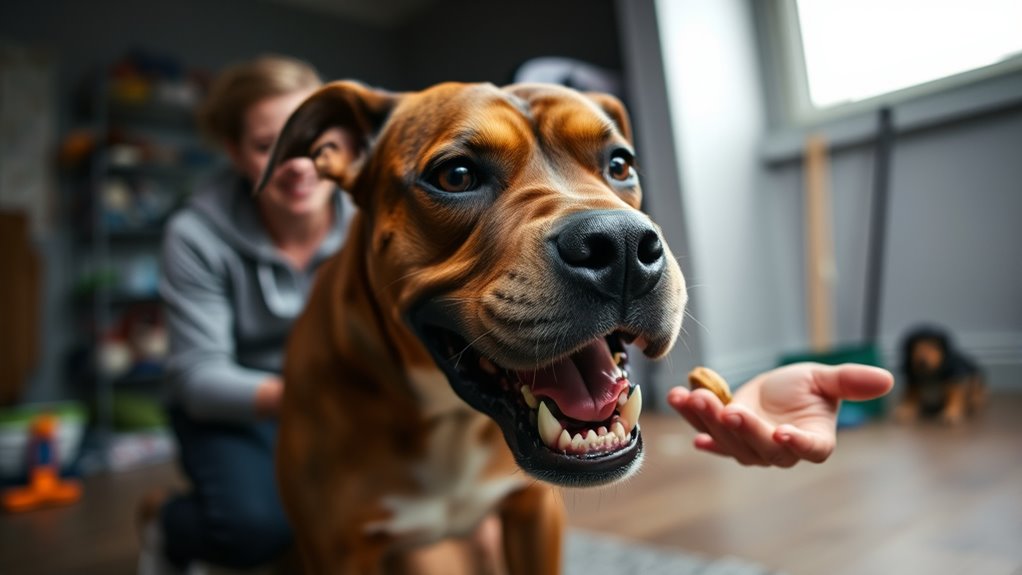
Although many people believe aggression stems from dominance, it actually often comes from fear, anxiety, frustration, or past trauma.
Aggression often arises from fear, anxiety, frustration, or past trauma—not dominance as commonly believed.
When you encounter dog aggression, understanding its root causes is key. Fear-based aggression arises from perceived threats, causing growling or defensive biting.
You might also see resource guarding, where dogs protect food or toys aggressively.
Reactivity happens when a dog overreacts to triggers like other animals or strangers, especially on a leash or in new environments.
Recognizing warning signs helps you intervene early.
Effective training programs focus on behavioral modification, targeting these root causes and trauma.
Assessing Aggression and Safety Measures
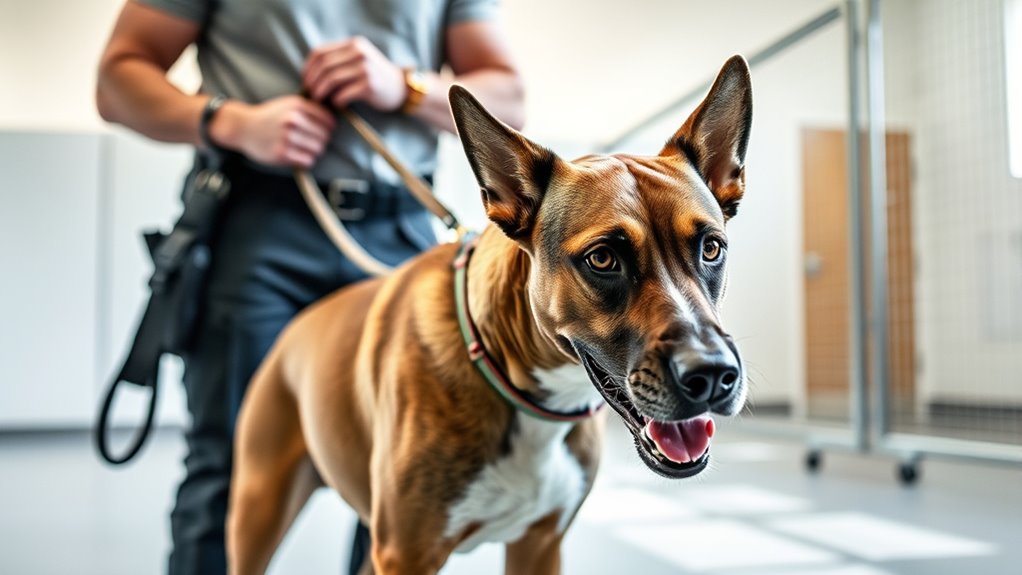
Understanding the causes of aggression sets the foundation for proper assessment and safety planning.
You need professional guidance from a veterinary behaviorist or trainer to conduct a thorough behavioral evaluation. This assessment identifies triggers and warning signals like growling or stiff posture, which help you intervene early.
Implementing safety measures such as muzzles, head halters, and environment control is critical to prevent bites during evaluation and training.
Constant monitoring allows you to document behavior changes and adjust safety protocols accordingly.
These insights let you develop a tailored rehabilitation plan that prioritizes safety for both the dog and people involved.
Behavior Modification Strategies for Rehabilitation
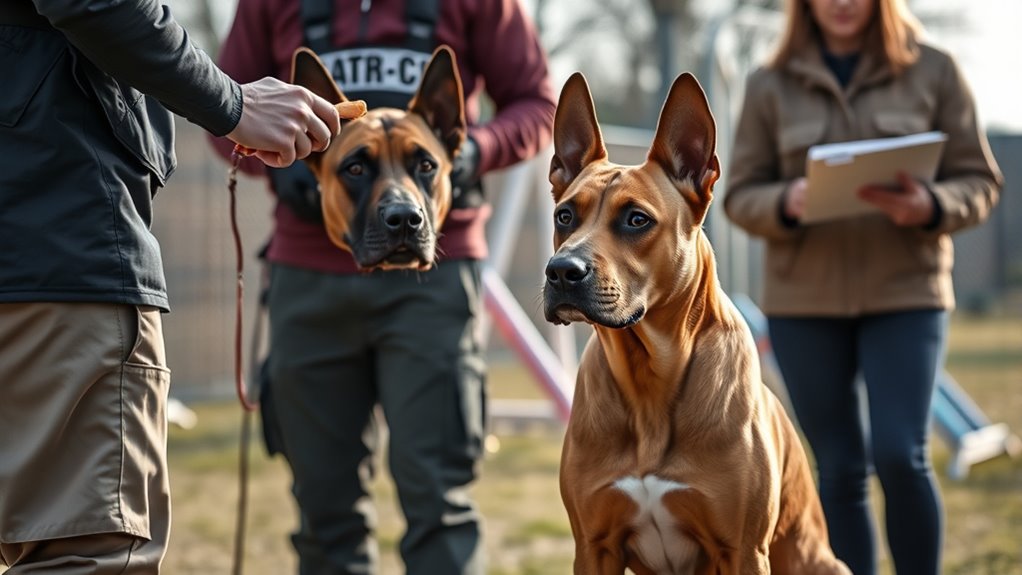
When you apply behavior modification strategies, you gradually reduce your dog’s fear and aggression through systematic desensitization and counter-conditioning.
This behavioral intervention focuses on retraining your dog’s emotional responses by controlled exposure to aggression triggers in manageable doses.
Consistent training routines paired with stimuli control help decrease impulsive aggressive behavior over time.
Positive reinforcement plays a key role in encouraging calm, non-aggressive reactions, building trust between you and your dog.
Tailoring these strategies to your dog’s specific triggers ensures a safer, more effective rehabilitation process.
Collaborating with professional trainers or veterinary behaviorists enhances the success of behavior modification by providing expert guidance.
Role of Positive Reinforcement and Socialization
Since positive reinforcement rewards your dog for calm, non-aggressive behavior, it plays a crucial role in rebuilding trust and encouraging better reactions.
By consistently rewarding desirable behaviors with treats, praise, or play, you help your aggressive dogs learn non-aggressive responses that strengthen your bond.
Gradual socialization exposes your dog to new people and environments in a controlled environment, reducing fear and reactivity.
During these interactions, reinforcing calm, non-threatening behavior promotes confidence and diminishes negative associations.
Patience and persistence are key as you use positive reinforcement and socialization techniques to rehabilitate your dog.
Through this careful approach, you foster trust and gradually guide your dog toward safe, desirable behaviors that improve their overall temperament and quality of life.
Long-Term Management and Owner Involvement
Although rehabilitating aggressive behavior takes time, you play an essential role in long-term management by maintaining consistent routines and reinforcing positive behaviors daily.
Your owner involvement ensures ongoing collaboration with trainers and behaviorists, making behavior reinforcement effective.
To manage aggression safely, focus on these key areas:
- Implement environmental controls and safety measures like secure confinement and muzzles to prevent incidents.
- Maintain regular training sessions using positive reinforcement to encourage desirable behaviors.
- Provide vigilant supervision, especially around known triggers or family members.
- Commit to consistent routines that reduce stress and promote stability.
Frequently Asked Questions
How Long Does It Take to Rehabilitate an Aggressive Dog?
It typically takes you several months to over a year to rehabilitate an aggressive dog, depending on severity and consistency.
With early intervention and dedication, you might see improvements within 3 to 6 months.
The key is to stay patient and committed to the process.
What to Do With an Aggressive Dog You Can’t Keep?
If you’re holding a ticking time bomb, don’t hesitate—reach out to a professional behaviorist.
They’ll help you create a safety plan or find a skilled new home, ensuring everyone stays safe and secure.
Can Dog-On-Dog Aggression Be Cured?
You can’t always completely cure dog-on-dog aggression,
but with patience, consistent training, and professional help, you can substantially reduce it.
You’ll need ongoing management to keep your dog safe and well-behaved around others.
When Should a Dog Be Put Down for Aggression?
You should consider putting a dog down for aggression when it poses a consistent, serious safety risk, especially after professional evaluation confirms rehab won’t work.
If the dog’s behavior leads to repeated, severe attacks or injuries, it’s crucial to take this matter seriously.
In such cases, the safety of both the dog and those around it must be prioritized.
Conclusion
Rehabilitating an aggressive dog isn’t an overnight fix.
It’s like tending a fragile garden that needs patience, care, and the right tools.
You’ll need to understand the roots of their behavior and stay consistent with positive reinforcement.
Creating a safe environment for gradual change is essential.
With your commitment and involvement, you can help your dog grow into a calmer, more trusting companion.
Remember, every small step forward is a victory worth celebrating.
In conclusion, rehabilitating aggressive dogs is possible with dedication and the right approach.
By focusing on understanding their behavior and implementing positive reinforcement, you can foster a safe environment that promotes trust.
Celebrate each small victory, as every step forward contributes to their overall progress.
With time, patience, and love, you can transform your aggressive dog into a more balanced and loving companion.