What Challenges Do Disabled People Have With a Romantic Lover?
When you’re disabled, romantic relationships can bring unique challenges. Societal stigma and misconceptions often question your ability to love or be loved.
You might struggle with when and how to disclose your disability honestly while seeking acceptance.
Physical barriers and inaccessible venues can limit your shared experiences, making it harder to connect in meaningful ways.
Communication and consent might require extra clarity, as you balance independence with the support your partner can provide.
Despite these hurdles, understanding them can help you build stronger connections.
Navigating love with confidence is absolutely possible, and it can lead to more fulfilling relationships.
Societal Stigma and Misconceptions

Although society often overlooks it, stigma and misconceptions create significant barriers for disabled people in romantic relationships.
You might face societal stereotypes that wrongly assume you can’t love or be loved, which only fuels social exclusion.
These prejudices often lead to discrimination, making it harder for you to find acceptance and genuine connection.
Cultural and religious biases may add another layer of stigma, discouraging open conversations about intimacy.
You could also encounter the false perception that relationships involving disabled partners are acts of charity rather than equal partnerships.
This undermines your autonomy and worth.
These negative attitudes increase your vulnerability to judgment, rejection, and social isolation, turning what should be a natural part of life into a challenging and sometimes painful experience.
Navigating Disclosure and Acceptance

When you share details about your disability, it’s natural to worry about how your partner will react.
Being honest early on helps build trust and sets the stage for acceptance.
Handling their response with openness can make all the difference in your connection.
Sharing Disability Details
How and when you choose to share details about your disability can shape the foundation of a romantic relationship.
You might worry about being judged or rejected, which makes disclosure feel intimidating.
It’s natural to fear misunderstandings or assumptions about your abilities.
However, studies show that honest communication about your disability early on builds trust and paves the way for acceptance.
You don’t have to reveal everything immediately, but being clear about your needs helps your partner understand and support you better.
Ultimately, your comfort with sharing and their willingness to listen play key roles.
Taking control of this conversation lets you set the tone, making it easier to navigate the relationship with openness and confidence.
Handling Partner Reactions
Sharing details about your disability sets the stage, but handling your partner’s reaction shapes the relationship’s future. You might worry about rejection or judgment, especially since disabilities can carry misconceptions.
Timing matters—disclosing too soon risks snap judgments, while waiting too long might create barriers to honesty.
When you share, trust your partner but prepare for varied responses. Some may need time to understand, while others might react negatively.
Open communication helps clear misunderstandings and builds mutual acceptance. Remember, your willingness to discuss disabilities openly invites empathy and strengthens connection.
Navigating partner reactions isn’t easy, but by fostering patience and dialogue, you create a space where your relationship can thrive despite challenges linked to disability disclosure.
Accessibility and Physical Barriers
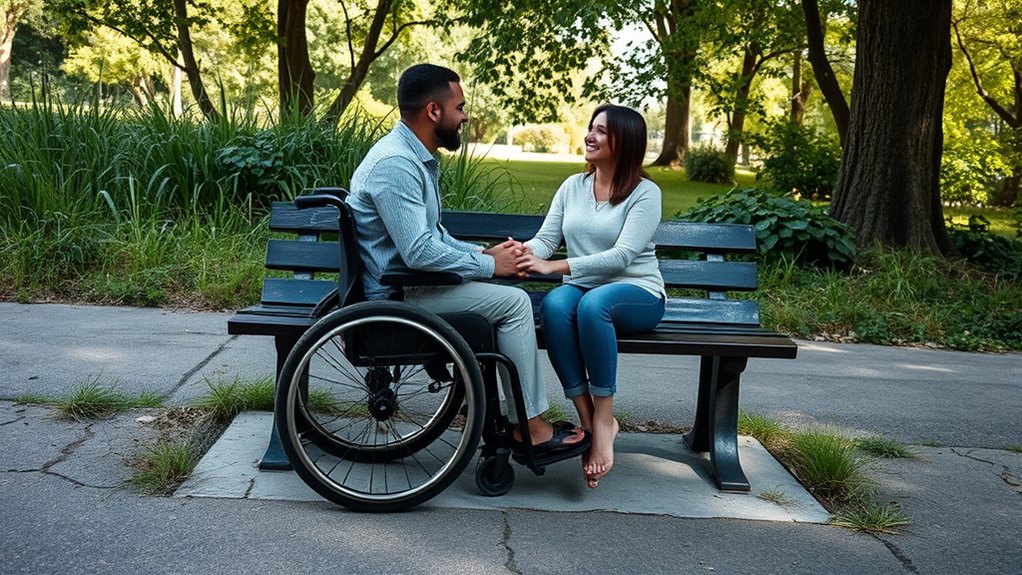
You’re likely to face challenges when traversing physical spaces that aren’t designed with accessibility in mind, from dating venues to transportation options.
Finding and using adaptive intimacy tools can require extra effort, but they play a vital role in enhancing connection.
Overcoming these barriers is essential to building and maintaining meaningful romantic relationships.
Navigating Physical Spaces
Although many people take for granted the ease of moving through public spaces, you’ll quickly notice the challenges if buildings and transportation aren’t accessible.
Physical barriers can limit your ability to enjoy romantic outings or spontaneous moments with your partner. Inaccessible venues often require extra planning and modifications, which can strain relationships and hinder inclusion.
To navigate these challenges, consider:
- Seeking community programs that promote accessibility and social inclusion.
- Choosing locations known for their physical accessibility.
- Advocating for improved accessibility in public spaces.
- Building a support network to help overcome physical barriers.
These steps can help you and your partner move freely, reducing isolation and strengthening your relationship despite widespread accessibility challenges.
Adaptive Intimacy Tools
When physical limitations affect intimacy, adaptive tools can make a significant difference in how you connect with your partner.
As a person with disabilities, you might face challenges with physical closeness due to accessibility barriers or lack of suitable equipment.
Adaptive intimacy tools like adjustable beds, transfer aids, or sensory devices help overcome these obstacles, making intimate moments safer and more comfortable.
These tools accommodate specific needs, enhancing your ability to engage fully in relationships.
Without universally designed spaces or assistive devices, intimacy can feel limited or frustrating.
By using adaptive intimacy tools, you empower yourself and your partner to build stronger emotional and physical bonds despite physical barriers.
This ultimately improves the quality of your romantic relationships and overall connection.
Transportation and Mobility
Because many transportation options lack accessibility, disabled people often face serious challenges getting around with a romantic partner.
These mobility barriers can limit your ability to enjoy spontaneous outings or attend social events together.
You might find that public transit systems aren’t equipped to meet your needs, making shared experiences harder to plan.
Structural obstacles like missing ramps or elevators can also block access to potential dating venues.
Here are some common transportation and mobility challenges you may encounter:
- Inaccessible public transit limits flexibility for dates.
- Few adapted vehicles available for private travel.
- Physical barriers at venues reduce accessibility.
- Transportation hurdles can cause social isolation.
These issues can make maintaining romantic relationships more difficult by restricting your freedom to connect and explore together.
Communication and Consent Challenges
Managing communication and consent can pose unique challenges in romantic relationships involving disabled individuals.
Navigating communication and consent requires thoughtful approaches in relationships involving disabled partners.
When you’re maneuvering relationships as a person with a disability or dating someone with a disability, communication might rely on alternative methods like assistive technology or non-verbal cues.
This can complicate expressing consent clearly.
People with disabilities often face misconceptions about their ability to make decisions, which can affect how consent is understood by one partner without disabilities.
You and your partner must include feeling safe and respected by using explicit, ongoing communication to ensure mutual understanding.
Recognizing social cues may be harder for some, so tailored strategies help both partners feel valued.
Balancing Independence and Support Needs
Although you may value your independence deeply, balancing support needs in a romantic relationship requires honest conversations and flexibility.
When you and your partner openly discuss caregiving roles and boundaries, you prevent misunderstandings and foster mutual respect.
About 20% of disabled college students feel unsure about how much support is appropriate, highlighting the importance of clear communication.
To balance independence and support, consider:
- Clarify which tasks you prefer to handle independently versus with assistance.
- Set boundaries to avoid power imbalances or feelings of dependency.
- Encourage your partner to understand your support needs without overstepping.
- Regularly revisit and adjust support expectations as your relationship evolves.
Overcoming Relationship Stereotypes and Biases
Finding the right balance between independence and support in your relationship is only part of the journey.
You also need to confront stereotypes that wrongly assume you lack romantic interest or the ability to form meaningful connections.
Society often views your relationships through a lens of charity or caregiving instead of mutual partnership, which can be frustrating and isolating.
These biases undermine your autonomy and ignore your genuine desires for love and intimacy.
To overcome this, you must actively challenge these myths and educate others about the reality of your experiences.
Promoting an inclusive understanding helps break down prejudices and affirms your right to pursue fulfilling, equal romantic relationships without being defined by stereotypes.
Frequently Asked Questions
What Are Common Challenges in Dating With a Disability?
You’ll often face social barriers and misconceptions about your needs.
Communication challenges can also arise, which adds another layer of complexity.
You might worry about rejection or how to disclose your disability.
Sometimes, others prioritize safety over your independence, making dating more complicated.
What Is the 70/30 Rule in a Relationship?
You know what they say, “It takes two to tango.”
The 70/30 rule means you and your partner share effort fairly—each giving about 70% over time to keep balance.
This approach helps avoid burnout and nurtures your connection.
How Does a Disability Affect a Relationship?
A disability can affect your relationship by requiring more communication, patience, and adaptability.
You might face physical or emotional barriers, but with understanding and support, you can build a strong, loving connection despite challenges.
How Do Disabilities Affect Intimacy?
Imagine steering a dance where every step feels different.
Disabilities can affect intimacy by altering touch, desire, or comfort.
You’ll need patience, open communication, and creativity to create connection despite physical or emotional hurdles.
Conclusion
You might think that love simply transcends all barriers, but the reality is more complex.
While society often assumes disability defines romantic potential, you know it’s not about limitations but understanding and respect.
Challenges like disclosure, accessibility, and consent require patience and open communication.
Remember, your worth isn’t diminished by stereotypes—it’s your unique connection that truly matters.
Love can thrive when you push past misconceptions and embrace both independence and support.
In conclusion, navigating romance as a disabled person involves tackling issues like communication and societal stereotypes.
It’s essential to foster understanding and respect in your relationships.
Ultimately, love is about the connection you share, not the limitations you face.
With patience and openness, meaningful relationships can flourish, proving that everyone deserves love, regardless of their challenges.