

How Can Felons Get Social Security Disability
You can still get Social Security disability benefits even if you have a felony conviction.
If your medical condition meets the SSA’s standards and you’ve paid enough into Social Security, you may qualify for assistance.
Your felony won’t automatically disqualify you. However, if you are incarcerated for over 30 days, your benefits may be paused.
Once you’re released, it’s important to notify the SSA to restart your payments.
Understanding how disability is defined and managing the application process carefully can significantly improve your chances of approval.
So, let’s explore further how to navigate these steps successfully.
Eligibility Criteria for Social Security Disability Benefits

Although having a felony conviction doesn’t automatically bar you from Social Security disability benefits, you still need to meet strict criteria.
A felony conviction alone won’t disqualify you from Social Security disability benefits.
To qualify, your medical condition must meet SSA’s severity and permanence standards.
Your work history matters too; you must have enough work credits paid into Social Security through payroll taxes.
If you’re applying for SSI, your income and resources must be minimal.
The application process reviews these factors carefully, regardless of any felony conviction or whether you’ve been confined in jail.
Keep in mind, benefits suspension can occur if certain impairments linked to your felony aren’t considered disabling.
Meeting these eligibility criteria guarantees your felony conviction won’t prevent you from accessing Social Security Disability or SSI benefits if you truly qualify based on your medical condition and work history.
Impact of Felony Convictions on Disability Claims

When you have a felony conviction, it doesn’t automatically prevent you from receiving Social Security disability benefits.
The only exception is if your disability resulted from the crime or your time in jail after October 19, 1980.
Felony convictions affect disability claims mainly when your impairment is directly linked to criminal activity or worsens during incarceration.
Benefits suspension occurs if you’re confined for more than 30 days, except when you participate in an approved rehabilitation program.
After your release, the reinstatement of benefits depends on your continued eligibility and proper reporting.
Keep in mind, your benefits eligibility hinges on the disability onset not being tied to the felony or jail time.
Understanding these nuances helps you navigate claims effectively, ensuring that your felony convictions don’t unfairly bar you from receiving the support you need.
Suspension and Reinstatement of Benefits During and After Incarceration
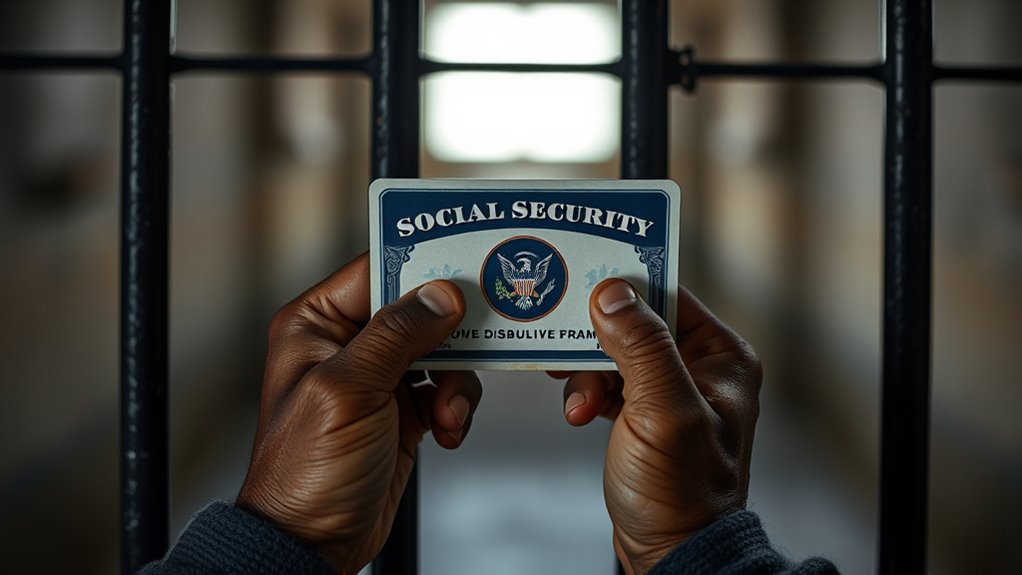
If you’re confined in jail or prison for more than 30 days due to a criminal conviction, your Social Security benefits will be suspended.
This applies to both disability benefits and SSI benefits, but keep in mind that SSI benefits will only suspend after 12 months.
To restart your benefits after you’re released, it’s important to report your prison release to the Social Security Administration.
The reinstatement process usually starts the month after your release, and you may need to provide proof of your release or update your status in person.
Participating in approved rehabilitation or work programs while incarcerated can help you maintain your benefits eligibility or make it easier to get your benefits reinstated.
Staying proactive with the SSA will help ensure you regain your benefits after release without needing to file a new application.
This way, you can resume your financial support promptly after incarceration.
Understanding Social Security’s Definition of Disability for Felons
Because Social Security bases disability eligibility on medical conditions and work ability rather than your criminal record, having a felony doesn’t automatically bar you from receiving disability benefits.
The SSA defines disability as the inability to perform your past work or adjust to other work due to medical conditions.
Even if you’re a felon, you can qualify if you meet these criteria.
However, if your impairment is related to your felony or confinement after October 19, 1980, it generally won’t count during confinement.
Benefits may face suspension if you’re incarcerated over 30 days, but you can reestablish eligibility after reentry.
The SSA carefully evaluates your medical evidence and work history, focusing on your disability, not your felony, to determine your benefits eligibility.
Legal Assistance and Navigating the Application Process
Though applying for Social Security Disability benefits can be challenging on its own, felons often face even more complexities that require expert legal assistance.
Managing the application process demands a clear understanding of eligibility criteria and proper documentation, which legal assistance can provide.
Disability attorneys help you manage benefit suspension issues and guide you through benefit reinstatement after incarceration.
They also support you during the appeals process if your disability claims are denied.
When seeking legal assistance, focus on:
- Understanding eligibility criteria specific to felons
- Ensuring accurate documentation for disability claims
- Addressing benefit suspension and reinstatement
- Navigating the appeals process with professional advocacy
Disability attorneys, like those at Ficek Law, PC, can considerably improve your chances of approval.
Frequently Asked Questions
Can a Convicted Felon Receive Social Security Disability?
Yes, you can receive Social Security Disability as a convicted felon if your disability existed before or isn’t related to your felony.
Benefits may pause during incarceration but usually restart once you’re released.
Conclusion
Even if you have a felony on your record, you can still qualify for Social Security Disability benefits.
You might worry that your conviction automatically disqualifies you, but that’s not true.
While incarceration can temporarily suspend benefits, they often resume once you’re released.
By understanding eligibility rules and seeking legal help, you can navigate the process successfully and get the support you deserve.
Don’t let a past mistake stop you from getting aid.
In conclusion, having a felony on your record does not prevent you from receiving Social Security Disability benefits.
It’s important to know that your benefits can resume after incarceration, and with the right guidance, you can effectively apply for the support you need.
Reach out for legal assistance to understand your eligibility and secure the help that can make a difference in your life. Don’t let your past define your future!