
Does VA Disability Count as Income for Child Support?
Yes, VA disability benefits usually count as income when calculating child support. Courts often include these benefits as part of your gross income because they reflect your ability to pay.
Federal laws protect VA benefits from garnishment, but they can still impact support amounts.
Sometimes, the VA can directly apportion payments for child support without court orders.
If you want to understand how this works and explore your enforcement options, keep scrolling for more details.
Legal Status of VA Disability Benefits in Child Support Cases
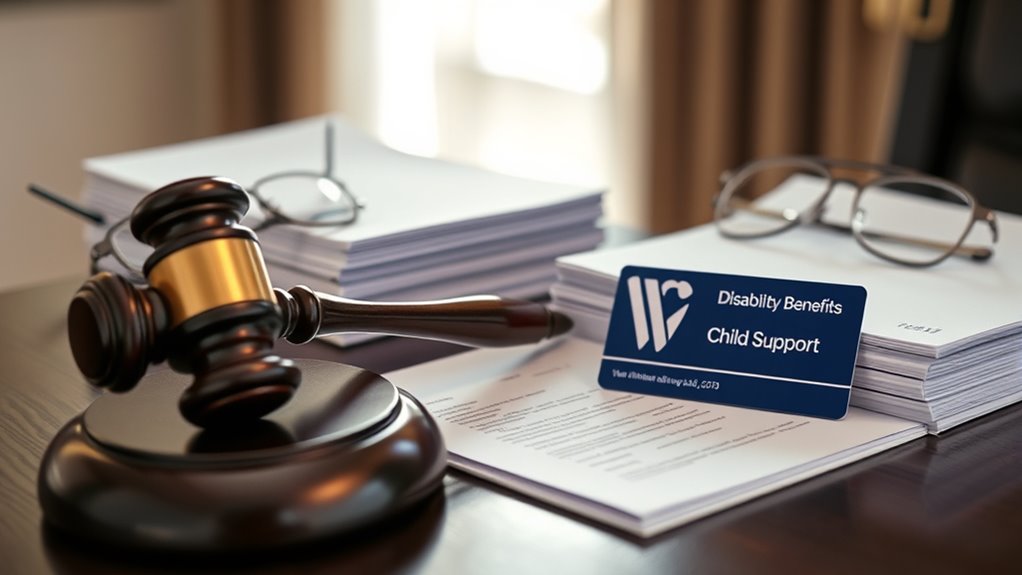
Although federal law protects VA disability benefits from seizure, courts still count them as income when calculating child support.
When you go through support calculations, the court often treats your VA disability benefits as part of your income.
Federal law (38 U.S.C. § 5301) exempts these benefits from attachment or levy, but it doesn’t prevent courts from including them in child support assessments.
Federal law protects benefits from seizure but allows courts to count them in child support calculations.
State law varies, yet many states follow this approach, considering VA disability payments—and sometimes dependent allowances—as income.
The Supreme Court’s ruling in Rose v. Rose confirmed that these benefits can factor into your child support obligations.
Knowing how your benefits influence support calculations helps you understand what the court expects when determining your financial responsibilities.
Court Precedents and Federal Regulations Impacting VA Benefits

Courts rely on key legal precedents and federal regulations to determine how VA disability benefits factor into child support cases.
The Supreme Court’s decision in Rose v. Rose established that VA disability benefits count as income in support calculations.
This is despite federal regulations under 38 U.S.C. § 5301 providing an income exemption that protects these benefits from seizure.
Family law across various states often includes VA benefits as part of a parent’s gross income for child support purposes.
Additionally, courts can order apportionment, allowing a portion of VA disability benefits to be withheld for child support.
These court precedents and federal regulations work together to balance protecting VA benefits from creditors while ensuring they’re fairly considered in family law support determinations.
How VA Disability Benefits Affect Child Support Calculations
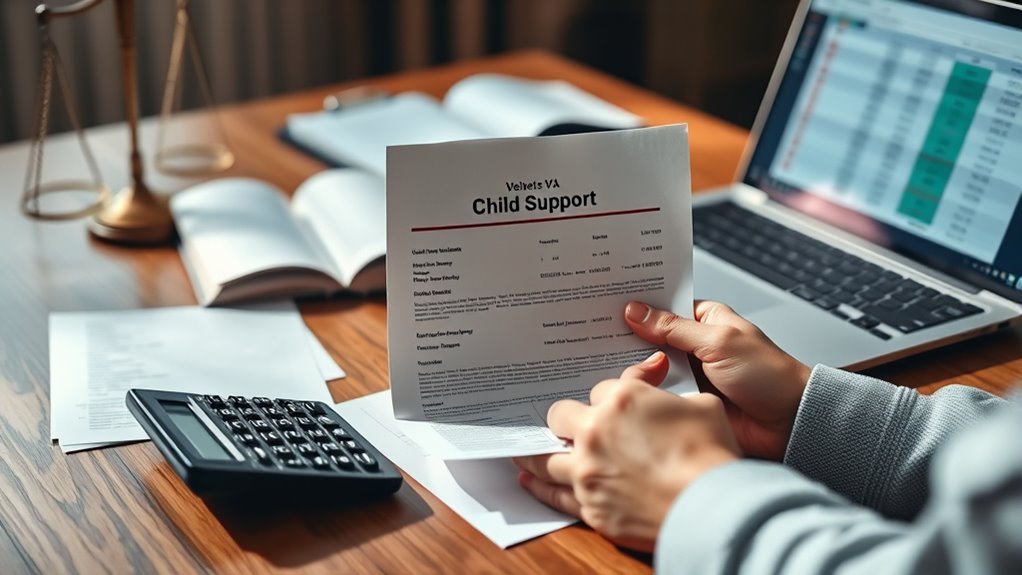
When calculating child support, courts usually count your VA disability benefits as part of your income.
This can increase your support obligation. However, how these benefits factor in can vary depending on your state’s laws.
Understanding these differences helps you know what to expect in your support calculations.
Inclusion in Income
How do VA disability benefits influence your child support obligations?
Courts generally consider VA disability benefits as income when calculating child support payments because they reflect your financial resources.
Whether your disability stems from service-connected reasons or not, these benefits often count as part of your gross income.
Many states include VA disability payments in their formulas, recognizing that these benefits contribute to your ability to support your children.
Federal rulings, like Rose v. Rose, have confirmed this approach, reinforcing that VA disability benefits can’t be ignored in court orders.
While some states might offer exceptions, most factor these payments in to avoid financial hardship on the child’s well-being.
Understanding how your VA disability benefits fit into your income helps you prepare for fair child support arrangements.
Impact on Support Amount
Understanding that VA disability benefits count as income sets the stage for seeing how they affect the actual child support amount you may owe.
Family courts include VA disability payments in the income calculation, which often raises your support amount.
Legal rulings like Rose v. Rose confirm that these benefits enhance your financial capacity and consequently influence your support obligations.
If your VA disability payments increase your gross income, family courts will likely factor them into determining child support.
While benefits garnishment isn’t typically allowed, the payments still impact what you’re expected to contribute.
State Law Variations
Although VA disability benefits provide essential financial support, their treatment in child support calculations varies considerably by state.
State laws differ on whether these benefits count as income, with some jurisdictions including them fully or partially.
Others apply an income exclusion due to federal protections.
For example, in states like Colorado and Illinois, VA disability benefits often factor into your gross income when setting a support order.
This is especially true if they boost your ability to pay.
Conversely, other states recognize federal protections that prevent these benefits from being garnished or seized.
This leads courts to exclude them entirely from child support calculations.
Ultimately, how VA disability benefits affect your child support depends on the specific statutes and court interpretations in your jurisdiction.
Garnishment Rules for VA Disability Benefits
You should know that VA disability benefits are generally protected from garnishment, but there are important exceptions if a court orders it or you waive certain rights.
Understanding when and how garnishment can apply is vital to managing your child support obligations.
Let’s explore the specific rules and limitations that affect your benefits.
Garnishment Limitations Explained
Even though VA disability benefits are designed to support veterans with service-connected disabilities, they aren’t always off-limits when it comes to child support garnishment.
VA disability benefits classified as non-earnings are generally safeguarded from garnishment under federal regulations. This means the VA won’t directly withhold these funds for child support.
However, if your benefits are considered earnings—especially when deposited into a bank account exceeding two months’ worth—they may be subject to garnishment by court order.
Garnishment limitations ensure only certain portions can be taken, protecting the bulk of your benefits.
These rules, outlined in 31 C.F.R. § 212, aim to balance your need for support while enforcing child support obligations.
Understanding these distinctions helps you know when your benefits are protected or potentially garnishable.
Court Orders and Exceptions
Understanding when VA disability benefits can be garnished requires examining court orders and legal exceptions.
Generally, VA disability benefits aren’t subject to garnishment for child support unless specific conditions apply.
If you’ve waived your military retired pay, court orders can authorize garnishment, allowing benefits deducted directly by the VA for support payments.
Without waiving retired pay, your VA benefits typically remain protected.
Federal law, like 42 U.S.C. § 659, enforces these rules, limiting garnishment to cases where retired pay is voluntarily waived or a court explicitly orders support deductions.
VA Apportionment Process for Child Support Enforcement
How does the VA apportionment process guarantee child support is properly allocated from veteran disability benefits?
The custodial parent can request a portion of VA disability through the apportionment process by submitting VA Form 21-0788, along with evidence showing financial need.
Unlike benefits garnished through a court order, the VA evaluates the veteran’s disability compensation, income, expenses, and the children’s needs before approving apportionment.
If approved, the VA distributes a designated part of the benefits directly to the custodial parent for child support.
The veteran has the right to object and can challenge decisions via hearings or appeals within the VA system.
This process assures child support is allocated fairly without fully garnishing VA disability benefits, balancing support for the children with the veteran’s circumstances.
Alternatives When VA Benefits Cannot Be Garnished
When VA disability benefits can’t be garnished directly, you still have options to secure child support.
One key alternative is apportionment, an administrative process within Veterans Benefits that allows a portion of VA disability payments to be redirected for child support.
To request apportionment, you submit VA Form 21-0788, outlining the need for support and demonstrating financial hardship.
The VA reviews the veteran’s income, expenses, and the child’s needs before deciding.
Unlike garnishment, apportionment doesn’t require a court order but depends on eligibility criteria.
If benefits cannot be garnished and the VA denies apportionment, you may need to explore other support enforcement methods outside the VA system to ensure consistent child support payments.
Frequently Asked Questions
Can VA Disability Benefits Be Increased Due to Child Support Obligations?
No, you can’t increase VA disability benefits because of child support obligations.
The VA sets your compensation based on your disability, not personal financial responsibilities like child support payments.
Do State Laws VAry on Counting VA Benefits as Income?
Think of VA benefits like a recipe ingredient—some states count it as income for child support, others don’t.
You’ll need to check your state’s laws because what counts in one kitchen might be excluded in another.
How Does Remarriage Affect VA Disability and Child Support?
When you remarry, your VA disability benefits usually remain unchanged.
However, your child support obligations might be reviewed.
Courts often consider your new financial situation, so expect possible adjustments depending on your income and custody arrangements.
Are VA Pension Benefits Treated Differently Than Disability Benefits?
You’d think VA pension benefits and disability benefits are worlds apart, and they kinda are!
VA pensions often count as income for child support, while disability benefits usually don’t.
But it varies by state and case specifics.
Can Veterans Negotiate Child Support Payments Based on VA Benefits?
Yes, you can negotiate child support payments considering your VA benefits, but it depends on state laws and courts.
Be sure to consult a family law attorney to help you present your VA benefits properly during negotiations.
Conclusion
You might assume VA disability benefits automatically count as income for child support, but the law draws a distinct line—like a fence separating a garden from the sidewalk.
While courts recognize these benefits protect your well-being, they also navigate complex rules on garnishment and apportionment.
So, as you balance obligations, remember VA benefits stand apart, not just as income but as a carefully guarded resource.
They are much like a quiet stream flowing beside a busy road.
In conclusion, VA disability benefits typically do not count as income for child support calculations.
Understanding this distinction can help you manage your financial responsibilities while ensuring that your benefits remain protected.
Always consult with a legal expert to navigate these waters effectively.