

How to Create Alternatives to Incarcerate Developmentally Disabled Adults
To create alternatives to incarcerate developmentally disabled adults, it’s essential to focus on understanding and supporting their unique needs.
Start by training justice and care professionals to recognize disabilities and communicate effectively.
Implement diversion programs and specialized courts that connect individuals to community supports instead of detention.
Building strong partnerships among law enforcement, social services, and healthcare is crucial to provide coordinated care and early intervention.
Advocating for policies that enforce disability rights is also key, as it helps expand community resources.
By exploring these strategies, we can uncover their real impact on the lives of developmentally disabled adults and create a more compassionate system.
Together, we can transform the approach towards those with developmental disabilities and provide them with the support they truly need.
Understanding the Unique Challenges Faced by Developmentally Disabled Adults in the Justice System
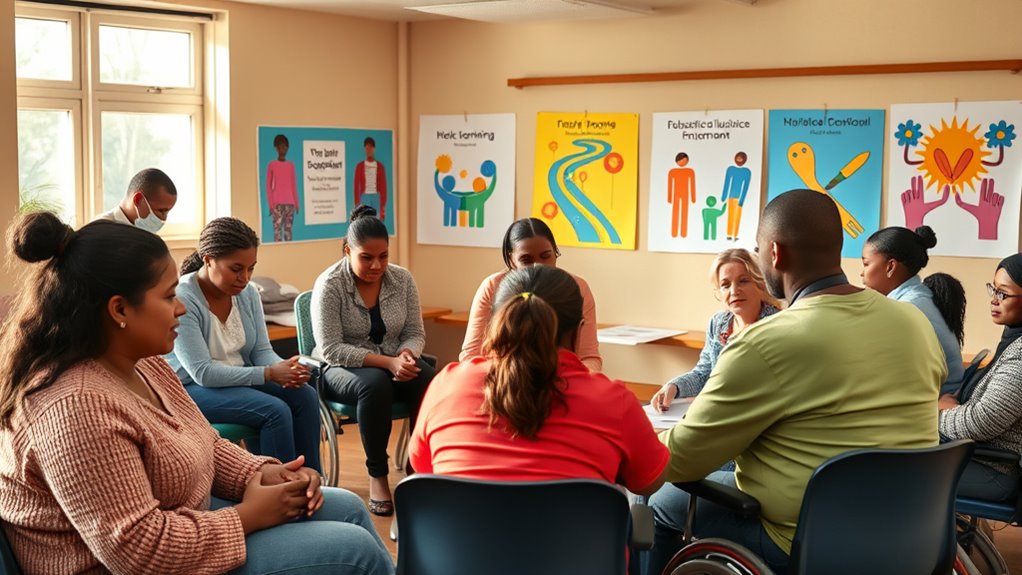
Although many people don’t realize it, developmentally disabled adults face unique and serious challenges in the justice system.
You might not see how impulse control issues or public outbursts, common among these adults, can lead to arrests for behaviors linked to their disabilities.
Unfortunately, miscommunication and lack of proper assessment tools often prevent accurate identification of disabilities, making it harder to provide alternatives to incarceration.
You should understand that developmentally disabled adults are disproportionately represented in incarceration, highlighting the need for disability justice.
Instead of traditional incarceration, crisis intervention and community-based programs with mental health services can offer more effective support.
Enhancing Education and Training for Legal and Care Professionals

Recognizing the unique challenges faced by developmentally disabled adults in the justice system is only the first step.
Understanding the unique challenges developmentally disabled adults face in the justice system is just the beginning.
You must prioritize ongoing training and professional development for legal and care professionals to address these needs effectively.
Incorporate evidence-based screening tools like the Hayes Ability Screening Index-Nonverbal to identify disabilities accurately.
Focus your education on ADA compliance and disability rights to guarantee legal obligations are met.
Enhance communication skills by teaching strategies such as allowing extra response time and using person-centered language.
Use case studies and real-world scenarios to help professionals recognize vulnerabilities and respond compassionately.
Regular refresher courses will keep your team updated on best practices, ensuring equitable treatment and better outcomes for developmentally disabled adults throughout the justice process.
Implementing Diversion and Specialized Court Programs

You can start by exploring how diversion program models use early screening tools to identify developmentally disabled adults and redirect them away from incarceration.
Then, consider the benefits specialized courts offer through tailored interventions that reduce recidivism and detention times.
Finally, focus on strategies for interagency collaboration that bring together mental health, social services, and legal teams to support these alternatives effectively.
Diversion Program Models
A growing number of justice systems have turned to specialized courts and diversion programs to better serve developmentally disabled adults.
Diversion programs, including mental health courts, use screening tools like the Hayes Ability Screening Index to identify these individuals early.
You’ll find that successful models involve collaboration across justice, mental health, and social services to create personalized plans emphasizing community-based supports.
Training staff in disability awareness, ADA compliance, and trauma-informed care is essential for proper case handling.
By focusing on treatment rather than incarceration, these programs aim for recidivism reduction and shorter jail stays.
When you implement such diversion initiatives, you help shift the justice system toward a more supportive, effective approach that respects the unique needs of developmentally disabled adults.
Specialized Court Benefits
When courts implement specialized programs for developmentally disabled adults, they tailor interventions that address unique needs while reducing recidivism and unnecessary jail time.
Specialized courts focus on accurate assessments and appropriate sentencing, ensuring fair treatment within the justice system.
By using diversion programs, these courts prioritize treatment and community-based services over incarceration, which leads to recidivism reduction and improved mental health outcomes.
You’ll find that individuals with developmental disabilities, who are often disproportionately represented in the justice system, benefit greatly from these tailored approaches.
Specialized courts help integrate participants back into the community more effectively than traditional sentencing, promoting long-term stability.
Implementing these court programs is essential if you want to create a more equitable and effective justice system for developmentally disabled adults.
Interagency Collaboration Strategies
How can different agencies work together to better support developmentally disabled adults in the justice system?
You can promote interagency collaboration by establishing formal partnerships among criminal justice agencies, mental health providers, and disability organizations.
These partnerships help coordinate diversion efforts, ensuring individuals receive community-based support instead of incarceration.
Developing specialized courts focused on developmental disabilities prioritizes treatment and tailored interventions.
To streamline connections, create referral protocols that allow law enforcement and courts to quickly link individuals to appropriate services.
Cross-training staff across agencies is essential so everyone recognizes disability-related needs and communicates effectively during diversion.
Finally, use data-sharing systems to monitor outcomes and improve collaboration continuously.
Building Community-Based Support and Intervention Services
Because community-based support services can address the unique needs of adults with developmental disabilities, they play a crucial role in preventing incarceration.
You can build specialized programs that combine mental health services and developmental disability care, ensuring individuals get the right help before crises arise.
Early identification through screening tools in community settings lets you intervene promptly, reducing justice system involvement.
Crisis intervention teams and collaborations with local organizations provide coordinated, culturally competent support tailored to each person.
Expanding social integration and employment opportunities also promotes stability, lowering reliance on detention.
Developing Comprehensive Resources for Disability Identification and Support
You need reliable tools like the Hayes Ability Screening Index-Nonverbal and RAPID to accurately identify developmental disabilities in justice settings.
Coordinating support services guarantees individuals get the accommodations and resources they deserve.
Disability Identification Tools
When justice-involved adults undergo intake or assessment, using validated screening tools like the Hayes Ability Screening Index-Nonverbal, Learning Disability Screening Questionnaire, and RAPID lets you quickly identify those who may have intellectual or developmental disabilities.
These disability identification tools take just 3 to 10 minutes to administer and fit seamlessly into assessment procedures.
By employing these screening instruments, you can distinguish developmental disabilities from other mental health issues. This ensures justice-involved adults receive tailored interventions and legal accommodations.
Accurate identification helps you refer individuals to specialized evaluations and community resources, reducing wrongful incarceration risks.
Embedding these tools in system protocols promotes consistency, enhances data collection, and drives systemic reform.
Implementing such vital resources is essential to creating alternatives to incarcerate adults with developmental disabilities effectively.
Support Service Coordination
How can justice systems better support developmentally disabled adults beyond identification?
You need strong support service coordination that connects individuals with community programs and disability response teams.
Start by establishing referral agreements with trusted organizations like The Arc.
Then, guarantee thorough resources include validated screening tools and ongoing intervention training for staff.
Focus on three key actions:
- Build partnerships with healthcare providers and advocacy groups to tailor services.
- Train justice system personnel to recognize disabilities and apply appropriate interventions.
- Collect and analyze data regularly to identify gaps and improve support networks.
Promoting Collaboration Among Mental Health, Social Services, and Law Enforcement
Although addressing the needs of developmentally disabled adults can be complex, promoting collaboration among mental health, social services, and law enforcement is essential for effective support.
You can establish formal partnerships that foster interagency coordination, ensuring law enforcement and mental health providers work seamlessly together.
Developing shared protocols and communication channels allows for smooth referrals and information exchange.
Shared protocols and clear communication enable efficient referrals and seamless information sharing among agencies.
Cross-training first responders equips them to recognize and properly assist individuals with developmental disabilities.
Creating community-based crisis response teams that include social service and mental health professionals helps divert these adults from incarceration.
By using data to identify system gaps, you can tailor crisis response strategies that prioritize treatment and support over detention.
Ultimately, this builds a more compassionate, coordinated approach focused on community-based services.
Advocating for Policy Reform and Disability Rights Protections
Since developmentally disabled adults face disproportionate incarceration rates, you must advocate for policy reforms that prioritize community-based alternatives and strengthen disability rights protections.
Focus on expanding mental health services and supported housing to reduce reliance on the criminal justice system.
Enforce legal protections like the ADA to guarantee accommodations and prevent unnecessary detention.
Promote specialized training for law enforcement and judicial personnel to better recognize and respond to developmental disabilities.
Frequently Asked Questions
Can a Mentally Disabled Person Be Charged With a Crime?
Yes, you can charge a mentally disabled person with a crime, but courts consider their understanding and capacity.
They might qualify for special evaluations, accommodations, or alternative sentencing instead of traditional incarceration.
This approach is in place to guarantee fair treatment.
What Are Some Alternatives to Incarceration?
You can use community-based diversion programs, specialized mental health courts, and crisis response teams.
Training law enforcement and expanding supported employment and housing also help provide alternatives to incarceration for developmentally disabled adults.
What Do They Do With Disabled People in Jail?
In jail, you often face miscommunication and lack of proper support.
Staff might not understand your needs, leading to mistreatment or solitary confinement.
This can worsen your condition instead of offering the help or accommodations you deserve.
What Would Be Considered an Alternative Correctional Institution?
An alternative correctional institution is a community-based facility focused on rehabilitation, offering specialized mental health and developmental support.
You’ll find person-centered care that emphasizes skill-building and social integration instead of punishment or incarceration.
Conclusion
You can’t put a square peg in a round hole when it comes to justice for developmentally disabled adults.
By improving education, creating specialized courts, and building strong community supports, you’ll help create alternatives to incarceration that truly suit their needs.
Working together across systems and pushing for policy changes ensures these individuals get the fair treatment they deserve.
Remember, change takes teamwork—and every step forward counts toward a more just future.
In conclusion, we must prioritize education and community support while establishing specialized courts to effectively address the needs of developmentally disabled adults.
By collaborating across different sectors and advocating for meaningful policy changes, we can create a justice system that offers fair treatment and viable alternatives to incarceration.
Let’s work together for a brighter future that respects and uplifts these individuals, ensuring they receive the support they deserve.