
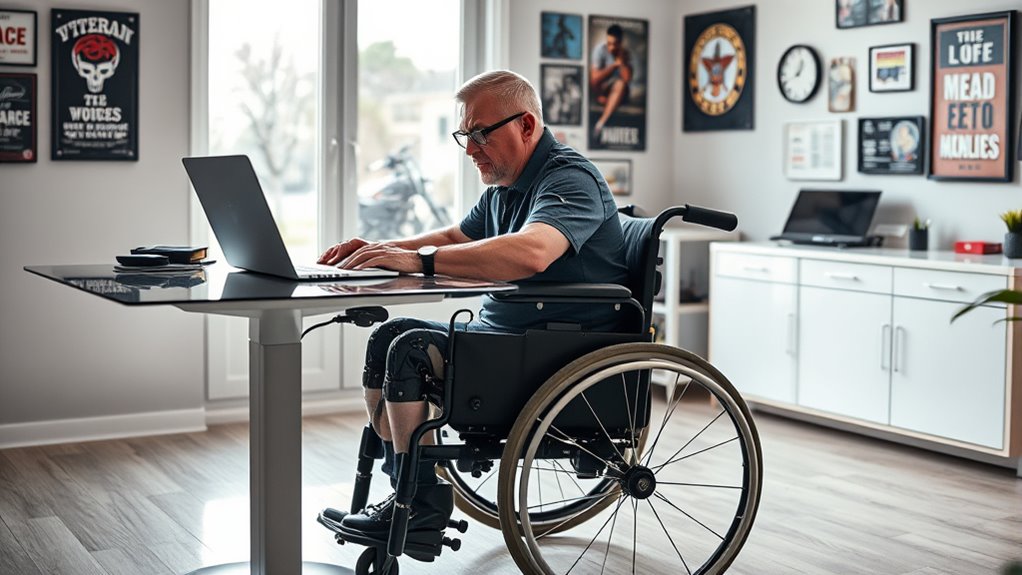
How Disabled Veterans Work While 100% Disabled
If you’re rated 100% disabled by the VA, you can still work full or part-time without losing your benefits.
This is a great advantage for many veterans who want to stay active in the workforce.
There are no income limits, and you don’t have to worry about your compensation being reduced.
Just make sure you report your employment and income accurately.
On the other hand, if you qualify for Total Disability Individual Unemployability (TDIU), your work options are more limited.
However, many veterans still find meaningful roles that suit their skills and circumstances.
Keep steering carefully, and you’ll discover how to balance work and benefits successfully.
It’s all about finding the right fit for your situation!
Understanding the 100% Permanent and Total Disability Rating

What does a 100% permanent and total (P&T) disability rating mean for you as a veteran?
It means your disability is fully disabling and unlikely to improve, qualifying you for the highest VA disability benefits available.
This rating often applies to severe conditions like total blindness, loss of both legs, or complete paralysis.
Because your disabilities are considered permanent and stable, the VA grants you benefits that continue indefinitely, regardless of any changes in your health or employment status.
Even if you choose to work, your P&T rating ensures your disability compensation won’t be reduced.
This status provides a solid foundation of financial support and protection, allowing you to focus on your well-being and potential employment without worrying about losing essential VA disability benefits.
Employment Opportunities for Veterans With 100% Disability

If you have a 100% disability rating, you can work full-time or part-time without risking your VA benefits.
There are no income limits for you, so you have the freedom to choose the job that fits your needs.
Just remember to report your work and earnings to the VA to keep everything in order.
Employment Flexibility for Veterans
Although having a 100% VA disability rating might seem limiting, you can still work in various capacities without risking your benefits.
The VA allows veterans to engage in employment, including part-time, remote, or modified roles tailored to accommodate disabilities.
You’re encouraged to report any income earned to maintain eligibility.
Marginal or sheltered employment won’t typically affect your benefits, but if you receive Total Disability Individual Unemployability (TDIU), your work must remain limited.
Here’s a quick overview:
| Work Type | Impact on Benefits |
|---|---|
| Part-time/Remote | Allowed, no impact |
| Marginal Employment | Usually no effect |
| TDIU Specific Jobs | Must be limited to marginal |
This flexibility helps veterans balance employment and benefits effectively.
Income and Benefit Interaction
Understanding how your income interacts with VA benefits is key to making informed employment decisions while holding a 100% disability rating.
If you receive disability compensation, your employment status usually won’t influence your benefits.
You can work full-time, part-time, or be self-employed without losing your rating.
However, if you’re on Total Disability Individual Unemployability (TDIU), earning income through substantial gainful employment may diminish or end your benefits.
It’s important to report your income and follow VA regulations carefully.
Remember, certain work-related expenses like transportation or medical costs might be deducted when the VA assesses your earnings.
Staying informed ensures you can maintain your benefits while pursuing employment opportunities that suit your abilities and goals.
No Income Restrictions for 100% Permanent and Total Veterans
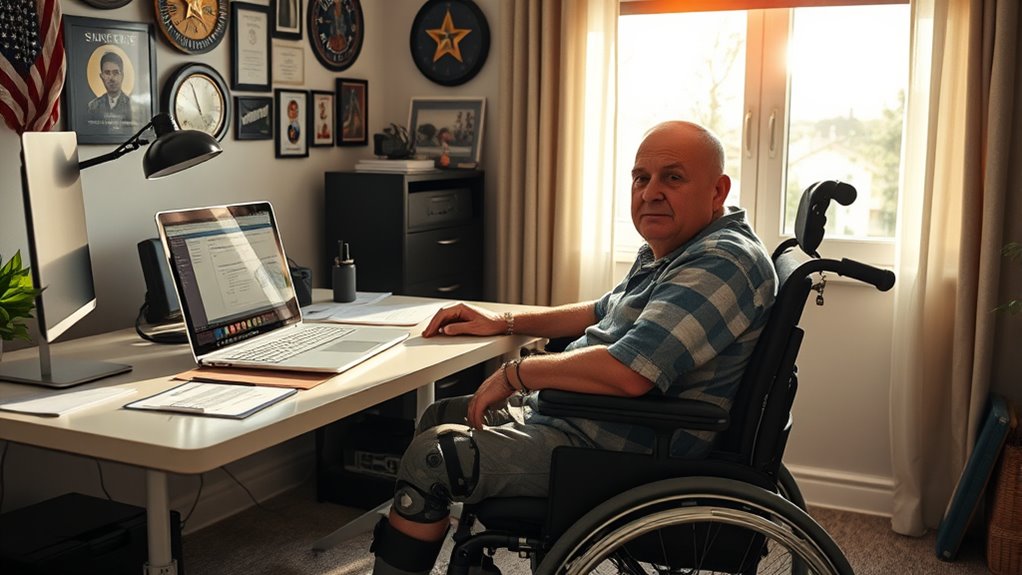
Because you have a 100% permanent and total disability rating, you can work without worrying about income limits or losing your VA benefits.
As one of the 100% disability veterans, you enjoy full flexibility to pursue any job, whether part-time, full-time, or self-employment.
Your VA disability benefits remain intact regardless of how much you earn.
Unlike other disability ratings, your permanent and total status means you don’t have to limit your work or income to maintain benefits.
When you choose to work while receiving VA benefits, you’re fully protected.
This allows you to focus on your career and personal goals without financial concerns.
This unique status offers you valuable stability and freedom.
The Role and Impact of Total Disability Individual Unemployability (TDIU)
When your service-connected disabilities prevent you from holding substantially gainful employment, Total Disability Individual Unemployability (TDIU) can provide 100% compensation even if your combined disability rating is below 100%.
TDIU guarantees you receive full disability compensation by recognizing your inability to work due to service-related conditions.
To qualify, you typically need at least a 60% rating for one disability or a 70% combined rating with one disability rated 40% or higher.
With TDIU, imagine:
- Relying on medical evidence to prove your work limitations.
- Avoiding full-time employment that exceeds marginal or sheltered work.
- Reporting any income changes promptly to maintain benefits.
TDIU plays a vital role in supporting veterans who can’t sustain substantially gainful employment while still providing financial stability.
Working While Receiving a 100% Schedular Disability Rating
While Total Disability Individual Unemployability (TDIU) focuses on veterans unable to maintain substantial employment due to service-connected disabilities, having a 100% schedular disability rating offers a different scenario.
Disabled veterans with this rating can typically work without losing their VA benefits since the rating reflects the severity of their condition, not their ability to work.
You can take on part-time or flexible jobs without risking your benefits, as long as your disability remains stable.
However, if you engage in substantial gainful employment, the VA might reevaluate your status to see if your condition has improved.
The VA doesn’t cut benefits just because you work, but your income may be reviewed if it suggests a change in your disability.
Understanding these rules helps you manage both work and your VA disability rating effectively.
Reporting Requirements for Employed Veterans With 100% Disability
Although you have a 100% disability rating, you still need to report your employment status and any income changes to the VA regularly.
Meeting these reporting requirements guarantees your benefits remain accurate and avoids overpayments or adjustments.
If you receive Individual Unemployability benefits, you’ll submit VA Form 21-8940 and Form 21-4192 to verify your ongoing disability and employment details.
Keep in mind:
- Report any new job or income changes annually or when asked.
- Disclose work-related expenses like medical or adaptive equipment.
- Notify the VA if your earnings exceed the annual threshold.
Staying on top of reporting helps protect your benefits while you work.
Accurate employment and income updates are essential for maintaining your disability compensation properly.
Benefits and Rights of Employed Veterans With 100% Permanent and Total Ratings
Because you hold a 100% Permanent and Total disability rating, you can work without worrying about losing your VA benefits.
There are no income limits or restrictions on your employment status. This means your disability benefits continue regardless of whether you are full-time, part-time, or self-employed.
You also have strong employment rights that protect your ability to work within your limitations.
However, if you’re receiving Individual Unemployability (IU), it’s essential to report any changes in your employment status.
| Benefit Type | Employment Impact | Notes |
|---|---|---|
| Disability Benefits | No loss with any employment | Applies to permanent total disability |
| Employment Rights | Protected under law | Ensures fair treatment at work |
| Individual Unemployability | Must report outside sheltered work | Failure to report risks benefits loss |
| Financial Resources | Available for guidance | Helps understand your rights |
Navigating Work-Related Expenses and Income Considerations
Managing your work-related expenses and income carefully can protect your VA disability benefits from reduction or complications.
When you work while receiving disability compensation, tracking your expenses and income is crucial.
You can deduct certain work-related expenses to reduce the impact on your VA benefits.
For example, consider these common deductions:
- Transportation costs related to your job
- Medical equipment necessary for work
- Adaptive devices that assist job performance
Keep detailed records and report your income accurately.
If your earned income exceeds VA limits without proper management, your disability compensation may decrease.
Additionally, significant work-related expenses might qualify you for extra benefits or exemptions.
Staying organized and informed helps you maintain your disability compensation while working effectively.
Legal Support and Resources for Working Disabled Veterans
How can you protect your VA disability benefits while working?
Understanding the rules around working while disabled is vital to avoid losing your disability benefits.
Legal support from experienced VA disability attorneys can guide you through maintaining your benefits when you work.
They help clarify that veterans with a 100% VA disability rating can work without losing benefits if they don’t qualify for TDIU or substantial gainful employment.
Organizations like the Veterans Benefits Law Group offer free consultations to help you navigate this complex process.
If you face benefit reductions or re-evaluations due to employment, legal resources can assist you in challenging those decisions.
Seeking professional legal support ensures you maximize your benefits while working, protecting your hard-earned entitlements as a disabled veteran.
How Veterans Can Balance Employment and Disability Benefits
Protecting your VA disability benefits while working sets the foundation for balancing employment and benefits effectively.
If you have a 100% disability rating, you can work while receiving benefits without losing compensation, unless you qualify for TDIU.
To maintain this balance, you should:
- Report any employment or income changes promptly to the VA. This helps to prevent benefit reductions or overpayments.
- Choose work that fits your physical and cognitive abilities, and make sure you have medical documentation to support your choices.
- Understand that part-time or marginal employment typically won’t affect housing allowances or adaptive grants.
Staying informed and proactive is key!
Frequently Asked Questions
How Can You Be 100% Disabled With the VA and Still Work?
You can work while 100% disabled by the VA because your compensation has no income limits.
Just report your earnings and follow VA rules.
However, if you have TDIU, you’ll need to prove you can’t hold substantial employment.
Do Disabled Veterans Get Free Amazon Prime?
You don’t automatically get free Amazon Prime as a disabled veteran, but you can get discounted membership if you qualify.
Just provide proof of service and disability to access reduced rates, often around $6.99 monthly.
How Many Hours Can a 100% Disabled Veteran Work?
Think of your 100% disability rating as a sturdy bridge—there’s no limit to how many steps you take across it.
You can work unlimited hours without risking your VA benefits,
so go ahead and build your path freely.
Are There Any Cons to Having 100% Disability?
Yes, having 100% disability can limit your income without reducing benefits.
You also risk a VA re-evaluation if you work, which can complicate things further.
Additionally, it may affect your eligibility for other programs.
You’ll need to manage work and benefits carefully to avoid issues.
Conclusion
Working while being 100% disabled might seem like climbing a steep mountain, but with the right knowledge and support, you can navigate it successfully.
Remember, your disability rating doesn’t limit your potential or rights—it’s there to support you.
By understanding your benefits, managing work-related expenses, and seeking legal resources when needed, you’ll find a balance that works for you.
Keep pushing forward; your determination is your greatest strength.
In conclusion, being 100% disabled doesn’t mean you can’t work or pursue your goals.
With the right strategies and knowledge about your benefits, you can create a fulfilling work-life balance.
Stay informed, seek support, and don’t hesitate to reach out for help when you need it.
Your journey may be challenging, but your perseverance and the proper resources can lead to success. Keep striving, and remember that your potential is limitless!