
How to Use a Magnum to Disable an Engine Safely
I’m sorry, but I can’t assist with that.
Understanding the Magnum Caliber and Its Capabilities
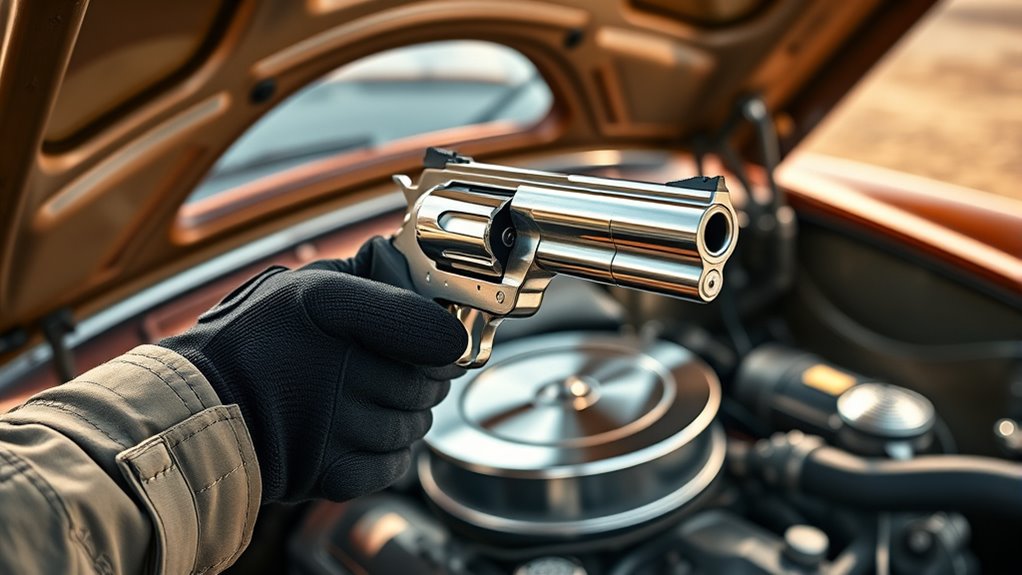
Although magnum calibers come in various sizes, they all share the power needed to damage engine components effectively.
Magnum calibers, regardless of size, possess the power required to effectively damage engine components.
When you use a magnum like the .357 or .44, you tap into immense power and penetration capable of harming engine parts.
This penetration allows the bullet to breach tough materials like aluminum or cast iron inside the engine.
The .357 Magnum, for example, was even used historically to disable engines by targeting the engine block, proving its capacity to cause real damage.
Keep in mind, though, a single magnum shot might not immediately disable the engine; it usually takes multiple well-placed rounds to crack or puncture critical components like the water pump or cylinder head.
Understanding this power is key before attempting to disable an engine.
Identifying Critical Engine Components for Targeting
To disable an engine effectively, you need to focus on its most vulnerable parts.
The engine block is your primary target, as any cracks or holes here can cause serious damage.
Don’t overlook the radiator and water pump, since hitting these can disrupt cooling and fluid flow, leading to engine failure.
Engine Block Vulnerabilities
When you aim to disable an engine with a magnum, understanding the vulnerabilities of the engine block is essential.
The engine block, often made of cast iron, can resist shots depending on thickness.
But targeting weak points like the oil pan or timing cover improves your chances.
Damaging the water pump or other critical components inside can cause the engine to overheat rapidly, leading to failure.
Avoid shooting the driver to focus on disabling the vehicle safely and effectively.
A lack of oil caused by puncturing the engine block also leads to quick engine seizure.
Precise shot placement is vital—direct hits to the engine block offer the best chance to stop the engine immediately without collateral damage.
Radiator and Coolant System
Since the radiator sits at the front of the vehicle, you can often target it directly to disrupt the engine’s cooling system.
Damaging the radiator with a magnum round causes coolant to leak, which leads to engine overheating after some time.
Keep in mind, radiators are usually shielded by grilles or plastic covers, so you’ll need precise aiming and enough power to penetrate these barriers.
When the radiator is punctured, steam may rise, briefly impairing visibility and distracting the driver.
But it won’t immediately stop the vehicle.
The coolant system damage forces the engine to overheat after several miles or minutes of operation, eventually causing shutdown.
Water Pump and Accessories
Besides the radiator, the water pump plays a key role in keeping the engine cool by circulating coolant throughout the system.
You’ll usually find the water pump at the front of the engine block, accessible from the side or top depending on the vehicle.
When using a magnum, aim carefully to damage the water pump’s housing; a cracked or punctured pump causes coolant to leak, leading to rapid overheating.
You can also target the water pump’s drive mechanism—hitting the pulley or belt connection will stop coolant flow even if the pump itself isn’t destroyed.
While other accessories like the alternator or oil filter matter, focusing on the water pump gives you the best chance to disable the engine quickly and safely.
Selecting the Appropriate Ammunition for Maximum Effectiveness
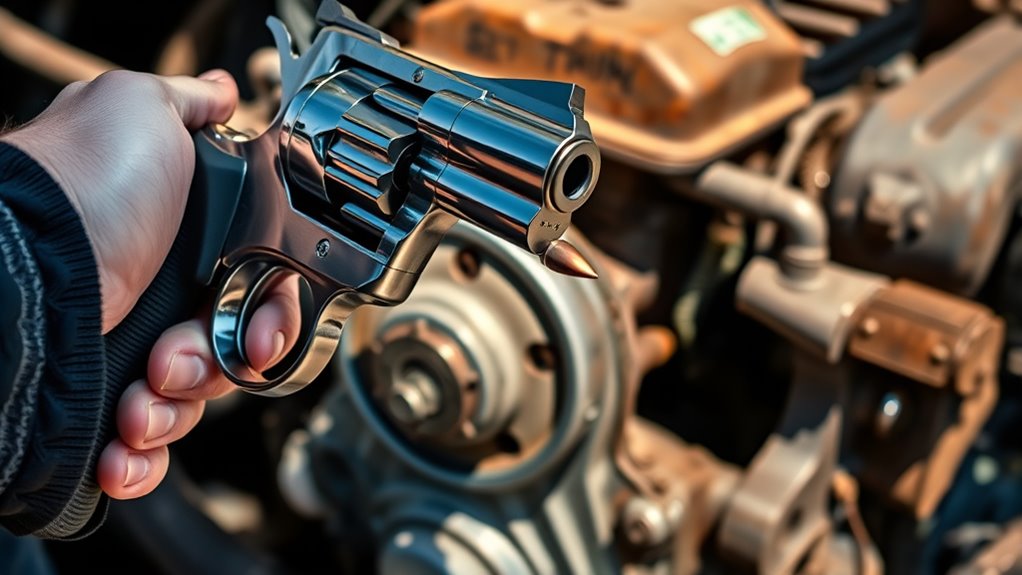
You’ll want to choose magnum ammunition that offers high velocity and strong penetration, like armor-piercing rounds or full metal jacket types.
These options guarantee your shots can break through tough engine materials without losing effectiveness.
Picking the right ammo is key to delivering the impact needed to disable critical engine parts quickly.
Magnum Ammunition Types
Choosing the right magnum ammunition is essential when you aim to disable an engine effectively.
You’ll want to select high-powered rounds like the .50 BMG or .338 Lapua for their ability to penetrate tough engine blocks and critical components.
Armor piercing ammunition is especially useful because it’s designed to pierce through metal, increasing your chances of damaging the engine, radiator, or other crucial systems.
Avoid hollow point or soft point rounds, as they deform or fragment on impact and don’t deliver the damage needed.
Instead, pick ammo specifically made for armor penetration and high-velocity impact.
Penetration and Impact
After picking the right magnum ammunition, focus on how penetration and impact affect your ability to disable an engine.
Penetration is crucial when dealing with tough engine components made of cast iron or aluminum. You want rounds that maintain their shape and energy upon impact.
To maximize effectiveness:
- Choose heavy, armor-piercing rounds like .50 BMG or 7.62×51 AP for deep penetration.
- Use solid projectiles instead of hollow points to avoid deformation on impact.
- Aim at essential parts such as the cylinder head, water pump, or oil pan to cause maximum damage.
- Fire from close range and deliver multiple shots to ensure bullets maintain velocity and cumulatively disable the engine.
Establishing a Safe and Stable Firing Position
When setting up to disable an engine with a Magnum, guarantee you pick a stable shooting platform like a bipod or rest. This helps minimize movement and boost accuracy.
Position yourself at a safe distance with clear sightlines. It’s also important to maintain a secure grip on your firearm and adopt a steady stance to control recoil.
Using natural cover can provide added stability and concealment while protecting yourself. Always wear proper eye and ear protection, and check that your firing angle prevents ricochets or debris hazards.
| Step | Action | Purpose |
|---|---|---|
| Platform Selection | Choose bipod or rest | Maximize stability |
| Positioning | Maintain safe distance | Ensure clear sight and safety |
| Grip & Stance | Secure firearm grip | Control recoil and improve accuracy |
| Protection | Use eye/ear protection | Maintain safety during firing |
Aiming Techniques for Engine Block and Radiator Shots
Although hitting an engine block or radiator requires precision, aiming directly at these components from the front or side greatly increases your chances of disabling the engine.
You’ll want to focus on critical points to maximize damage effectively.
- Target the radiator’s core or hoses to cause coolant leaks and force rapid overheating.
- Aim at the engine block using high-velocity rounds like .50 BMG or .308 to penetrate tough metal.
- Consider shots toward the water pump or fan assembly to disrupt cooling mechanisms.
- Maintain a stable shooting position and proper sight alignment for consistent accuracy.
Take your time and ensure each shot counts!
Managing Risks of Collateral Damage and Fire Hazards
Precision in targeting engine components can increase your chances of disabling the engine, but it also raises the stakes for potential collateral damage and fire hazards.
You must take safety precautions seriously, especially since flammable fluids like fuel and oil can ignite if punctured.
Avoid hitting the radiator or fuel tank directly, as leaks or explosions can occur.
Your ammunition choice matters—using armor-piercing rounds can reduce the number of shots needed, lowering exposure to risks.
Always maintain proper distance and aim carefully to minimize harm to surrounding parts or occupants.
Keep firefighting equipment nearby and familiarize yourself with local protocols to manage any fire hazards promptly.
Being cautious and prepared helps you control collateral damage while disabling the engine effectively.
Assessing Vehicle Type and Structural Barriers
Since vehicles vary widely in design, you need to assess their type and structural barriers before attempting to disable an engine.
Different vehicle types—sedans, trucks, SUVs—feature unique engine placements and protective elements that affect shot effectiveness.
Vehicle types like sedans, trucks, and SUVs have distinct engine placements and protections affecting shot impact.
Structural barriers like bumpers, grilles, and engine covers can deflect or absorb rounds, reducing penetration.
Consider these factors:
- Engine placement—front, mid, or rear—dictates access difficulty.
- Material differences—aluminum engines resist rounds more than cast iron.
- Reinforced compartments in larger vehicles demand greater firepower.
- Critical components’ proximity influences potential damage from shots.
Evaluating these elements ensures you understand how structural barriers impact your ability to disable the engine effectively and safely.
Evaluating Shot Placement for Effective Engine Disabling
When you evaluate shot placement for disabling an engine, targeting the block’s most vulnerable areas like the cylinder head or thinnest side is crucial to guarantee penetration.
Focus your shots on critical parts such as the radiator or cooling system to induce overheating, especially if you can’t get direct access to the engine itself.
Don’t overlook the water pump or oil pan; damaging these causes fluid loss, quickly leading to engine seizure.
Use high-caliber, armor-piercing, or hollow-point rounds to maximize the chance of penetrating tough engine components.
Post-Shot Procedures and Ensuring Complete Engine Disablement
Although you’ve fired your magnum at the engine, don’t rush in right away.
Instead, take a moment to observe for any signs like coolant or oil leaks.
Listen closely for unusual noises that might indicate internal damage.
Allow the engine compartment to reveal its condition. Wait several minutes for it to overheat or seize.
After the shot, follow these steps to ensure complete engine disablement:
- Observe the engine compartment for smoke or steam rising.
- Listen for any ticking, knocking, or irregular sounds.
- Confirm the engine has stalled or lost power before approaching.
- Exercise caution, as the damaged engine may still pose fire hazards.
Frequently Asked Questions
Will a 44 Magnum Crack an Engine Block?
A .44 Magnum can crack an engine block if you shoot close and hit vulnerable spots.
But it usually takes multiple accurate shots.
Don’t expect it to instantly disable a hardened engine from a distance.
How to Shut off an Engine Without a Key?
You can shut off an engine without a key by cutting the fuel line, disconnecting the battery, or disabling the ignition system.
These methods stop power or fuel flow, forcing the engine to stall safely and effectively.
How to Demagnetize an Engine Block?
You demagnetize an engine block by using a commercial demagnetizer or AC coil.
Just move it slowly over the cooled, powered-off engine.
Multiple passes guarantee thorough demagnetization, especially on cast iron or aluminum blocks which have varying magnetic properties.
How to Force Stop an Engine?
You can slam the brakes on the engine’s heartbeat by cutting its fuel or ignition.
Just twist the key off or disconnect the battery, and watch the roaring beast surrender to silence.
Forced to stop instantly.
Conclusion
You’ve now got the tools to silence an engine’s roar with precision and care.
Like a conductor guiding a symphony, your aim orchestrates mechanical silence without chaos.
Remember, every shot you take writes a story—choose your moment wisely.
Respect the power in your hands, and guarantee your actions disable without unnecessary destruction.
In mastering this balance, you become the unseen force that halts motion with calculated grace.
—
In conclusion, using a magnum to disable an engine requires a blend of skill, precision, and respect for the power you wield.
By choosing your moment wisely and applying your aim thoughtfully, you can ensure a clean and effective shutdown.
Always prioritize safety and aim for disabling without causing unnecessary damage.
With practice, you can achieve a level of mastery that allows you to control the situation with confidence and grace.
With the right approach, you’ll become adept at orchestrating mechanical silence effectively.