

How Can I Sue My Employer for Not Accommodating My Disability?
If your employer won’t reasonably accommodate your disability, you have the right to take legal action under laws like the ADA.
Start by documenting all accommodation requests and their responses in writing.
Then, file a complaint with the EEOC or a state agency within set deadlines.
Gather medical records and evidence to build a strong case.
If necessary, you can sue after you receive a Right to Sue notice.
Understanding this process can help you protect your rights effectively.
Understanding Your Rights Under Disability Laws

You have clear protections under federal and state disability laws like the ADA and MHRA that prevent discrimination and require your employer to provide reasonable accommodations.
These laws cover physical or mental impairments that limit major life activities, even if episodic or temporary. Your employer must offer a reasonable accommodation unless it causes undue hardship based on their size and resources.
Denying accommodation without valid reason can lead to adverse employment actions, which counts as discrimination.
You have strong employment rights to a workplace free from such bias.
If your employer ignores these obligations, you can file a complaint with the EEOC or a state agency.
Pursuing legal action is an option if they violate disability laws by refusing a reasonable accommodation or retaliating against you.
Documenting Accommodation Requests and Employer Responses

Although requesting accommodations can feel intimidating, documenting every step thoroughly is essential to protect your rights.
Always submit accommodation requests in writing and keep copies of all communication records.
If your employer denies or ignores your request, ask for a written explanation to add to your documentation.
Collect medical records supporting your need and organize everything carefully.
Proper documentation serves as vital legal evidence under the ADA in cases of disability discrimination.
| What to Document | Why It Matters |
|---|---|
| Written accommodation requests | Creates a clear communication trail |
| Employer responses | Shows acceptance or denial |
| Medical records | Supports your accommodation need |
| Communication records | Tracks all interactions |
Keeping detailed, organized documentation strengthens your case if you pursue legal action.
Filing a Complaint With the EEOC or State Agencies
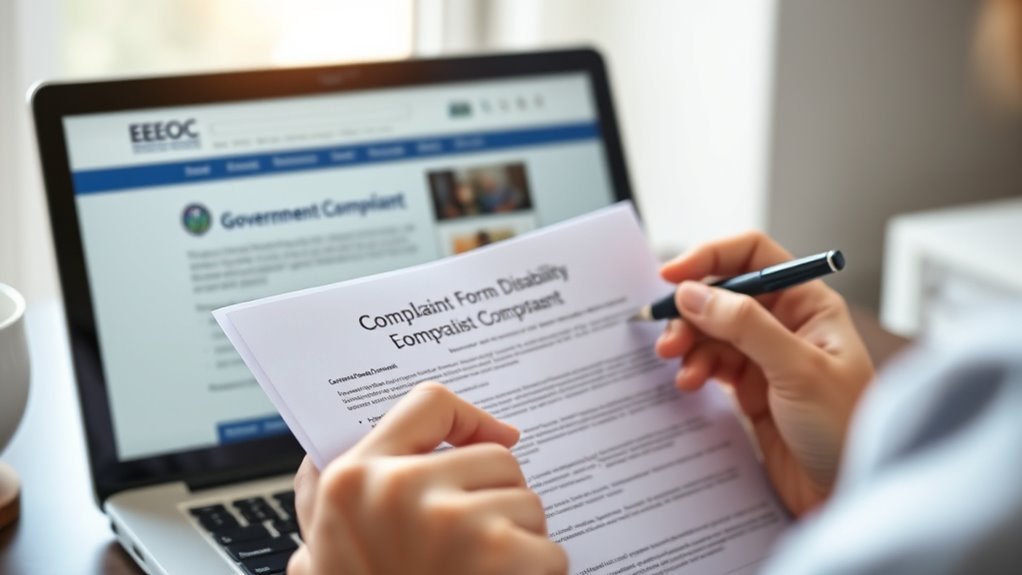
How do you take formal action when your employer denies your disability accommodation?
Start by filing a complaint with the EEOC within 180 days of the adverse employment action—or up to 300 days if a local agency is involved.
Begin by filing a complaint with the EEOC within 180 days of the adverse action.
You can submit an ADA complaint form online or by mail to the U.S. Department of Justice for other disability discrimination issues.
The complaint process accepts multiple languages, making it accessible.
After filing, the EEOC or local agency typically responds within three months.
They may launch an investigation or mediation.
Once the agency finishes, you’ll receive a right to sue notice, which gives you 90 days to file a discrimination lawsuit.
Acting promptly is crucial to ensure your claim about denied reasonable accommodations is formally addressed.
It also helps preserve your legal rights.
Building a Strong Disability Discrimination Case
When building a strong disability discrimination case, gathering thorough and organized evidence plays a crucial role in proving your employer’s wrongful actions.
Start by collecting written records of your accommodation requests and your employer’s responses, including any denial notices.
Medical documentation from your healthcare provider is essential to detail your disability, limitations, and recommended reasonable accommodations.
Keep detailed logs of incidents and obtain witness statements from coworkers who observed discrimination or the denial of accommodations.
Save all correspondence and meeting notes showing your qualifications and any adverse treatment.
Understanding your legal rights under the Americans with Disabilities Act helps you identify when your employer unjustly claims undue hardship.
Effective evidence collection strengthens your discrimination case and supports filing a complaint, ensuring you have a solid foundation to challenge disability discrimination.
Legal Remedies and What to Expect in Court
If your employer hasn’t provided reasonable accommodations, you can pursue legal remedies that may include compensation for lost wages, emotional distress, and even punitive damages.
To succeed, gather medical documentation, correspondence requesting accommodations, and proof of adverse employment actions.
Collect medical records, accommodation requests, and evidence of workplace retaliation to build a strong legal case.
The legal process starts by filing a complaint within 90 days of receiving a Right to Sue notice from the EEOC or a state agency.
In court, you can seek damages for discrimination and enforcement of employer obligations.
Court remedies may compel your employer to implement accommodations, reinstate you, or pay monetary compensation.
Additionally, prevailing parties often recover attorney’s fees and costs, promoting fair treatment and compliance with disability laws.
Understanding these steps helps you navigate the fight for your rights effectively.
Frequently Asked Questions
What Happens if an Employer Refuses an ADA Accommodation?
If your employer refuses an ADA accommodation without a valid reason, you should request a written explanation.
Document everything related to the situation, including dates, times, and conversations.
And know you can file a complaint with the EEOC or take legal action to protect your rights.
What Are Three Examples of Disability Discrimination?
You should know 1 in 4 people face disability discrimination.
Examples include denying promotions due to disability,
refusing reasonable accommodations like flexible schedules,
and creating a hostile workplace with offensive remarks about your disability.
What Is an Example of Failure to Accommodate?
An example of failure to accommodate is when you request a wheelchair ramp for accessible entry, but your employer refuses without a valid reason.
This neglect can harm your job performance and violate your rights.
What Is the Hardest Disability to Prove?
The hardest disability to prove?
It’s like convincing a cat to do your taxes—mental health issues and invisible disabilities like chronic pain or PTSD.
You’ll need solid, consistent medical proof to make your case stick.
Conclusion
Remember, about 1 in 4 adults in the U.S. lives with a disability, so your request for accommodation is both common and protected by law.
If your employer refuses to accommodate you, don’t hesitate to document everything.
Consider filing a complaint with the EEOC or a state agency.
Taking these steps strengthens your case and helps protect your rights.
You deserve a fair workplace that supports your needs.
In conclusion, it’s crucial to know your rights when seeking accommodations for your disability. Documenting your requests and employer responses is key.
If you encounter resistance, filing a complaint can be a powerful way to advocate for yourself.
Remember, you have the right to a supportive work environment, and taking action can help you achieve that.