Does COPD Qualify for Disability Benefits?
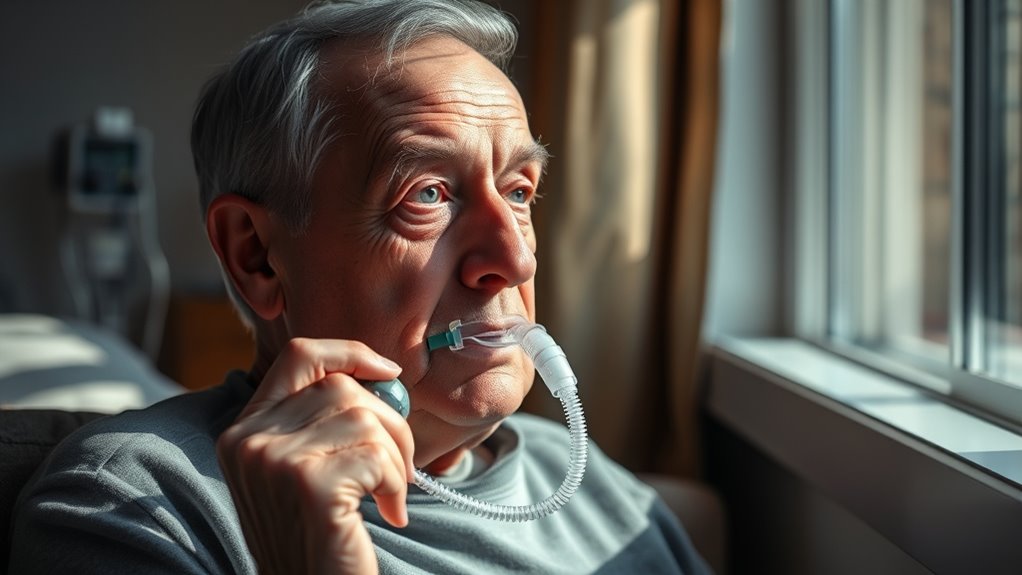
If your COPD (Chronic Obstructive Pulmonary Disease) severely limits your breathing and daily activities, you may qualify for disability benefits through Social Security.
To strengthen your claim, you’ll need medical evidence, such as spirometry tests that show reduced lung function.
It’s essential to prove that your condition lasts or will last at least a year.
Additional health issues can impact your claim, so thorough documentation is key.
With the right information and support, you can improve your chances of receiving benefits.
Keep exploring to understand what’s involved in the application process and how to navigate it effectively.
Understanding Chronic Obstructive Pulmonary Disease
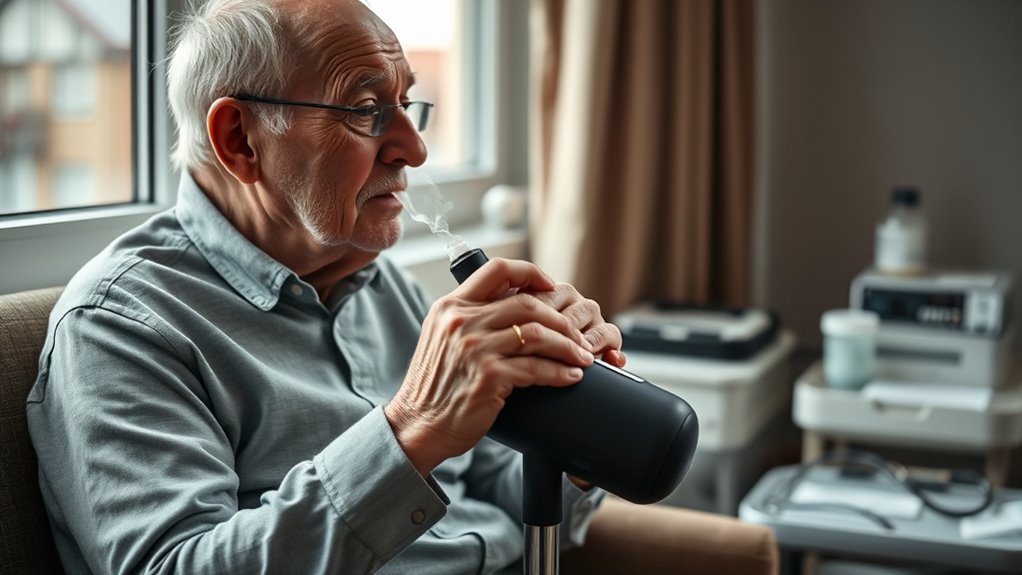
Although you might not realize it at first, Chronic Obstructive Pulmonary Disease (COPD) progressively blocks airflow in your lungs, making breathing increasingly difficult.
Chronic Obstructive Pulmonary Disease slowly obstructs lung airflow, causing breathing to become harder over time.
COPD includes emphysema and chronic bronchitis, both damaging your respiratory system.
To qualify for disability benefits through the SSA, you’ll need to meet specific medical criteria.
This often involves pulmonary function tests that assess how well your lungs work.
The SSA uses these results in the disability determination process to decide if your COPD markedly limits your ability to work.
Understanding COPD’s impact on your respiratory function is essential when applying for benefits.
Symptoms and Signs of COPD Affecting Work Capacity

If you have COPD, breathing difficulties like shortness of breath and wheezing can make physical work really challenging.
You might also notice signs such as rapid breathing or the need for supplemental oxygen, which limit your activity even more.
Recognizing these symptoms is key to understanding how COPD affects your ability to work.
Breathing Difficulties Impacting Work
Because COPD causes persistent shortness of breath, wheezing, and coughing, you may find it difficult to perform physical tasks required at work.
These respiratory limitations directly reduce your work capacity and complicate daily activities.
The signs of COPD, such as the use of accessory muscles and episodes of dyspnea, reveal compromised lung function that can worsen over time.
In some cases, oxygen dependence further restricts mobility and endurance.
You might experience:
- Shortness of breath during minimal exertion
- Difficulty sustaining physical activity due to respiratory limitations
- Reliance on supplemental oxygen impacting work hours
- Use of accessory muscles indicating increased breathing effort
These symptoms and signs play a vital role in your disability assessment, demonstrating how breathing difficulties hinder your ability to maintain employment.
Physical Symptoms Limiting Activity
The breathing difficulties you experience with COPD often come with a range of physical symptoms that limit your ability to stay active and work effectively.
Symptoms like shortness of breath, wheezing, and chronic cough create significant activity limitations that reduce your work capacity.
Pulmonary function tests, such as spirometry and DLCO, provide objective proof of impaired gas exchange and airflow restriction that worsen your respiratory symptoms.
Low oxygen saturation measured by pulse oximetry or arterial blood gases further decreases your endurance.
Medical documentation may also reveal accessory muscle use, tachypnea, or hemoptysis, showing the severity of your condition.
Additionally, chest pain, fatigue, and frequent respiratory infections can impair your ability to perform sustained or strenuous tasks, making it harder for you to maintain consistent work.
Social Security Disability Insurance and Supplemental Security Income Overview

If your COPD severely limits your ability to work, you might qualify for Social Security Disability Insurance (SSDI) or Supplemental Security Income (SSI).
Both programs require clear medical proof showing how your lung condition affects your daily functioning.
Understanding the basic eligibility criteria will help you navigate the application process more effectively.
SSDI and SSI Basics
How do you qualify for disability benefits when living with COPD?
The Social Security Administration offers two main programs: SSDI and SSI.
SSDI supports those with enough work credits who’ve paid into Social Security, while SSI helps individuals with limited income regardless of work history.
To qualify, you need strong medical evidence showing that your lung disease severely limits your daily function.
Key points include:
- Listing 3.02 covers respiratory disorders, including severe COPD.
- Documentation of pulmonary function tests is essential.
- You need to demonstrate functional limitations that prevent substantial gainful activity.
- Your disability must last or be expected to last at least 12 months.
Both SSDI and SSI rely on thorough medical records to confirm your eligibility for disability benefits.
Eligibility Criteria Overview
Qualifying for SSDI or SSI with COPD depends on meeting specific criteria set by the Social Security Administration.
To get disability benefits, your COPD must meet the severity outlined in SSA’s Listing 3.02 or show work limitations equal to that listing.
Medical evidence, including spirometry, DLCO, ABG tests, and imaging, must document your lung function and airflow obstruction.
If you’ve had three hospitalizations within a year or need ventilatory support, you may automatically qualify.
Even if you don’t meet listing 3.02 exactly, proving that your impairment equals its severity can suffice.
The SSA bases eligibility on the qualifying criteria, the extent of your impairment, and thorough medical documentation.
Ensuring your records clearly reflect your condition is vital for approval.
Medical Criteria for COPD Disability Eligibility
Because the Social Security Administration (SSA) requires clear medical evidence, you’ll need detailed pulmonary function tests, imaging results, and blood gas analyses to prove your COPD meets their disability criteria.
The key medical criteria focus on demonstrating severe respiratory impairment through objective measures.
Specifically, spirometry must show FEV1 or FVC below certain thresholds, indicating significant reduced lung capacity.
Additionally, your records should document:
- Repeated hospitalizations or oxygen dependence
- Use of ventilatory support if applicable
- Clinical signs like persistent cough, sputum, and use of accessory muscles
- Imaging results confirming COPD and related complications
Meeting these criteria confirms your COPD severity under SSA’s disability guidelines.
This gives you a stronger case for benefits eligibility.
The Role of Pulmonary Function and Gas Exchange Tests
Although pulmonary function and gas exchange tests may seem technical, they play an essential role in proving the severity of your COPD.
Pulmonary function tests, especially spirometry, measure airflow capacity, focusing on FEV1 to determine lung function decline.
Gas diffusion efficiency is assessed with the DLCO test, which reveals how well oxygen passes through your lungs.
Arterial blood gas analysis provides critical data on oxygen and carbon dioxide levels, highlighting respiratory impairment.
Additionally, oxygen saturation levels from pulse oximetry offer non-invasive insights into your oxygenation status during rest or activity.
The Social Security Administration relies on accurate interpretation of these tests to evaluate the extent of your respiratory impairment and decide if your COPD qualifies you for disability benefits.
Assessing Residual Functional Capacity in COPD Cases
Understanding your pulmonary function and gas exchange test results lays the groundwork for appraising your Residual Functional Capacity (RFC) in COPD cases.
Interpreting pulmonary function and gas exchange tests is essential for assessing RFC in COPD patients.
The Social Security Administration bases their disability evaluation on how much your COPD severity limits your physical abilities and breathing capacity.
Key components in evaluating RFC include:
- Reviewing pulmonary function tests like spirometry and DLCO to measure lung impairment.
- Evaluating oxygen dependence and exercise intolerance that affect daily tasks.
- Considering arterial blood gas (ABG) and pulse oximetry results to assess gas exchange efficiency.
- Determining how these factors restrict your ability to perform full-time work.
A restricted RFC reflecting diminished breathing capacity and lung impairment can strongly support your eligibility for disability benefits.
Impact of Additional Health Conditions on Disability Claims
When you have COPD alongside other health conditions like coronary artery disease or diabetes, these combined impairments can substantially affect your ability to work.
This can really strengthen your disability claim with the SSA.
The SSA evaluates how these comorbidities together create functional limitations that impact your daily activities and job performance.
Even if your COPD alone doesn’t meet the listing criteria, the presence of additional impairments can tip the balance during disability determination.
The SSA uses medical evidence to assess the severity of your combined impairments through the Listing of Medical Impairments or medical vocational rules.
Demonstrating how your multiple health issues interact gives you a stronger chance of qualifying for disability benefits.
The SSA evaluation focuses on overall work capacity rather than isolated conditions.
Navigating the Disability Application and Appeals Process
Proving how your COPD and related health issues limit your ability to work is just the beginning.
When you file a disability application, the SSA reviews medical evidence like spirometry, imaging, and blood gas tests to assess your impairment.
To strengthen your claim, gather thorough medical records and provider notes detailing your functional limitations and treatment history.
If your claim is denied, don’t give up—you can appeal within 60 days.
Just remember to submit additional medical testing and updated impairment evaluations.
Keep these tips in mind:
- Understand SSA criteria to tailor your documentation effectively.
- Submit complete and timely medical records and test results.
- Consider consulting a disability attorney for guidance through the appeals process.
- Prepare to provide detailed evidence of how COPD impacts your daily functioning.
Navigating the process carefully boosts your chance of approval.
Benefits of Legal Representation for COPD Disability Claims
Although applying for COPD disability benefits can feel overwhelming, having legal representation substantially boosts your chances of approval.
This is because they ensure your medical evidence meets SSA standards and fully reflects your condition.
Lawyers help gather thorough documentation like pulmonary function tests and physician opinions, which are essential for Social Security disability claims.
If your initial claim is denied—which happens in about 80% of cases—they guide you smoothly through the appeal process, including hearings before Administrative Law Judges.
Plus, you won’t pay legal fees unless you win benefits, making expert help risk-free.
| Benefit | Description | Impact |
|---|---|---|
| Medical Evidence Review | Ensures documentation meets SSA standards | Strengthens your claim |
| Appeals Support | Navigates the complex appeal process | Increases approval chances |
| No Upfront Fees | Pay only if benefits are awarded | Low financial risk |
Frequently Asked Questions
At What Stage of COPD Are You Considered Disabled?
You’re considered disabled at severe COPD stages when your lung function is critically low.
Symptoms like breathlessness limit daily tasks, and you can’t work full-time for 12+ months.
Often, you may need oxygen or ventilatory support.
What Benefits Can I Get if I Have COPD?
Like a lifeline in a storm, you can get monthly SSDI or SSI payments, help with medical costs,
and possibly supplemental oxygen support, easing financial stress while managing COPD’s daily challenges
and preserving your quality of life.
How Much Do You Get for COPD Disability?
You can get about $1,400 to $1,800 monthly through SSDI for COPD, or up to $914 from SSI.
Severe cases might bring $1,500 to $2,000, depending on your work history and disability level.
Can You Get SSI if You Have COPD?
Yes, you can get SSI if your COPD severely limits your work ability.
Over 15 million Americans have COPD, but to qualify, you’ll need strong medical proof showing your condition prevents substantial gainful activity for at least a year.
Conclusion
If your COPD severely limits your breathing and daily activities, you may qualify for disability benefits.
Imagine Sarah, who once loved hiking but now struggles to walk short distances without gasping for air.
She applied for Social Security Disability and, with the right medical evidence and legal help, finally received the support she needed.
Don’t hesitate to explore your options—you deserve assistance that helps you live with dignity despite COPD’s challenges.
If you’re facing similar difficulties, it’s important to know that you can seek help.
Disability benefits can provide you with the financial support you need to manage your condition.
With the right documentation and guidance, you can navigate the application process successfully.
Remember, you’re not alone in this journey, and there are resources available to help you cope with COPD.