Does Scoliosis Qualify for Disability Benefits
If your scoliosis leads to severe pain, mobility issues, or impacts your breathing and heart function for 12 months or more, you might qualify for disability benefits.
To support your claim, you’ll need medical evidence such as imaging and doctor statements that demonstrate how your limitations affect your ability to work and handle daily tasks.
The Social Security Administration evaluates spine disorders based on functional restrictions.
So, it’s crucial to keep your medical records detailed. Strong documentation can significantly boost your chances of receiving benefits.
Understanding these aspects can help you navigate your options for support. Don’t hesitate to reach out for assistance if you need it!
Understanding Scoliosis and Its Impact on Daily Life
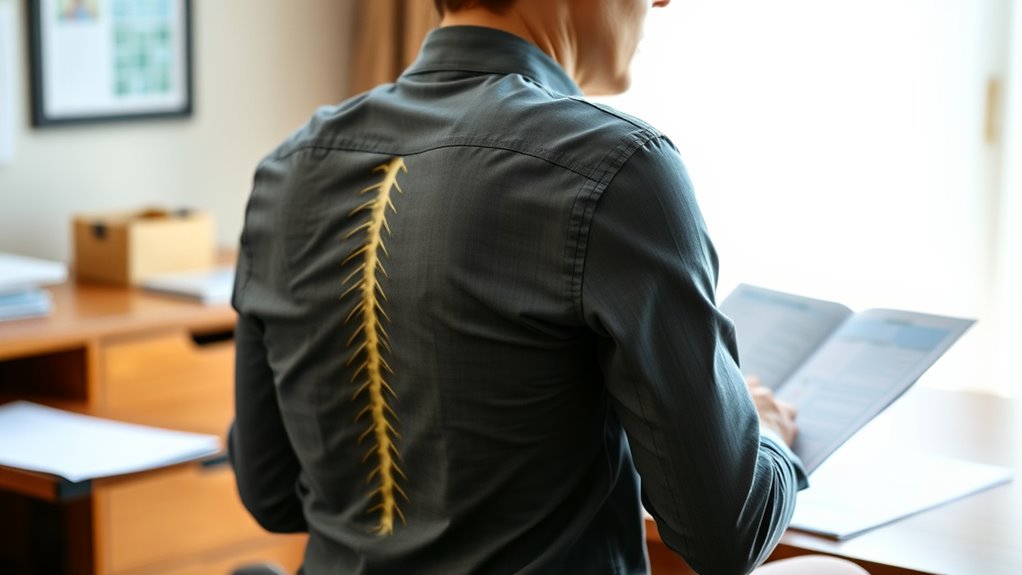
Although scoliosis often starts unnoticed, its abnormal sideways spine curvature can affect your daily life in many ways.
You might experience mild discomfort or no symptoms at all in early stages, but as scoliosis progresses, it can lead to significant medical issues.
Severe scoliosis may cause back pain, muscle weakness, and limit your mobility, making everyday tasks challenging.
In advanced cases, the spine’s abnormal curve can compress your lungs and heart, causing breathing difficulties and cardiovascular problems.
These complications can interfere with your ability to work or perform routine activities, potentially qualifying scoliosis as a disability.
Understanding the medical impact of scoliosis is essential, as it helps you recognize when the condition starts affecting your quality of life.
This awareness may indicate a need for medical intervention or consideration for disability benefits.
Criteria for Disability Under Social Security Administration
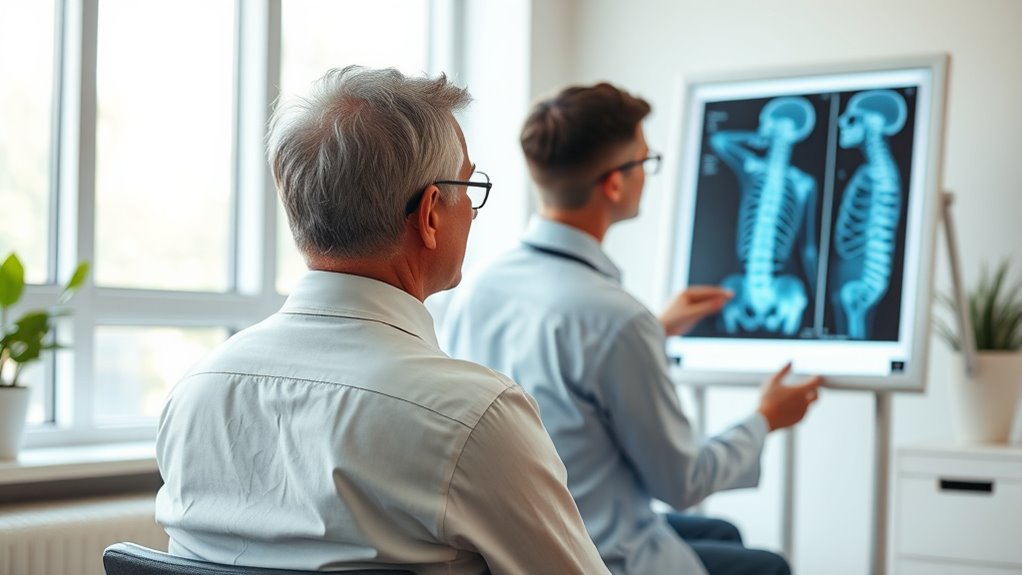
When your scoliosis causes significant limitations like nerve compression or restricted movement for at least 12 months, the Social Security Administration (SSA) may consider you disabled under their spine disorder criteria.
Although scoliosis isn’t listed specifically, the SSA evaluates your condition based on disability criteria related to spine disorders.
Scoliosis is assessed under spine disorder criteria despite not having a specific SSA listing.
To qualify, you must show functional limitations such as difficulty walking, breathing, or performing daily tasks.
Providing thorough medical evidence like X-rays, MRI scans, and detailed physician reports is essential to prove the severity of your scoliosis and its impact.
If your case involves nerve root damage or respiratory issues, you have a stronger chance of meeting SSA’s listing.
Even if you don’t meet the listing exactly, documented residual functional limitations can support a medical-vocational allowance.
How Scoliosis Can Affect Work Ability

Understanding how scoliosis affects your ability to work helps clarify why the Social Security Administration considers specific functional limitations when evaluating disability claims.
Severe scoliosis can limit your mobility, making tasks like bending, lifting, or standing for long periods challenging.
Chronic back pain and muscle weakness may reduce your concentration and physical stamina at work.
Advanced scoliosis can also cause respiratory and cardiovascular problems, lowering your endurance for both physical and mental activities.
If you rely on braces or walking aids, these can further restrict your movement and interfere with typical job duties.
Additionally, difficulty sitting for extended periods or needing frequent breaks can prevent consistent employment.
These challenges directly impact your work ability and form the basis for qualifying for disability benefits.
Medical Evidence Required for Disability Claims
To support your disability claim for scoliosis, you’ll need clear imaging like X-rays or MRIs that show the spinal curvature and its progression.
You should also provide detailed records from physical exams that highlight how the condition limits your movement and causes pain.
These documents help prove how scoliosis affects your daily function and work ability.
Imaging and Diagnostics
Since your scoliosis claim hinges on clear proof, medical imaging like X-rays, MRIs, or CT scans play an essential role in documenting the severity of your spinal curvature.
These imaging diagnostics confirm the degree of curvature—often measured by Cobb angles exceeding 40 degrees—which is fundamental for supporting your disability claim.
Imaging reports also help identify complications such as nerve root compression, spinal stenosis, or inflammation that worsen your condition.
Combined with physical exam notes, these diagnostics establish how scoliosis impacts your mobility, breathing, and overall health.
Regular imaging over time demonstrates the chronic nature and progression of your spinal curvature, strengthening your case for Social Security Administration eligibility.
Accurate, consistent imaging and diagnostics are indispensable to prove the extent and effects of your scoliosis.
Functional Limitations Documentation
Although imaging provides crucial proof of scoliosis severity, your disability claim also depends heavily on detailed documentation of how the condition limits your daily functioning.
Your medical records should include thorough physical exam notes describing functional limitations such as restricted mobility, persistent pain, muscle weakness, or difficulty maintaining posture.
Be sure to document how scoliosis impacts everyday activities like walking, standing, sitting, or lifting, as this evidence directly supports your claim.
Records of treatments—bracing, physical therapy, or surgeries—and your response to them further demonstrate ongoing impairment.
To meet Social Security Administration criteria, your medical records must show these functional limitations have lasted, or are expected to last, at least 12 months.
Clear, precise documentation of your functional limitations alongside imaging results strengthens your case substantially.
Navigating the Blue Book Listings for Spine Disorders
When you’re dealing with scoliosis and seeking disability benefits, understanding how the SSA evaluates spine disorders is essential.
The SSA doesn’t have a specific listing for scoliosis but reviews your condition under Section 1.04 of the Blue Book for spine disorders.
To qualify, your scoliosis must cause nerve root compression, spinal stenosis, or significant spinal motion limitations.
You’ll need strong medical evidence like X-rays, MRI reports, and physical exam findings to prove this.
The SSA also looks at how your scoliosis impacts your ability to walk, stand, or breathe.
If your condition doesn’t meet these strict criteria, don’t worry—you may still pursue benefits through a medical-vocational allowance based on your residual functional capacity.
Types of Disability Benefits Available for Scoliosis
If your scoliosis limits your ability to work, you might qualify for Social Security Disability Insurance (SSDI) or Supplemental Security Income (SSI).
These benefits depend on your work history and financial situation, so it’s important to look into them.
You should also check if your employer offers long-term disability benefits, as that could provide additional support.
Understanding these options helps you find the right benefits to manage your condition.
SSDI and SSI Options
How can you secure financial support if scoliosis severely impacts your daily life?
You might qualify for scoliosis disability benefits through SSDI or SSI.
SSDI provides benefits if you have a work history and your scoliosis causes significant impairment that prevents you from maintaining substantial gainful activity.
On the other hand, SSI offers need-based assistance regardless of work history, aimed at individuals with limited income and assets.
Both programs require strong medical evidence, including imaging and functional assessments, proving your scoliosis results in severe spinal curvature, nerve compression, or respiratory issues that limit your ability to work.
To apply, you’ll need to submit detailed medical records showcasing lasting functional limitations.
Understanding these options can help you pursue the right benefits tailored to your situation.
Employer Long-Term Disability
Beyond SSDI and SSI, employer long-term disability (LTD) insurance can offer another avenue for financial support if scoliosis hampers your ability to work.
To qualify for these disability benefits, you need to provide solid medical evidence showing scoliosis causes functional limitations lasting at least 12 months.
LTD policies usually require documentation of treatments like surgery, braces, or physical therapy. Your ability to perform job duties such as sitting, standing, or lifting will be assessed closely.
| Requirement | Description |
|---|---|
| Medical Evidence | Proof of scoliosis-related limitations |
| Duration | Symptoms lasting 12+ months |
| Treatment Records | Surgery, braces, PT, or assistive devices |
| Functional Impact | Effects on job tasks (sitting, lifting, etc.) |
| Healthcare Provider | Statement linking scoliosis to work incapacity |
Having detailed records boosts your chances of approval.
Legal Assistance and Resources for Disability Applications
What steps can you take to strengthen your scoliosis disability claim?
Seeking legal assistance from experienced disability attorneys is a smart move.
They help collect and submit strong medical evidence, like imaging and treatment records, which is essential for your disability application.
Many firms offer free consultations to assess your eligibility and build a solid case.
If your claim gets denied, legal representatives can manage appeals, ensuring all documentation is thorough and you’re properly represented at hearings.
Additionally, you can access resources such as websites, support groups, and non-profits that guide you through the disability application process.
Utilizing these legal and informational resources can greatly improve your chances of securing the benefits you deserve for scoliosis.
Frequently Asked Questions
What Degree of Scoliosis Qualifies for Disability?
You typically qualify for disability if your scoliosis curve measures 40 degrees or more and substantially limits your daily function.
Curves above 50 degrees often cause severe symptoms that meet disability criteria.
What Benefits Can I Get With Scoliosis?
You can get monthly cash benefits, plus access to Medicaid or Medicare if your scoliosis limits mobility or breathing.
The exact benefits depend on your condition’s severity and your financial or work history.
How to File for Disability for Scoliosis?
Wondering how to file for disability with scoliosis?
Start by gathering detailed medical records.
Then complete the SSA application, clearly explaining your limitations.
Don’t forget to consult an attorney—they’ll help you navigate this complex process smoothly.
What Spinal Conditions Automatically Qualify for Disability?
You automatically qualify for disability if you have spinal cord injuries, complete paralysis, or severe spinal stenosis with neurological deficits.
Permanent spinal fractures and ankylosing spondylitis causing complete spine fusion and major mobility limitations also qualify you for disability.
Conclusion
If you’re wondering whether scoliosis qualifies for disability benefits, know that it can—especially if it severely limits your ability to work.
Did you know the Social Security Administration awards disability in about 40% of spine-related cases?
That shows how seriously they take these conditions when supported by strong medical evidence.
So, gather your records carefully, understand the criteria, and consider getting legal help to improve your chances of approval.
In conclusion, scoliosis can qualify for disability benefits if it significantly hinders your daily activities and ability to work.
Make sure to compile comprehensive medical records and familiarize yourself with the necessary criteria for a strong application.
Seeking legal assistance can also enhance your probability of approval, as the process can be intricate.
Taking these steps can make a big difference in securing the benefits you need.