

How Long Does a Disability Appeal Take Step by Step
You’re looking at several stages with varying timelines for a disability appeal. Understanding the process can help you manage your expectations and prepare accordingly.
Your initial application decision usually takes about 3 to 5 months. If your application is denied, the reconsideration stage can add another 3 to 9 months to the timeline.
Next, a hearing by an Administrative Law Judge might take anywhere from 7 months to over a year due to backlogs in the system.
If you need to pursue an Appeals Council review, that can stretch from 6 to 12 months.
Finally, if you find yourself in federal court, be prepared for a lengthy process that often lasts 12 to 24 months or even longer.
Keep going to get the full picture and tips to navigate each step.
Initial Application Review and Decision Timeline

How long does it take to get a decision on your initial disability application?
Typically, the Social Security Administration (SSA) completes the review within 3 to 5 months.
The Social Security Administration usually takes about 3 to 5 months to complete an initial disability review.
However, the decision timeline can vary widely—some applicants get decisions in as little as 30 days, while others wait over 7 months.
Your processing time largely depends on the complexity of your medical evidence and the completeness of your initial application.
If your case is straightforward and well-documented, the SSA can move through the decision process faster.
Keep in mind, the SSA workload and staffing levels also impact how quickly your application is reviewed.
Understanding this will help you navigate the disability appeal process more effectively if your initial application is denied.
Reconsideration Stage Duration and Process

Although waiting can be frustrating, the reconsideration stage usually takes between 3 to 9 months for the SSA to reach a decision.
During this time, a different examiner reviews your disability claim and all medical evidence to guarantee a thorough adjudication.
To start this appeal process, you must submit a formal appeal request, often using SSA form SSA-561-U2.
Keep in mind, the approval rate at this stage is about 16% in 2024, so most requests are denied.
If you want benefits continuation during this period, you need to request it within 10 days of the denial notice.
Understanding the decision time and process at reconsideration helps you prepare for the next steps in your disability appeal journey.
Administrative Law Judge Hearing Wait Times
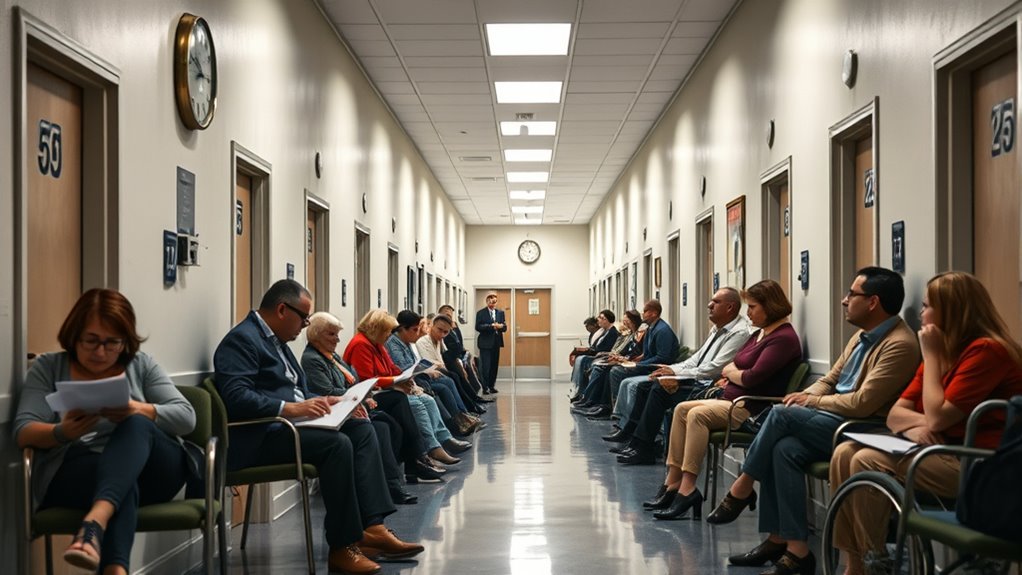
Once your claim moves past reconsideration, the next step often involves a hearing before an Administrative Law Judge (ALJ).
Currently, disability hearing wait times can range from 7 months to over a year due to SSA’s backlog and high volume of hearing requests — between 20,000 and 40,000 monthly.
This backlog and staffing shortages cause significant decision delays in the appeal process.
To help manage the hearing scheduling and reduce delays, you should focus on:
- Submitting complete and timely medical evidence.
- Preparing thoroughly for the ALJ hearing.
- Considering legal representation to navigate the process.
- Staying proactive with SSA communications.
Understanding these factors helps you better anticipate the timeframe for your Social Security Disability appeal before an ALJ.
Appeals Council Review Period
While you wait after an Administrative Law Judge decision, the Appeals Council review can take anywhere from 6 to 12 months or even longer, depending on your case’s complexity and the current backlog.
During this review period, the Appeals Council evaluates your case, focusing on any new evidence that wasn’t considered at the hearing level.
The review process involves a thorough case evaluation, which can affect the overall appeal duration.
The Appeals Council may grant, deny, or dismiss your request, often prolonging the review timeline.
Although they typically make a review decision within 60 days of receiving your application, the case backlog and complexity often extend this period.
Most cases are either denied or remanded back to an Administrative Law Judge after the Appeals Council review.
Federal Court Appeal Timeline
If you decide to continue your disability appeal after the Appeals Council’s decision, you’ll need to file a complaint in federal court within 60 days.
The federal court appeal timeline for a disability case typically spans 12 to 24 months or longer.
During the court review, the judge examines the evidence and the hearing record. This may result in remand, awarding benefits, or dismissal.
Complex legal issues or extensive evidence can extend the duration. Keep in mind, the federal court stage is often the longest part of the legal process.
Here are some key points about the federal court appeal timeline:
- File your complaint within 60 days of the Appeals Council’s decision.
- The court reviews the disability case record thoroughly.
- It may require additional hearings or evidence submission.
- Duration varies, often taking 12 to 24 months or more.
Frequently Asked Questions
How Long Does It Take to Hear From a Disability Appeal?
You’ll usually hear back from a disability appeal within 9 to 12 months after your hearing.
But it can take longer if the Appeals Council reviews your case, adding up to a year or more to the process.
How Long Does It Take for an Appeal to Get Approved?
Wondering how long it takes for your appeal to get approved?
It usually takes about 7 to 12 months after your hearing, but delays happen.
Stay patient and keep gathering strong evidence to boost your chances.
What Are the Chances of Winning a Disability Appeal?
You’ve got about a 50% chance of winning at the ALJ hearing stage, especially if your medical evidence is strong.
Chances drop at the Appeals Council, so make sure your documentation clearly supports your disability.
How to Speed up a Disability Appeal?
To speed up your disability appeal, don’t beat around the bush—submit all medical evidence promptly.
File within deadlines and respond quickly to SSA requests.
Consider hiring an experienced attorney to keep the process moving smoothly.
Conclusion
Guiding a disability appeal is like climbing a mountain—each stage, from the initial review to a federal court appeal, is a vital step toward reaching the summit.
Though the wait times may feel long and the process tough, remember every step moves you closer to your goal.
Hold onto patience and persistence; the journey may be challenging, but your determination is the rope that will pull you through to the top.
—
In conclusion, navigating a disability appeal can feel like a steep ascent, but each step is crucial.
By staying focused and persistent, you’ll gradually make your way to the top.
Remember, the key to success lies in your determination and patience throughout this process.
Keep pushing forward, and don’t lose sight of your goal—it’s worth the climb!