
How Long Does Vestibular Rehabilitation Take to Work?
How Long Does Vestibular Rehabilitation Take to Work?
Vestibular rehabilitation can be a game changer for those dealing with balance issues and dizziness. If you’re consistent with your exercises, you’ll typically start noticing improvements within 2 to 4 weeks.
In the beginning, therapy focuses on balance and gaze stability through simple movements. As you progress, the exercises gradually increase in difficulty.
Recovery time really varies based on your specific condition, symptom severity, and overall health.
Daily exercises and early therapy can significantly boost your progress. Many individuals see notable gains by the three-month mark.
Keep exploring to understand how to speed up your recovery and what to expect along the way!
What to Expect in the First Weeks of Therapy
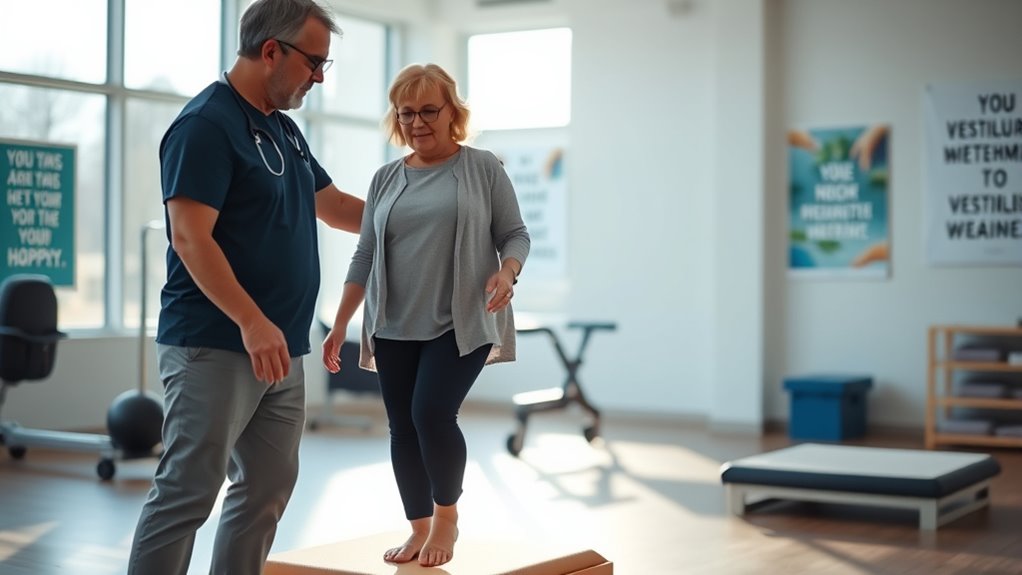
When you begin vestibular rehabilitation, your exercises will focus on improving visual stability during slow, controlled head and eye movements.
In this initial phase, vestibular therapy emphasizes developing foundational balance skills through basic balance exercises like marching in place and shifting your weight side to side.
Early therapy aims to prepare you for more challenging activities by gradually increasing the speed and complexity of movements.
As you progress, you may notice subtle improvement in your balance and a reduction in dizziness symptoms within the first few weeks.
This early therapy stage sets the groundwork for continued progress, helping you regain stability and confidence.
Timeline for Noticing Improvements
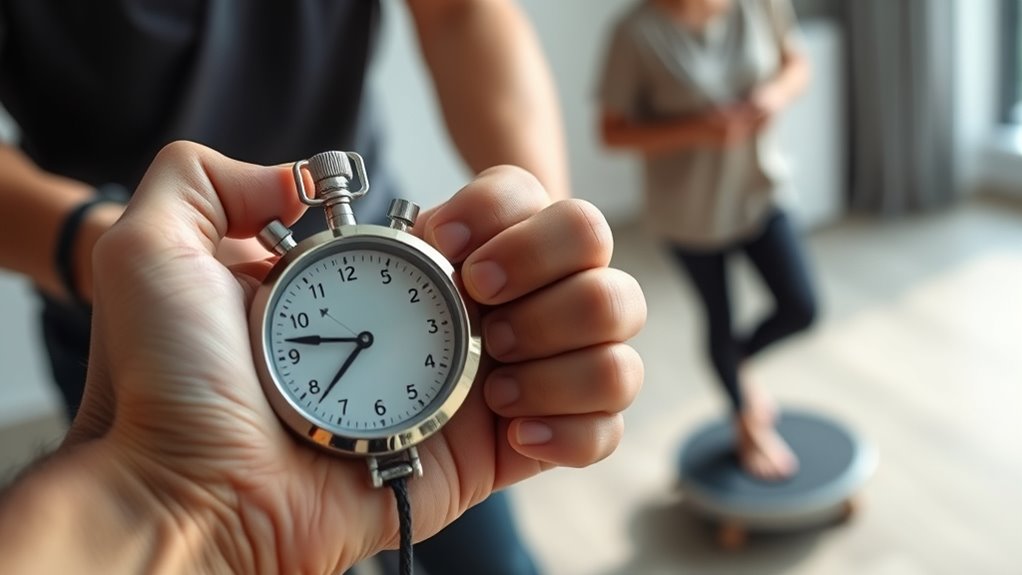
Although each person’s recovery varies, you’ll likely start noticing improvements in balance and dizziness within 2 to 4 weeks of beginning vestibular rehabilitation.
Early signs of progress, like reduced dizziness and better gaze stability, often show up around the one-month mark.
Between weeks 4 and 6, many experience significant improvement, especially if you stick to your therapy and home exercises.
While the timeline can differ, most people see substantial progress by three months, with some feeling better sooner or later.
Keep in mind that consistent rehabilitation is key to these positive changes.
Watching for these signs will help you understand your recovery pace and stay motivated as your balance and dizziness steadily improve over the coming months.
Factors That Influence Recovery Duration
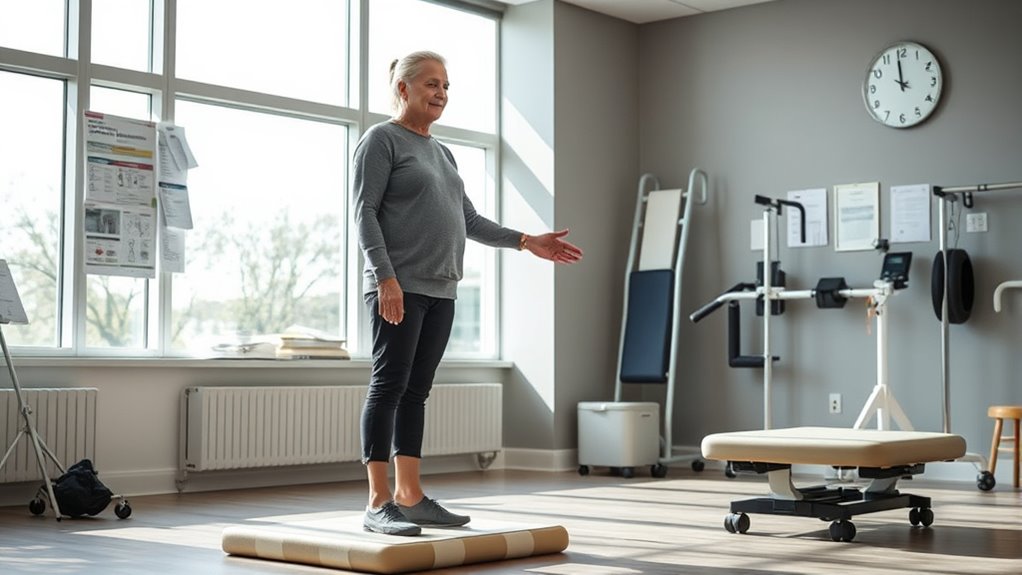
Noticing improvements within weeks is encouraging, but how long your recovery takes can vary widely based on several factors.
Your recovery time largely depends on the severity of a patient’s initial symptoms and the specific vestibular disorder. Some conditions improve after just a few therapy sessions, while others demand weeks or months.
Your consistency with home exercises and attending therapy sessions plays a vital role—regular practice accelerates progress and improvement.
Additionally, your overall health and age can influence recovery speed; younger, healthier individuals often heal faster.
The expertise of your therapy provider and the quality of their equipment also affect how quickly you notice benefits.
Finally, comorbidities might slow your recovery, so it’s essential to address all health aspects to optimize your rehabilitation.
Typical Recovery Periods for Common Vestibular Conditions
You’ll notice that recovery times vary depending on the vestibular condition you’re treating.
Some issues, like BPPV, often improve within a week, while others, such as vestibular neuritis or Meniere’s disease, may take several weeks to months.
Understanding these typical timelines can help you track your progress and set realistic goals during rehab.
Condition-Specific Timelines
When you start vestibular rehabilitation, the recovery timeline depends on your specific condition.
If you have BPPV, you’ll often notice symptoms like dizziness and balance issues improve within just one to three therapy sessions, usually in a week or two.
This quick improvement happens because BPPV affects the inner ear and responds well to targeted maneuvers during vestibular rehabilitation.
On the other hand, conditions like vestibular neuritis or labyrinthitis typically require four to twelve weeks of therapy before significant progress appears.
Meniere’s disease and motion sensitivity exercises also need about six to twelve weeks for noticeable improvement.
Understanding your condition’s typical timeline helps set realistic expectations as you work through therapy and regain balance and stability.
Recovery Stage Overview
How long does vestibular rehabilitation take to help you regain balance?
Recovery timelines depend on your specific vestibular system condition and your commitment to therapy.
For instance, BPPV symptoms often improve within 1-3 sessions, resolving in days to two weeks.
On the other hand, vestibular neuritis or labyrinthitis typically demands 4 to 12 weeks of rehabilitation before you notice significant improvement.
If you have Meniere’s disease, expect a 6 to 12-week timeline, influenced by how well you manage your episodic symptoms.
Habituation exercises for motion sensitivity also require about 6 to 12 weeks to effectively reduce symptoms.
Throughout therapy, consistent vestibular exercises are key to restoring balance and minimizing symptoms.
Your rehabilitation journey varies, but staying engaged with your exercises can really help speed up recovery and steadily improve your vestibular system’s function.
Strategies to Enhance and Accelerate Rehabilitation
Although vestibular rehabilitation can be challenging, consistently performing your prescribed vestibular exercises daily will considerably speed up your rehabilitation progress.
Early initiation of therapy helps improve symptoms faster by promoting brain adaptation.
Incorporate gentle movement and light aerobic activity to enhance balance and reduce dizziness and balance issues.
Managing stress through relaxation techniques also boosts therapy effectiveness.
Don’t forget to stay hydrated and maintain a nutritious diet to support overall recovery.
| Strategy | Benefit |
|---|---|
| Daily Vestibular Exercises | Accelerates rehabilitation progress |
| Early Initiation of Therapy | Quicker symptom improvement |
| Movement and Light Aerobic | Supports brain adaptation and balance |
| Stress Management & Nutrition | Enhances therapy effectiveness |
When to Seek Professional Guidance During Therapy
Sticking to your daily vestibular exercises and managing stress can markedly improve your recovery.
However, you should reach out to a healthcare professional if you notice your symptoms worsening or new problems arise.
Seeking professional guidance early in therapy helps guarantee exercises are tailored correctly, preventing ineffective treatment or injury.
Regular check-ins allow your provider to monitor progress and adjust therapy as needed for the best results.
If dizziness persists or severe symptoms develop, prompt assessment is vital to identify any underlying causes.
Don’t hesitate to seek help if you experience additional issues like hearing loss or ear pain.
Early professional involvement promotes safer rehab, prevents maladaptive habits, and supports a more effective treatment journey.
Frequently Asked Questions
How Long Does It Take for Vestibular Physical Therapy to Work?
You’ll typically start noticing balance improvements within 2 to 4 weeks of vestibular therapy.
Significant symptom relief usually happens around 4 to 6 weeks,
but full benefits may take 6 to 12 weeks depending on your condition.
Can Vestibular Disease Cause Diarrhea?
You might not expect it, but vestibular disease itself doesn’t cause diarrhea.
However, your nausea, stress, or certain medications used for treatment could trigger it.
How Successful Is Vestibular Rehabilitation?
Vestibular rehabilitation is quite successful, helping about 80-90% of people reduce dizziness and improve balance.
If you stick to your exercises and work with your therapist, you’ll likely see significant improvements.
How Long Does It Take to Recover From Vestibular Dysfunction?
You can recover from vestibular dysfunction anywhere from a few days to several months.
Sticking to your exercises and starting therapy early will help you see improvements faster, especially with conditions like BPPV or vestibular neuritis.
Conclusion
You might feel frustrated when progress seems slow. Yet, each small step brings you closer to balance.
Recovery can take weeks or months, but patience and persistence work together like a steady rhythm.
While some days feel challenging, others show clear improvement. Stick with your exercises, listen to your body, and don’t hesitate to reach out for help.
In the dance of vestibular rehab, your commitment and care create the harmony you need to heal.
Remember, it’s normal for the process to take time. The key is to stay motivated and consistent. Celebrate your little victories along the way, as they all contribute to your overall progress.
Ultimately, the journey of vestibular rehabilitation is about finding balance and restoring your quality of life. With dedication, you can achieve the improvement you seek. Stay focused, and don’t give up—your efforts will pay off!