
How to Open a Rehabilitation Centre in 5 Essential Steps
To open a rehabilitation centre, it’s essential to establish a clear mission and develop a detailed business plan. This plan will serve as your roadmap, guiding your services and defining your goals.
Next, you’ll want to secure funding. Explore options like loans, investors, or grants while carefully planning your budget.
After that, navigate the legal requirements. Make sure you obtain all necessary licenses and accreditations to operate legally and ethically.
Choosing the right location is crucial. You want to select a site that meets the needs of the community you aim to serve.
Once you have your location, it’s time to hire experienced staff who are passionate about rehabilitation.
Finally, implement effective marketing strategies and operational protocols. This will help attract clients and ensure your centre runs smoothly.
Keep following these steps to uncover deeper insights into the process!
Developing a Clear Mission and Business Plan

How do you guarantee your rehabilitation center stands out and meets community needs?
Start by crafting a clear mission statement that aligns your center’s goals with patient care and local demands.
Begin with a mission statement that connects your center’s objectives to patient and community needs.
Next, develop a detailed business plan based on thorough market research and data analysis.
This plan should outline your treatment modalities, specify target demographics, and define unique service offerings to differentiate you in a competitive market.
Use financial projections within your plan to ensure sustainability and guide operational strategies effectively.
By integrating these elements, your business plan becomes more than a document—it serves as the foundation for licensing, staff recruitment, and resource allocation.
This focused approach helps you meet community needs while positioning your rehabilitation center for long-term success.
Securing Funding and Financial Planning
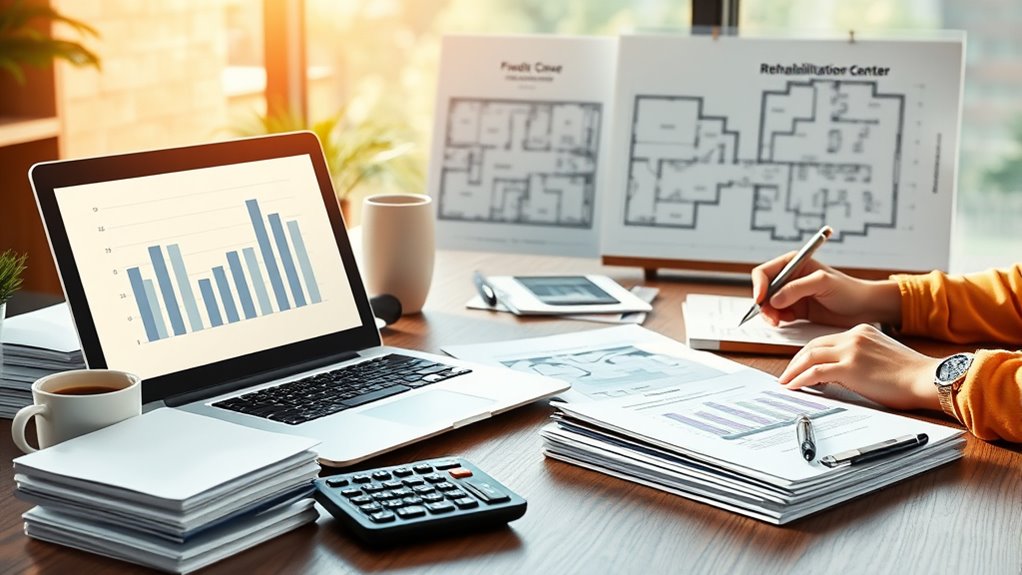
Once you’ve established a clear mission and business plan, securing funding becomes your next priority.
Startup costs for a rehabilitation centre can range from $300,000 to over $1 million, so solid financial planning is essential.
Develop detailed financial projections to forecast revenue, expenses, and cash flow. This will strengthen your business plan and attract investment.
Explore initial funding options such as personal savings, bank loans, private investors, grants, and government programs.
Allocate your budget carefully, covering property, equipment, staffing, accreditation, marketing, and operational costs.
Consulting financial advisors can improve your credibility with lenders and help identify diverse capital sources.
Navigating Legal Requirements and Obtaining Licenses

Why do legal requirements and proper licensing matter when opening a rehabilitation centre?
They ensure your facility meets industry standards, protects patients, and operates legally.
Managing licensing involves understanding state licensure, submitting detailed applications, and passing facility inspections.
You’ll also need to secure accreditation from bodies like CARF to enhance credibility and insurance acceptance.
Focus on these key aspects:
- Completing the application process with thorough compliance documentation.
- Ensuring your facility meets inspection requirements and local zoning laws.
- Developing comprehensive policies and procedures covering treatment and safety.
- Maintaining ongoing regulatory compliance through staff training and updates.
- Preparing for regular inspections to retain licensure and accreditation status.
Meeting these legal steps safeguards your centre’s reputation and operational success.
Choosing the Right Location and Building Your Team
When selecting a location for your rehabilitation centre, focus on areas with strong community demand and minimal zoning restrictions for healthcare facilities.
Prioritize accessibility and ensure compliance with zoning regulations.
Your facility should support detox, residential, and outpatient services tailored to community needs.
Also, building a multidisciplinary team is vital.
Recruit licensed clinicians and experienced professionals in addiction treatment and mental health to provide quality care.
| Aspect | Key Focus |
|---|---|
| Location | Accessibility, zoning compliance |
| Facility | Multi-level treatment support |
| Building Team | Licensed clinicians, diverse skills |
| Community Needs | Behavioral health demand |
This approach ensures your rehabilitation centre meets local needs effectively.
Implementing Marketing Strategies and Operational Management
After securing the right location and assembling a skilled team, you need to focus on attracting clients and managing daily operations efficiently.
Implement strong marketing strategies by developing a digital marketing plan with SEO, social media outreach, and pay-per-click ads to boost visibility.
Develop a digital marketing plan using SEO, social media, and pay-per-click ads to increase your visibility.
Use tracking tools like Google Analytics to monitor performance and adjust campaigns.
Building relationships with referral sources—healthcare providers and community groups—will help maintain a steady client flow.
For operational management, establish clear protocols for staff training, client intake, and treatment documentation to ensure smooth, compliant service delivery.
- Create SEO-optimized website content targeting local keywords.
- Launch social media outreach campaigns regularly.
- Use tracking tools to analyze marketing efforts.
- Develop referral partnerships for ongoing client intake.
- Standardize staff training and treatment documentation processes.
Frequently Asked Questions
How Much Does It Cost to Start a Rehabilitation Center?
You’ll need between $300,000 and over $1 million to start a rehab center.
This covers leasing, renovations, equipment, staff, licensing, accreditation, and marketing.
Planning your finances carefully guarantees you cover all these essential costs upfront.
What Are the 5 Components of Rehabilitation?
The five components of rehabilitation are medical management, counseling or psychotherapy, behavioral therapy, social support, and aftercare planning.
You’ll address health, mental issues, behavior changes, community help, and ongoing relapse prevention for lasting recovery.
What Are the Basic Steps in Rehabilitation?
You’ll find the basic steps in rehabilitation start with evaluating needs, developing personalized plans,
implementing therapies, monitoring progress, and adjusting treatments.
Coincidentally, these steps mirror how you’d approach healing any complex challenge carefully and adaptively.
What Are the Five Types of Rehabilitation Programs?
You’ll find five rehab program types: inpatient, outpatient, residential, partial hospitalization (PHP), and intensive outpatient (IOP).
Each offers different care levels, from full-time stays to flexible therapy sessions while living at home.
It’s important to choose the right type that fits your needs and circumstances.
Understanding the differences can help you make a more informed decision.
Conclusion
Opening a rehabilitation centre might seem like a tall order, but with a clear mission, solid funding, and the right legal groundwork, you’re already ahead of the game.
Choose your location wisely and build a dedicated team.
Don’t forget to market effectively!
Remember, every journey begins with a single step.
Stay focused, adapt as you go, and you’ll turn your vision into a thriving reality that truly makes a difference.
In conclusion, launching a rehabilitation centre requires careful planning and execution. Prioritize your mission, secure funding, and ensure you understand the legal requirements.
Selecting the right location and assembling a passionate team are key factors.
Lastly, effective marketing will help you reach those in need.
By following these essential steps, you can create a successful rehabilitation centre that positively impacts the community and transforms lives.