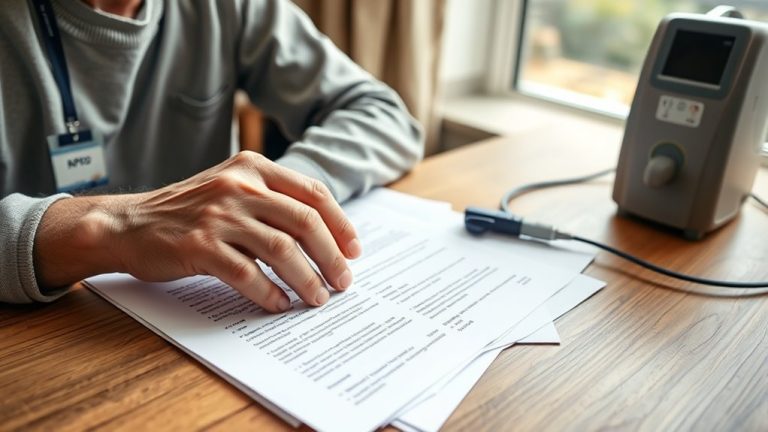

How Does Orthopedic Rehabilitation Work?
Orthopedic rehabilitation is essential for anyone looking to regain movement, alleviate pain, and rebuild strength after an injury or surgery. Through a customized, step-by-step therapy program, you’ll embark on a journey towards recovery.
Initially, you’ll engage in gentle exercises that are designed to help you ease back into physical activity. As you progress, your rehab will incorporate strengthening and functional activities, all under the watchful eye of professional guidance.
Your rehab team plays a crucial role in this process. They regularly monitor your improvements and make necessary adjustments to your treatment plan to ensure a safe recovery.
Additionally, they’ll provide valuable insights on preventing future injuries, helping you confidently return to your daily life.
So, keep exploring this journey of recovery and discover how orthopedic rehabilitation can greatly benefit you!
Understanding Orthopedic Rehabilitation and Its Purpose
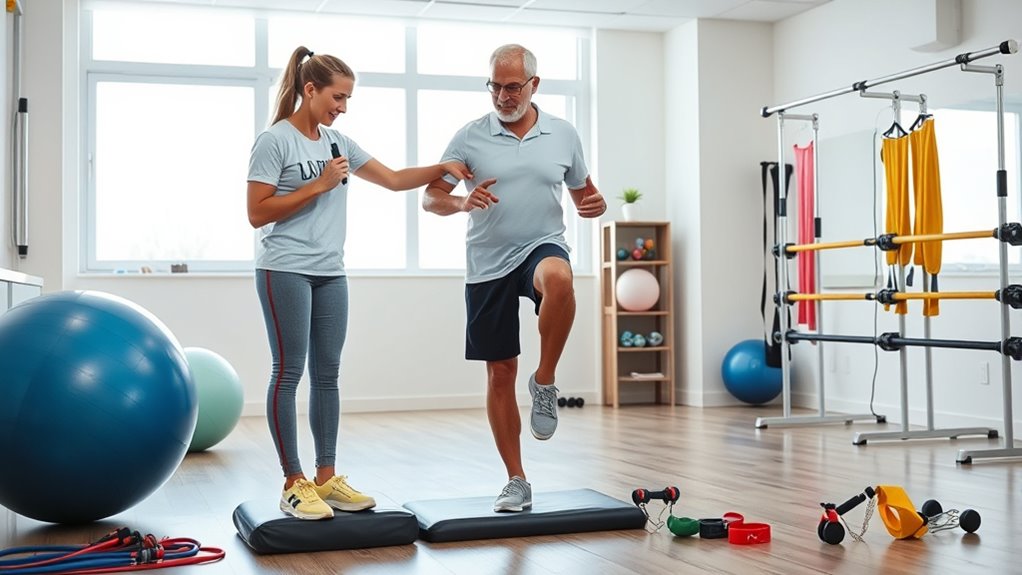
Although recovering from musculoskeletal injuries or surgeries can be challenging, orthopedic rehabilitation helps you regain movement, strength, and flexibility under a doctor’s supervision.
This specialized rehabilitation focuses on restoring function to your bones, joints, and soft tissues through tailored therapy plans.
By combining exercises, manual therapy, and education, it aims to reduce pain, improve mobility, and support your recovery journey.
Your therapy program is designed to help you return safely to daily activities or sports while preventing future injuries.
Orthopedic rehabilitation doesn’t just speed up healing; it empowers you to regain independence and ideal physical function.
With expert guidance, you can rebuild your musculoskeletal health effectively and confidently during every step of the recovery process.
Identifying Who Can Benefit From Orthopedic Rehabilitation
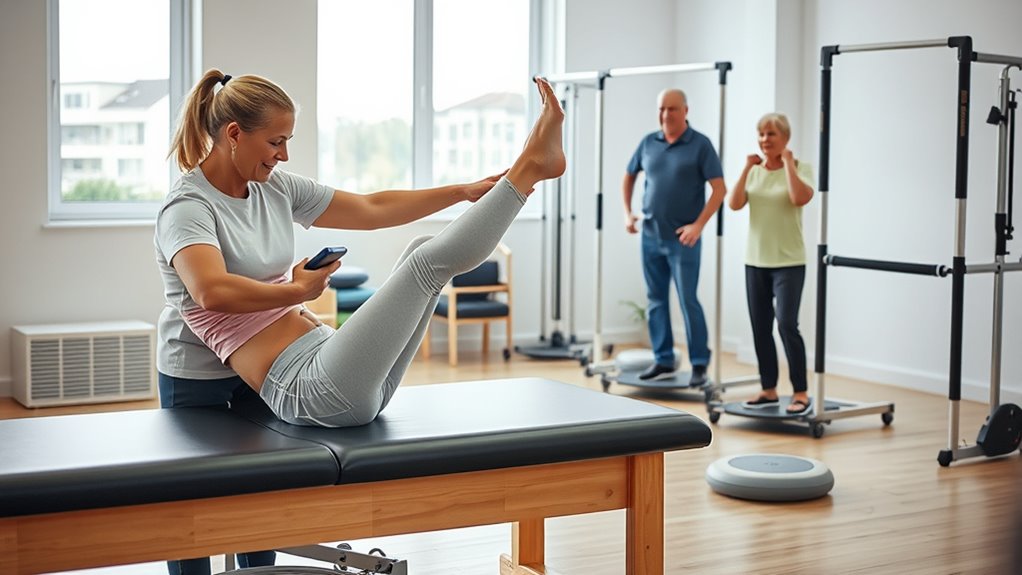
Orthopedic rehabilitation offers benefits to a wide range of individuals recovering from injuries or managing chronic conditions.
Orthopedic rehabilitation supports recovery and management for diverse injuries and chronic health conditions.
If you’ve undergone surgeries like joint replacements or ligament repairs, rehabilitation helps you regain strength and mobility.
Patients with fractures or dislocations need rehab to guarantee proper healing and restore function.
Even if you live with chronic conditions such as arthritis or tendonitis, rehab supports pain management and joint flexibility.
Athletes recovering from sports injuries like ACL tears rely on targeted rehabilitation to get back to peak performance.
Additionally, if you face mobility challenges from osteoporosis or muscular dystrophy, personalized orthopedic support can improve your daily functioning.
No matter your injury or condition, rehabilitation provides the tailored care you need to recover effectively.
The Four Stages of Orthopedic Rehabilitation
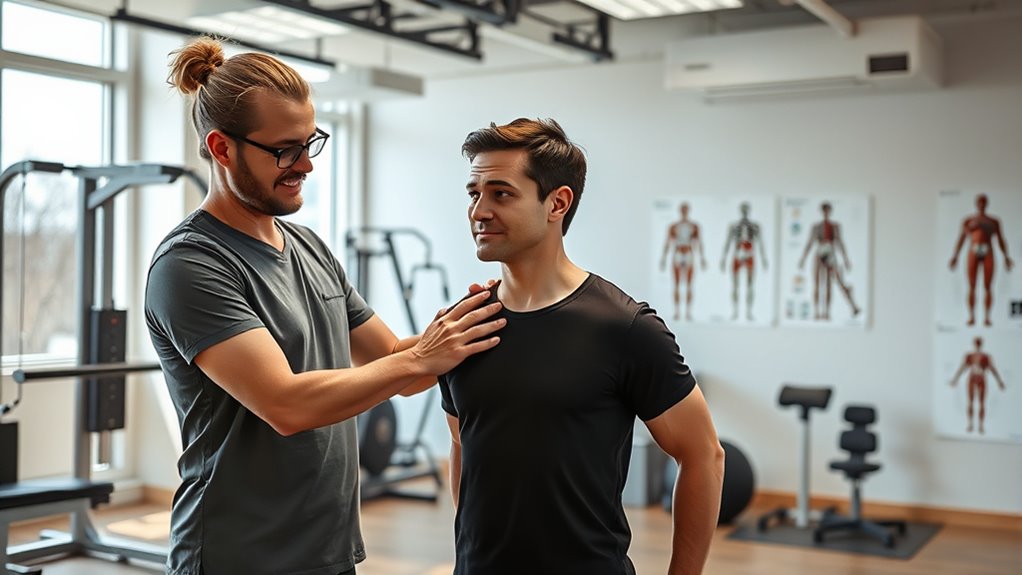
You’ll move through four key stages in orthopedic rehabilitation, each designed to help your body heal and regain strength step by step.
Starting with gentle recovery and progressing to full function, every phase builds on the last to make certain of steady improvement.
Let’s break down what you can expect at each stage.
Rehabilitation Stage Breakdown
How do you navigate the path to full recovery after an injury?
Orthopedic rehabilitation breaks down into four stages: recovering, healing, strengthening, and function.
In the recovering stage, you use passive exercises and assistive devices like slings or crutches to gently restore movement and reduce pressure.
Next, the healing stage focuses on tissue repair and improving your range of motion with guided, active exercises while avoiding strain.
Then, the strengthening stage helps you rebuild muscle strength and endurance through weight training and resistance exercises, reducing the risk of re-injury.
Finally, the function stage prepares you to return safely to daily activities or sports by restoring coordination, balance, and full activity.
Each stage builds on the last to guide you steadily toward full recovery.
Recovery Progression Steps
Recovering fully from an injury means following a clear, step-by-step process.
Orthopedic rehabilitation progresses through four key stages, each crucial to your recovery progression.
Here’s what you can expect:
- Recovery stage: Begin with gentle range of motion exercises, often using slings or crutches to support healing.
- Healing stage: Focus on active, guided exercises that promote tissue repair and improve flexibility without strain.
- Strengthening stage: Rebuild muscle strength and endurance through weight training and functional movements.
- Functioning stage: Restore your pre-injury activity level by enhancing coordination, balance, and injury prevention.
- Continuous evaluation: Your progress is regularly assessed to ensure you move safely through each rehabilitation stage.
Initial Evaluation and Goal Setting in Rehab
What happens during the initial evaluation in orthopedic rehab?
During this thorough assessment, your therapist reviews your medical history, injury details, and current mobility limitations. They identify key areas of weakness, pain, and functional impairments to establish a clear baseline.
Your therapist assesses medical history, injury specifics, and mobility limits to pinpoint weaknesses and pain.
Goal setting then comes into play. You and your therapist define specific, measurable objectives like restoring range of motion, reducing pain, and regaining independence in daily tasks.
Together, you collaboratively develop personalized treatment targets that guide your rehab journey.
This initial evaluation and goal-setting process lays the foundation for your treatment plan, allowing regular monitoring and adjustments to ensure you’re on track for ideal recovery.
This clear focus helps you stay motivated and aware of your progress throughout rehab.
Developing a Personalized Treatment Plan
You’ll start by evaluating your injury, mobility, and pain levels to set clear, personalized goals with your therapist.
From there, a tailored exercise plan and specific therapy methods will address your unique needs.
This approach guarantees your treatment stays effective as you progress.
Assessment and Goal Setting
Although every injury is unique, your rehabilitation begins with a thorough assessment of your medical history, injury details, and current functional limitations.
This assessment helps your therapist understand your specific needs and tailor your treatment accordingly. They’ll evaluate your:
- Range of motion and strength
- Pain levels and movement patterns
- Functional abilities and limitations
- Medical background and injury severity
- Personal recovery goals
Together, you’ll set clear, measurable goals such as improving joint mobility, reducing pain, or regaining independence in daily tasks.
These goals guide your personalized treatment plan and keep you motivated.
Your progress will be regularly monitored, allowing adjustments to ensure your recovery stays on track and meets your evolving needs.
Customized Exercise Regimen
Every customized exercise regimen starts with a detailed assessment of your injury, mobility, and overall health.
Based on this personalized evaluation, your therapist designs an exercise plan targeting the specific muscles, joints, and tissues affected by your condition.
This rehabilitation plan adjusts the intensity, duration, and frequency of exercises to fit your current healing stage and abilities.
As you progress, your therapist modifies the regimen to ensure you safely advance without risking setbacks.
The personalized exercise regimen combines active movements with passive techniques to meet your functional goals and prevent re-injury.
This tailored approach guarantees your rehabilitation is effective, focused, and responsive to your unique needs, helping you regain strength and mobility efficiently.
Therapy Modalities Integration
When developing your personalized treatment plan, therapists carefully select therapy modalities like manual therapy, therapeutic exercises, electrical stimulation, and heat or cold therapy to match your specific condition.
They integrate evidence-based modalities to promote tissue healing, reduce pain, and restore function efficiently.
Your therapist continually assesses how you respond and adjusts the treatment plan to optimize your recovery.
This dynamic approach ensures the modalities complement each other and address your unique needs.
Key aspects of therapy modalities integration include:
- Selecting treatments tailored to your condition
- Combining modalities that support healing and pain relief
- Regularly monitoring your progress
- Adjusting the plan based on your response
- Aligning therapy with your evolving recovery goals
This personalized strategy accelerates your improvement and maximizes outcomes.
Therapeutic Modalities Used in Orthopedic Rehabilitation
How do therapeutic modalities speed up your recovery in orthopedic rehabilitation?
These treatments, including ultrasound and electrical stimulation, target tissue healing by reducing pain and inflammation.
Ultrasound uses high-frequency sound waves to boost blood flow, which helps repair soft tissues efficiently.
Electrical stimulation strengthens muscles, decreases swelling, and improves nerve function, making your movements easier and less painful.
Alongside these, heat therapy relaxes muscles and enhances circulation, while cold therapy numbs pain and limits swelling.
Combining these therapeutic modalities with specific exercises accelerates your recovery, helping you regain strength and mobility faster.
Roles of the Rehabilitation Team Members
You’ll work closely with orthopedic surgeons who oversee your medical progress and adjust treatments as needed.
Physical therapists will guide you through exercises to rebuild strength and mobility.
Together, the entire rehab team collaborates to keep your recovery on track and address any challenges along the way.
Orthopedic Surgeons’ Responsibilities
Although orthopedic surgeons focus primarily on diagnosing and treating musculoskeletal injuries, they also play a crucial role in your rehabilitation process.
These specialists guide your post-surgical recovery and ensure your rehabilitation aligns with your healing needs.
Here’s what orthopedic surgeons do to support your patient recovery:
- Diagnose your injury and decide if rehabilitation is necessary.
- Collaborate with therapists to set and adjust rehab goals.
- Monitor your healing through regular evaluations.
- Provide clear instructions on activity limits and precautions.
- Coordinate the rehab plan to match surgical outcomes.
Physical Therapists’ Functions
Because effective rehabilitation depends on tailored care, physical therapists play an essential role in your recovery journey.
They perform detailed assessments of your movement, strength, and range of motion to design a personalized physical therapy plan.
Through guided exercises and manual therapy, they help restore mobility and ease pain.
Regular progress monitoring ensures your treatment stays effective and safe.
Plus, they teach you proper body mechanics and injury prevention for lasting health.
| Function | Purpose |
|---|---|
| Assessment | Evaluate movement, strength, range |
| Manual Therapy | Reduce pain, improve mobility |
| Education & Monitoring | Prevent injury, track progress |
Physical therapists are key to your orthopedic rehabilitation success.
Multidisciplinary Team Collaboration
When you undergo orthopedic rehabilitation, a team of specialists works closely together to ensure your recovery is thorough and effective.
This multidisciplinary team uses a collaborative approach to tailor your rehabilitation plan, combining expertise to optimize your healing.
Here’s how each member contributes:
- Physicians diagnose your injury, prescribe treatments, and coordinate with therapists to align medical and therapy goals.
- Physical therapists design exercise programs, assess mobility, and monitor your progress using targeted therapy techniques.
- Occupational therapists help restore daily functional skills and suggest adaptive tools to boost your independence.
The team communicates regularly, adjusting therapies based on your response.
Together, they ensure your rehabilitation plan is personalized, integrating medical and therapeutic care for the best outcome.
Monitoring Progress and Adjusting Therapy
To guarantee your recovery stays on track, therapists regularly assess your range of motion, strength, and functional abilities throughout the rehabilitation process.
They use progress monitoring with objective measurements and patient feedback to guide therapy adjustments. This ensures exercises remain effective and safe as you improve.
| Assessment Tool | Purpose | Frequency |
|---|---|---|
| Goniometer | Measure joint angles | Weekly |
| Strength Testing | Evaluate muscle power | Bi-weekly |
| Patient Feedback | Report pain & function | Each session |
Returning to Daily Activities and Preventing Re-Injury
As you progress through orthopedic rehabilitation, your therapist will guide you in safely returning to daily activities by focusing on restoring functional movements essential for everyday tasks.
To help prevent re-injury, you’ll learn proper body mechanics and ergonomics that reduce strain during routine actions.
The rehabilitation process includes gradual return-to-activity plans that build strength without risking setbacks. You’ll also work on balance, coordination, and flexibility to improve stability and avoid future injuries.
Key steps include:
- Practicing targeted exercises to restore movement patterns
- Learning safe body mechanics for daily tasks
- Following a gradual, monitored return-to-activity protocol
- Enhancing balance and coordination to reduce fall risk
- Adopting personalized strategies to maintain progress and prevent re-injury
This approach guarantees you safely resume your routine and maintain long-term joint and muscle health.
The Importance of Consistency and Support in Recovery
Maintaining steady progress in your rehabilitation relies heavily on consistency and support.
Attending therapy sessions regularly and sticking to your home exercise routine are essential for maximizing recovery.
Skipping appointments or rushing through exercises can cause setbacks, prolong healing, or even lead to re-injury.
You’ll benefit from ongoing support provided by healthcare professionals who motivate you, offer guidance, and adjust your treatment plan as needed.
This consistent involvement helps reinforce proper movement patterns, reducing future injury risks.
Evidence shows that patients who commit long-term to their rehabilitation routines tend to recover faster and more completely.
Frequently Asked Questions
What Does Orthopedic Rehabilitation Mean?
Orthopedic rehabilitation means you follow a personalized program that helps restore your movement, strength, and function after injuries or surgeries.
It reduces pain, improves mobility, and prevents future issues by retraining your body’s normal mechanics.
By focusing on specific exercises and techniques, you can enhance your recovery and get back to your daily activities more effectively.
It’s all about getting you back on your feet and feeling your best!
What Are the 4 Stages of Physical Rehabilitation Treatment?
You’d think healing’s just rest, but nope—it’s four stages: recover, healing, strengthening, and functioning.
You’ll start gently, then actively rebuild strength, and finally fine-tune skills to get back to your usual self.
What Is the Hardest Orthopedic Surgery to Recover From?
You’ll find hip replacement often hardest to recover from because of dislocation risks and intense therapy needs.
It demands patience and commitment since full recovery can take months and requires careful management to avoid complications.
How Long Does a Patient Stay in Rehabilitation?
You’ll spend anywhere from a few weeks to several months in rehab, depending on your injury’s severity.
Think of it as climbing a mountain—steady progress with milestones guiding your path to full recovery.
Conclusion
As you journey through orthopedic rehabilitation, think of it as rebuilding a sturdy bridge—each step strengthens your foundation.
With a personalized plan and a dedicated team guiding you, you’ll restore your body’s harmony and resilience.
Stay consistent and embrace the process; like a sculptor shaping stone, your commitment carves the path to recovery.
Soon, you’ll confidently return to daily life, stronger and wiser, ready to move forward without fear of re-injury.
In the end, orthopedic rehabilitation is all about rebuilding and regaining strength.
Every small victory adds to your overall recovery, creating a solid base for your future activities.
So, stay engaged and motivated throughout this journey.
With perseverance and the right support, you’ll not only heal but also enhance your physical capabilities.
Remember, this process is vital for preventing re-injury and ensuring you can enjoy life fully once again.